
Europe’s Deadliest Summer of the Century: Heat Claimed Hundreds of Lives in Slovakia


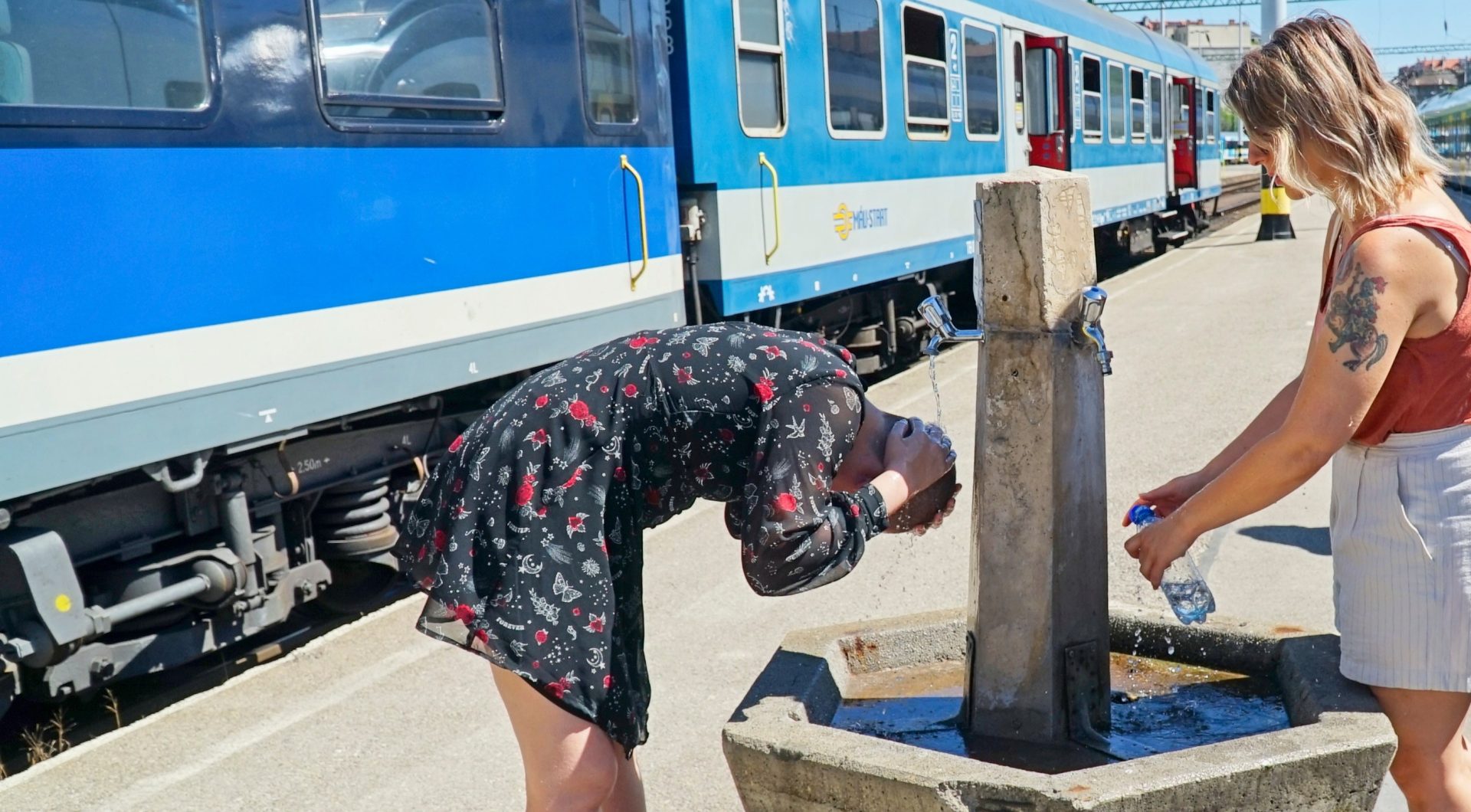
Summer 2026 was the deadliest of this century in European cities. According to scientists’ estimates, extreme heat claimed more than 50,000 lives, and about two-thirds of those deaths can be attributed to global warming caused by humans. With 321 deaths per million inhabitants, Slovakia ranked tenth among European countries, according to a model developed by the Urban Journalism Network and its European partners, including the Ján Kuciak Investigative Center, based on two new scientific studies. Contributing factors included the length of the heatwaves and the Central European temperature record of 42.2 °C, measured in Dolné Plachtince near Veľký Krtíš. Pavol Faško, a climatologist at the Slovak Hydrometeorological Institute (SHMÚ), warns that change is happening quickly and that Slovakia must prepare for the heat that future summers will bring.
In summer 2026, Slovakia ranked among the 10 European countries with the highest heat-related death toll per million inhabitants. Together with Austria, it appears in a ranking otherwise dominated by southern European countries.
“This summer was not the hottest in Slovakia in terms of average monthly or summer air temperature,” says SHMÚ climatologist Pavol Faško. “But the heatwaves lasted a long time. They didn’t peak on a single day and then begin to cool down. Instead, temperatures stayed at 35 degrees Celsius or higher for several days in a row.”
Faško says these are values that would be unusual for Central Europe under classic climatic conditions. “We are not adapted to this kind of heat. When it lasts a day or two, we can somehow get through it, but when it lasts long, it becomes harder for people to cope, especially if they have health problems,” he adds.
According to Faško, however, the situation was the worst in southern and western Europe. This is confirmed by the results of a data analysis by the Urban Journalism Network and its European partners, including the Ján Kuciak Investigative Center. The research builds on two new studies by teams from Imperial College London and the London School of Hygiene & Tropical Medicine (LSHTM), published in the journal Nature Health.
In total, extreme heat in European cities claimed more than 50,000 lives, making summer 2026 the deadliest of this century. Scientists estimate that roughly two-thirds of these deaths can be attributed to global warming caused by humans.
The study authors also warn that the situation will keep getting worse. “It will become a problem for almost everyone in Europe,” warns Pierre Masselot, a statistician and epidemiologist at LSHTM and one of the study’s lead authors. “This also applies to northern countries; it is not just a Mediterranean problem.”
According to Faško, Slovakia must also begin preparing for several possible weather scenarios in future summers.
The scientists’ analysis focused on urban areas. Faško explains that, in places with artificial surfaces, large expanses of concrete or asphalt, and glass-and-concrete buildings, daytime temperatures are higher than in rural areas with more greenery. “That alone might not be such a big problem,” he adds. “The problem arises in the evening and at night, because urbanized areas don’t cool down even after sunset. For people without air conditioning, this can be acute.”
The Statistical Office of the Slovak Republic recorded only 12 heat-related deaths from the beginning of the year to the end of August. This is the highest figure in the past 10 years, but its data do not confirm higher mortality during this year’s summer. However, the office notes in a press release that high temperatures can also contribute to death indirectly, for example by worsening a chronic or other illness, which may not show up in statistics on direct causes of death.
The scientists’ estimates differ and point to hundreds of deaths from this year’s heat in Slovak cities. They estimate the most deaths in Bratislava (110), followed by Košice (60). In large European metropolises, absolute numbers of victims were significantly higher. Scientists estimate the most deaths in Paris (more than 2,500), followed by Rome (over 2,200), London (almost 1,400) and Madrid (more than 1,000). In the Spanish capital, they attribute as much as 91 percent of heat-related deaths to climate change.
While massive heat decided the outcome in the south, northern Europe showed a high share of climate change impact even at lower death counts. In Stockholm, for example, the climate crisis was responsible for 34 of 43 deaths (over 80%). However, who is most at risk from heat is determined not only by geography but also by living conditions. In cities, the most vulnerable are residents of poorer, densely built neighborhoods with little greenery and worse access to healthcare.
How was the data analysis produced?
Scientists linked temperature and mortality data from the past 20 years with data on age, population density and poverty. They then built a model to estimate heat-related deaths in 854 cities across the European Union, the United Kingdom, Norway and Switzerland. The analysis therefore covers only urban areas, home to roughly 40 percent of the population of the 30 countries studied.
The reason for this focus is not only high population density but also the so-called urban heat island effect: Cities heat up more than the surrounding rural areas. Concrete, asphalt and buildings absorb solar radiation, while a lack of trees limits natural shade. Weaker air circulation between buildings, as well as heat from traffic and air-conditioning units, also contributes to higher temperatures.
Using climate models, the study authors also simulated temperatures in a world without the climate crisis. By comparing the two scenarios, they estimated the share of deaths directly attributable to human-caused global warming. The results show that this share has grown gradually over the years as the climate crisis has intensified.
“The results clearly highlight the danger associated with human-caused global warming,” said Clair Barnes of the Centre for Environmental Policy at Imperial College, who led this part of the research.
An example from the United Kingdom showed that these statistical estimates work: the researchers’ model predicted about 2,700 deaths for the spring 2026 heatwave, and authorities later confirmed 2,877 deaths from death certificates. The models do have limitations, however. For example, they may not capture the effects of the latest measures cities are using to protect residents from heat.
The Deadliest Summer of the Century
Temperature records fell in many places in Europe, and several cities were hit by multiple repeated heatwaves. This is a fundamental difference from 2003, when most victims succumbed to a single, exceptionally intense heatwave.
Heat hit seniors hardest. People over 85 accounted for almost half of all estimated victims. But extreme temperatures also endanger younger people: According to the scientists, more than 830 people aged 20 to 44 died from heat in the 854 European cities analyzed.
According to forensic medicine expert Michal Kováč, extreme heat places a major strain on the human body. When body temperature rises, the heart must work harder to cope with overheating. Even a one-degree Celsius rise in body temperature can raise heart rate by 10 to 20 beats per minute. The body also cools itself by sweating, which causes it to lose water and important minerals. If a person doesn’t replenish fluids, dehydration sets in, which further strains the heart and kidneys. “Groups with cardiopulmonary diseases are at the highest risk,” Kováč warns.
To some extent, however, people can protect themselves from heat. According to Kováč, the most important thing is to drink water—and ideally plain water—regularly, before feeling thirsty, since older people in particular may not sense thirst adequately. With heavy sweating, it is also advisable to replenish lost minerals. Kováč recommends avoiding alcohol, excessive caffeine and strongly sweetened drinks. Light, loose, light-colored clothing, a head covering and protection from direct sun can also help.
Slovakia in the Top 10 for Deaths per Capita
Italy paid the highest price for the heat in summer 2026. With more than 13,000 victims, it has the worst death toll in Europe, both in absolute numbers and per capita (775 deaths per million inhabitants). On this measure, it is followed by Malta (745 deaths) and Croatia (510).
While the Statistical Office of the Slovak Republic recorded only 12 heat-related deaths from the beginning of 2026 to the end of August, the model by scientists from Imperial College London and LSHTM puts Austria in ninth place and Slovakia in tenth for heat-related deaths per million inhabitants. The scientists estimate 321 heat-related deaths per million inhabitants in Slovakia, of which 202 they attribute to human-caused global warming.
Why did Slovakia end up among the most affected countries, alongside those of southern Europe? “Many of the values measured here were ones we have no experience with in the history of meteorological measurements,” said climatologist Pavol Faško. Slovakia, for example, recorded the highest temperature in Central Europe. “We’ve never had this distinction before,” he explains. “But after the heatwave in early August, we recorded 42.2 degrees Celsius in Dolné Plachtince, the highest value in Central Europe. So maximum daily temperatures went outside the standard we are used to.”
It was also unusual that temperatures in Slovakia exceeded 40 degrees Celsius as early as June. According to Faško, summer should only be getting started in June. The first heatwave hit Slovakia at the turn of June and July. The second arrived at the end of July and continued through the first 10 days of August.
The heatwaves also lasted a long time. “Every additional day is a burden, especially for people at risk from chronic illnesses or who cannot withstand the heat,” says Faško. “People aren’t adjusted to this; we haven’t had time to adapt yet. Change is happening quite fast.”
We Need to Prepare
The research results show that cities must start protecting their residents from extreme heat more effectively. In the long term, this also means changes in urban planning, such as more trees, greenery and shaded public spaces.
During heatwaves, it is particularly important to protect seniors and other vulnerable people. Publicly accessible air conditioned spaces where residents can cool down could help, as could transport for people who cannot reach them on their own. According to Masselot, reducing car traffic should also be a top priority. “The simplest step is to reduce the number of cars in cities and cut the space taken up by their infrastructure in favor of expanding greenery,” he explains.
Researchers from Imperial College and LSHTM also warn that if nothing changes and only current measures remain in place, temperatures could rise by 1.4 degrees Celsius by the end of the century. “Without a rapid shift toward net-zero emissions, which would slow the pace of warming, the health burden will continue to grow and put ever greater pressure on public health systems,” they write in the study.
Climatologist Faško notes that, in Slovakia,, what future summers look like depends on several factors, such as cloud cover and precipitation.
“If we think about what awaits us in the future, we probably have to be prepared either for summers that are as dry as this year’s, or, conversely, for summers with more rainfall. In that case, temperatures may not reach values as high as this year, but there may be more muggy days, which is also a burdensome factor. If it’s 35 degrees and muggy, it can be more dangerous than 39 degrees and dry,” Faško stresses, adding that unfavorable combinations of weather patterns must be anticipated in the future.
This article was originally published in Slovak on ICJK.sk, produced as part of a heatwave project coordinated by the Urban Journalism Network with support from Journalismfund Europe.
Subscribe to Goulash, our original VSquare newsletter that delivers the best investigative journalism from Central Europe straight to your inbox!