


FSB Hackers Impersonated Hungary’s Ex-Foreign Minister to Target Kremlin Critics
Photo: Szabolcs Panyi, with ChatGPT 2026-11-19


Photo: Szabolcs Panyi, with ChatGPT 2026-11-19
Hackers working for Russian intelligence tried to steal data from a former deputy director of Hungary’s foreign intelligence service, former state secretaries, and from me. Putin’s hackers used similar tactics to break into Hungary’s foreign ministry under Péter Szijjártó.
On November 2, a few hours before a popular podcast channel aired our conversation about my new book, Friends with Benefits. Putin’s Servants and Services in Hungary, I received an email with Géza Jeszenszky’s name on it.
Jeszenszky served as foreign minister (1990-1994) under Prime Minister József Antall and later as ambassador to Washington and Oslo under Viktor Orbán’s first two governments. Until then, we’d always corresponded over Gmail. This message came from a Proton Mail address bearing his name and landed in my own Proton inbox. I use the Swiss encrypted email service mainly to stay in touch with potential sources. I was surprised Jeszenszky had contacted me there.
Dear Szabolcs,
I have some information about someone that I think you might find useful and interesting.
I’ve put together a short document about it that I’d be happy to send you if you’re interested.
Best,
Géza
Jeszenszky is still active in public life and regularly sends his writing to friends and professional contacts. What struck me as odd was the separate email asking if he could send me something. Still, I wrote back to say that of course I was interested.
A few minutes after 7 p.m., a document called BP_PS_kapcsolata.pdf (claiming that the document described the relationship between two people identified only by their initials, PB and SP) arrived. It looked as though someone had shared it through Proton Drive. All I could make out in the preview was a blur of text. By then, I was suspicious.
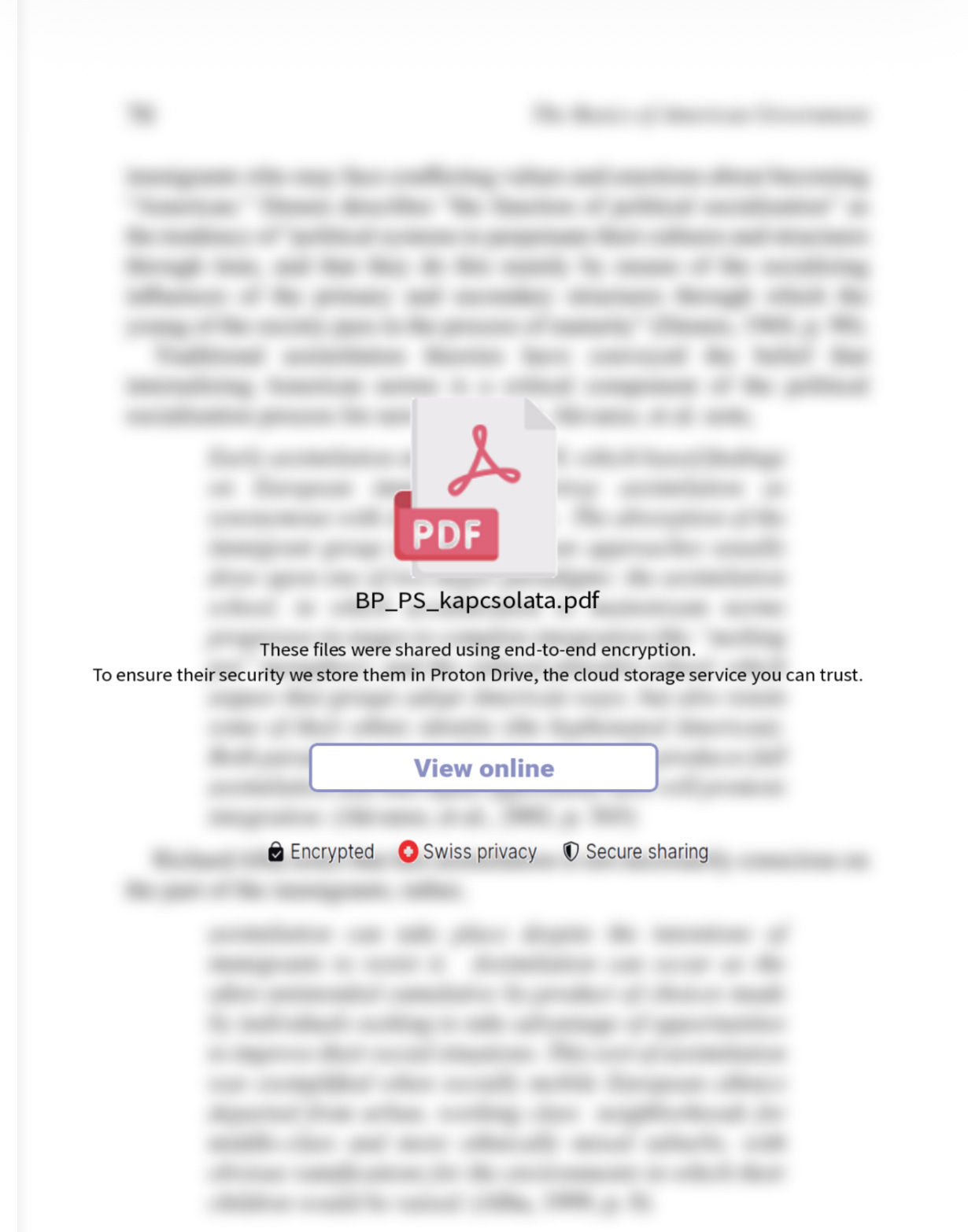
The PDF sent to me from [email protected].
What I kept coming back to was the idea of Jeszenszky using Proton Mail. That level of security awareness is rare even among people my age, let alone his. So I pulled up our old Gmail correspondence and asked him there whether he’d sent the document. He replied that the last time he’d sent an email with me among the recipients was in October. Then he wrote to me from his own Proton Mail account to show me he had one, too.
So much for my assumptions. The 85-year-old former foreign minister does indeed use encrypted email, something even Viktor Orbán’s foreign minister, Péter Szijjártó, apparently never managed, as far as we know. But Jeszenszky’s real Proton address was different from the one the PDF had come from, [email protected].
I called Jeszenszky. He confirmed he had nothing to do with this other address.
Then he told me something else. Not long before, András Telkes had also received a PDF over Proton Mail from someone claiming to be Jeszenszky.
The trail leads to the FSB’s Center 18
I got in touch with Telkes. In the 2000s, he served as deputy director general of the Information Office, Hungary’s civilian foreign intelligence service. In recent years, he’s become an outspoken critic of the Orbán government’s pro-Kremlin policies. He also writes about national security and Russian influence on Substack.
Telkes told me the email he’d received in Jeszenszky’s name had come from the same address, [email protected]. His document also looked as if someone had uploaded it to Proton Drive. His file was called Euro50_Compact_Concept_Note_Revised_2026.pdf.
Telkes examined the link embedded in the PDF. He concluded that it would have taken him to a page almost indistinguishable from Proton Mail’s login screen and prompted him for his credentials. He didn’t enter anything. When he checked where the link in the PDF led, he also discovered that the attackers had used a British company’s compromised website to set the trap.
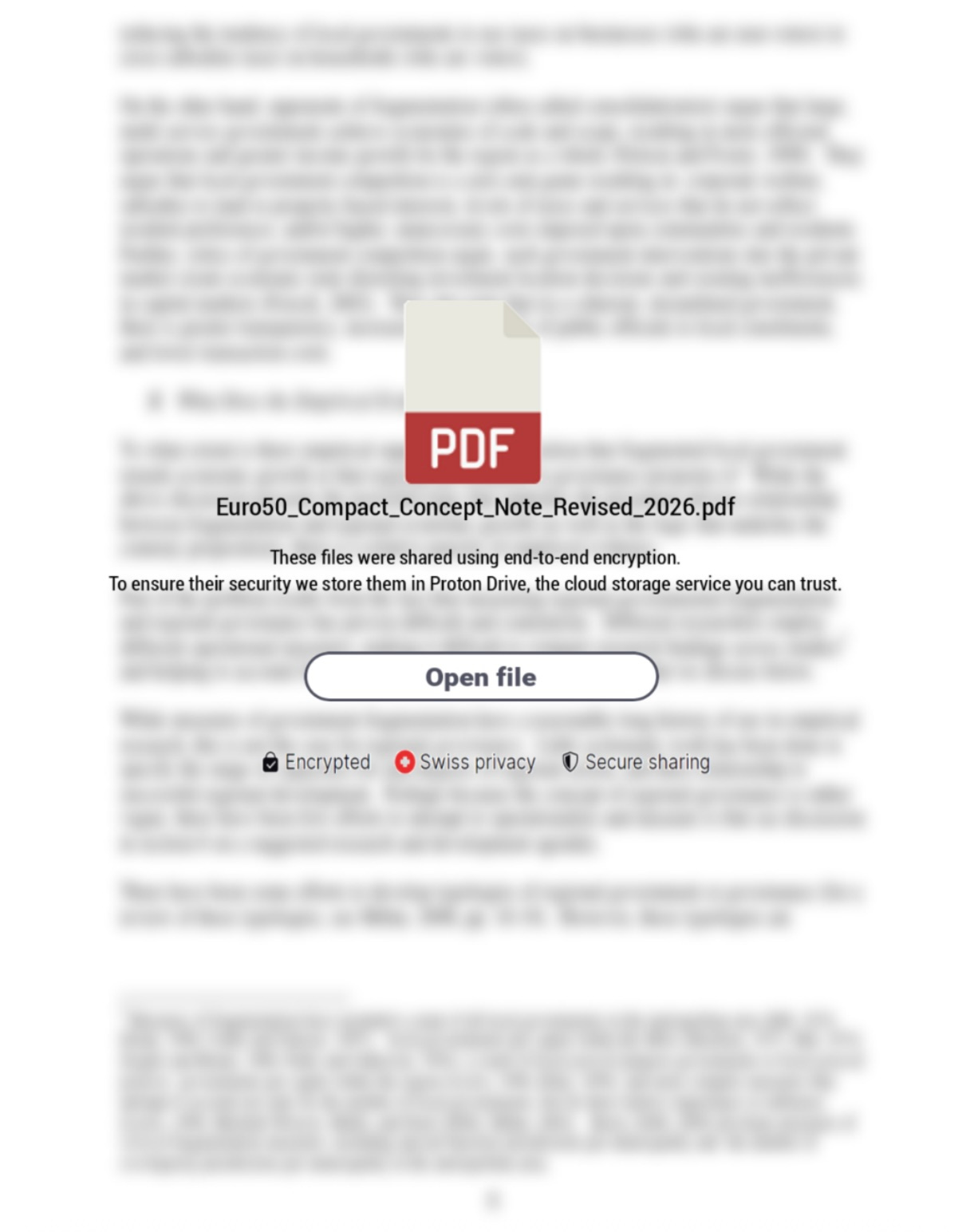
The PDF sent to András Telkes from [email protected].
I forwarded both suspicious emails, Telkes’s with his permission, to researchers at the University of Toronto’s Citizen Lab. They and Amnesty International previously found traces of Pegasus spyware on my phone. During Hungary’s 2026 election campaign, Citizen Lab also helped me examine a suspicious email from someone impersonating Hungarian investigative outlet Direkt36’s Proton Mail account. Even then, there were indications of Russian intelligence involvement.
Citizen Lab concluded that a Russian state actor was behind these personalized phishing attempts, and that they were deploying a tactic known as spear phishing. The researchers assessed that, had Telkes and I taken the bait, the attackers would have tried to steal our data and infect our devices.
The Google Threat Intelligence Group (GTIG) also analyzed our emails. In a report circulated among researchers on November 10, Google linked the attacks on Telkes and me to COLD RELIC, a Russian cyberespionage group previously tracked as COLDRIVER and UNC4057. According to Google, the group was after our Proton Mail login credentials and our two-factor authentication codes.
According to the analysis, the link embedded in BP_PS_kapcsolata.pdf connected two websites. It led first to a hacked third-party site, which would then have redirected the visitor to a phishing page controlled by the attackers.
The lure sent to Telkes played on the name of the Euro50 Group, a forum for discussing European financial and economic issues. Its name appeared in the filename of his document.
Google’s analysis noted that I had investigated Russian influence on Hungary’s April 2026 election. As for Telkes, it singled out a November 2025 article he’d written about how Orbán’s government cooperated with Russia’s Foreign Intelligence Service, the SVR.
Citizen Lab had already examined the group now known as COLD RELIC in a 2024 investigation. Several Western governments, including the United States, have linked the group to Center 18, a cyberespionage unit of Russia’s Federal Security Service, the FSB.
There were many more Hungarian targets
I shared both teams’ findings with Telkes and Jeszenszky. Both agreed to be named in this story.
Two research teams had independently found signs of a Russian intelligence operation. I alerted the National Security Office within the Hungarian Prime Minister’s Office to the spear-phishing attempts and shared the emails with Hungary’s Special Service for National Security.
There was good reason to believe the attackers also targeted other Hungarian national security experts, journalists, and possibly public officials. The attacks may still be going on.
After I broke the story in Hungarian on my Substack, other targets came forward. They included András Rácz, Hungary’s foremost expert on Russia and acting director general of the Hungarian Institute of International Affairs, the Foreign Ministry’s think tank. Two former Foreign Ministry state secretaries also came forward: István Szent-Iványi served as state secretary before 2010 and represented a liberal party in the European Parliament, while János Herman served as Hungary’s ambassador to NATO and the EU. They are known for criticizing both the Kremlin and Viktor Orbán’s pro-Russian policies.
All three received similar spear phishing emails from attackers posing as Jeszenszky and claiming to be offering analysis by the Euro50 Group. It remains unclear whether any of their accounts were compromised.
These tactics have a long history in Hungary. In my investigation into the breach of the Foreign Ministry’s computer systems under Péter Szijjártó, and later in Friends with Benefits, I described how Russian intelligence services used similar ruses to steal login credentials, some of which gave them high-level access. They used those credentials to break into Hungarian government systems and those of other state institutions, infect them, and steal data.
What does Google say about the attempted attacks?
I asked Google’s threat intelligence researchers to explain exactly what we were dealing with. Among other things, I wanted to know how active COLD RELIC is today, whom it targets in other countries, and how Google had traced the emails we received back to the group.
Wesley Shields, a security engineer with the Google Threat Intelligence Group, told me:
COLD RELIC remains highly active, consistently conducting credential harvesting and malware delivery campaigns against strategic and civil society targets. GTIG frequently observes the group targeting individuals who scrutinize Russian foreign influence, domestic politics, and regional security across Europe and North America. Operational activity has remained consistent in recent years and has focused heavily on investigative journalists, NGO personnel, think tank fellows, and former diplomatic and national security officials.
Google declined to share the specific technical evidence behind its attribution in our case. Shields explained:
To protect the security of our users and avoid tipping off threat actors to our detection methods, Google does not disclose specific technical evidence, indicators, or telemetry associated with individual government-backed attack notifications.
When we detect that an account has been targeted by a state-sponsored actor, our priority is prompt remediation and where possible user notification so potential targets can secure their accounts (see our Government-backed attack warnings guidance).
While we cannot discuss the specifics of individual cases, GTIG publishes comprehensive research on the tactics, techniques, and infrastructure commonly used by groups like COLD RELIC on our public threat intelligence blog.
I also asked why COLDRIVER had become COLD RELIC. Shields wrote:
The name change is part of a broader effort within GTIG to unify our naming conventions across historic Mandiant and Google’s Threat Analysis Group (TAG). We publicly discussed this in a blog post in late July. This feature article also serves as a useful explainer.
What should you look out for?
Shields offered the following advice:
Even if an email displays the name of a recognized colleague, journalist, or official, check the actual sending address: COLD RELIC frequently impersonates trusted contacts using personal webmail accounts or lookalike domains. Be cautious of document previews or file shares claiming you must ‘log in’ or ‘authenticate your email’ to decrypt or unlock a file—legitimate cloud documents do not require re-authentication through third-party intermediaries. Always confirm that any login page matches the official service’s canonical domain before proceeding, or access shared documents directly through your organization’s verified cloud portal.
To verify safely, contact the sender through a separate, pre-existing out-of-band channel (such as a known phone number or Signal) before opening links. For high-risk individuals such as journalists, researchers, and civil society advocates, we strongly recommend enrolling in Google’s Advanced Protection Program.
This article was originally published on Szabolcs Panyi’s Hungarian Substack.
Subscribe to “Goulash”, our newsletter with original scoops and the best investigative journalism from Central Europe, written by Szabolcs Panyi. Get it in your inbox every second Thursday!

VSquare’s Budapest-based lead investigative editor in charge of Central European investigations, Szabolcs Panyi is also a Hungarian investigative journalist at Direkt36. He covers national security, foreign policy, and Russian and Chinese influence. He was a European Press Prize finalist in 2018 and 2021.