




How Ukraine’s Major Corruption Scandal Reached Slovakia
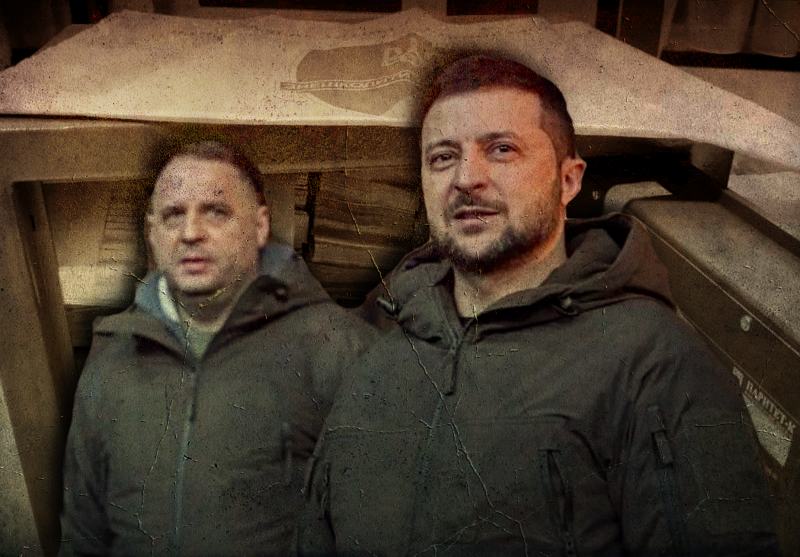
Illustration: ICJK (FB/Liwa Arms, Grand Power) 2026-01-22


Illustration: ICJK (FB/Liwa Arms, Grand Power) 2026-01-22
An investigation into corruption at the Ukrainian state-owned company Energoatom reveals several links to Slovakia. According to the findings of the Investigative Center of Ján Kuciak (ICJK), in cooperation with Radio Free Europe’s project Schemes, based in Kyiv, individuals linked to the Midas case did business in Slovakia, owned companies and real estate, or had residential and financial ties. According to Ukrainian investigators, some of the funds from illegal commissions may have been legalized through Slovak companies. The case reaches all the way to the inner circle of Ukrainian President Volodymyr Zelensky.
In November of last year, Ukraine was rocked by a huge corruption scandal. According to Ukrainian authorities, an investigation codenamed Midas uncovered a million-dollar bribery and money laundering scheme at the state-owned nuclear company Energoatom. High-ranking company officials and former associates of President Volodymyr Zelensky were allegedly involved in the scheme.
The National Anti-Corruption Bureau of Ukraine (NABU) and the Specialized Anti-Corruption Prosecutor’s Office (SAPO) announced that, after a 15-month investigation and thousands of hours of wiretapping, they had uncovered a scheme in which a group of officials and intermediaries collected bribes from Energoatom suppliers amounting to 10 to 15 percent of the value of contracts. According to investigators, approximately $100 million (about €85 million) was laundered through offshore structures, and the management of a strategic enterprise with a turnover of more than €4 billion was in fact in the hands of individuals without formal authority.
Eight people have already been charged, including former high-ranking officials from Energoatom and the Ministry of Energy. Among the most prominent names is Igor Myroniuk, former advisor to ex-Minister of Energy Herman Halushchenko. The investigation also points to businessman Timur Mindich, a long-time associate and co-owner of Zelensky’s production company Kvartal 95, whom authorities describe as the alleged organizer of the entire scheme. Both were also active in Slovakia.
According to investigators, Myroniuk masterminded the system of collecting commissions from Energoatom contracts. Myroniuk is a partner and executive of a company in Slovakia, where his family has property and residential ties.
The Ukrainian NABU also worked with the theory that part of the money from the corruption scheme was laundered through foreign companies and accounts in the European Union. One of the financial flows being investigated is the Cyprus-Slovakia route.
Anti-corruption units also searched the office and residence of Andriy Yermak, advisor and right-hand man to President Volodymyr Zelensky, in connection with the Midas case. Yermak subsequently resigned from his position. To date, he has not been charged in the case.
The Alleged Head of the Ukrainian Corruption Scheme also Had a Company in Slovakia
The main figure in the corruption scheme, Timur Mindich, also did business in Slovakia, where he had a joint business with another alleged player in the case, Igor Khmelov.
Mindich began doing business in Slovakia in 2016. It is still active today at an address in Bratislava’s Nové Mesto district. A year later, he became a partner in TIM&TIM, s.r.o. The company was originally called Blackrock Consulting and was founded at the same time as Mindich’s business.
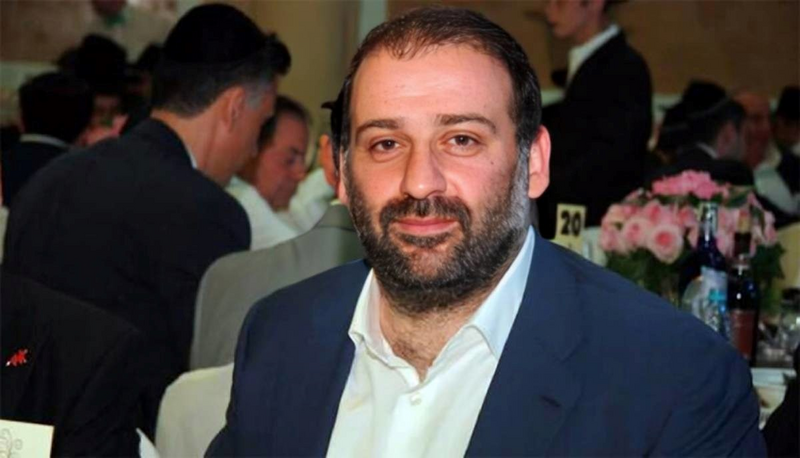
Businessman and co-owner of the Kvartal 95 studio, Timur Mindich. Source: Our Money Investigation.
However, Mindich did not own the company alone, but with his long-time Ukrainian business partner, Igor Khmelov. Khmelov also started a business in Slovakia in the same month as Mindich, at the same address. They took over the company at the end of 2017.
Khmelov is also said to be a possible co-owner of the Ukrainian defense company Fire Point, which specializes in long-range drones. He also can be heard in recently released audio recordings from the Midas corruption scandal. He is said to have had the nickname “Shmel,“ meaning bumblebee.
According to the registers, the main business activity of TIM&TIM is wholesale clothing and footwear, but their business activities also include courier services and market and public opinion research. In previous years (except 2022), the company was quite successful. Its sales revenue over the years was around one million euros. In 2019, they even had an exceptionally high turnover of more than four million euros. But they were not as successful in terms of profitability, closing last year with a profit of 12,000 euros.
Currently, only Igor Khmelov is listed in the TIM&TIM company. Timur Mindich left the company in the spring of last year. The circumstances surrounding his departure are unknown. Documents that could clarify these circumstances are not available in the commercial register. Khmelov thus remaines the sole partner and managing director of the company.
However, this is not the only Slovak company in which Igor Khmelov is involved. He also owns a one-third stake in Lamačská Brána. According to Finstat, this company is involved in the development of construction projects and the construction of residential and non-residential buildings. According to a document published on the website of the Bratislava district of Lamač, the company was involved in a new investment project in 2022. However, since its establishment, it has consistently had zero revenue and has been operating at a loss.
There is a family house on the land in question, but it is falling into disrepair. In 2022, shortly after the Russian invasion, it was offered to take in refugees. Until December 15 of this year, it was owned by Khmel’s wife Iryna, along with two other people from Ukraine. Khmel and his wife own an apartment in Marianka near Stupava, which they bought in 2017.
We also visited these properties. The family house in Bratislava looks like it hasn’t been lived in for a long time. In Marianka, no one opened the door or responded, even though there was a car with Ukrainian license plates parked in front of the apartment.
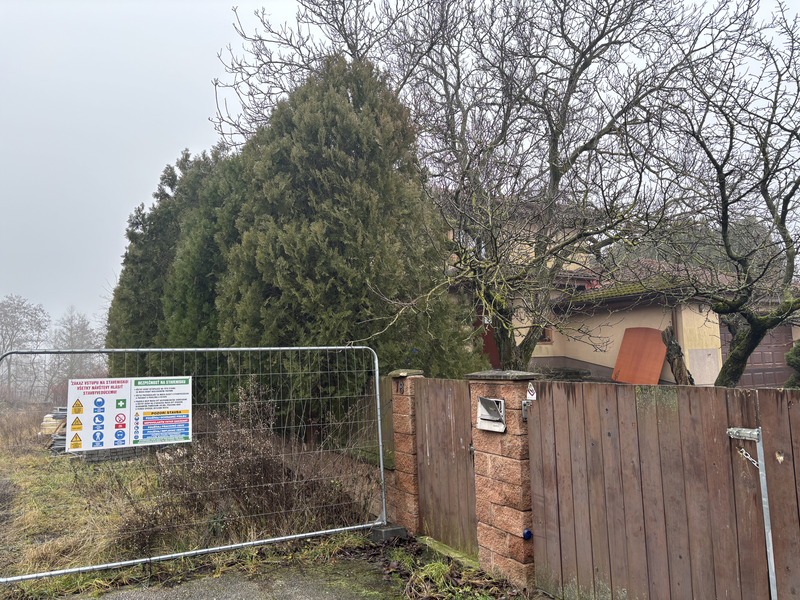
An abandoned family house in Lamač, which until recently was co-owned by Igor Khmel’s wife. Source: ICJK
Minister’s Advisor with Ties to Slovakia
Mindich and Khmelov, mentioned in the NABU recordings, are not the only ones with ties to Slovakia. Igor Myroniuk, former advisor to the Minister of Energy, is also one of the suspects in this case. According to the Kyiv editorial office of Radio Liberty, it was he who “organized“ the scheme to obtain commissions of 10 to 15 percent of the value of contracts from Energoatom’s contractual partners. Although he did not hold any official position in the company, he controlled the agency as an external “shadow manager.”
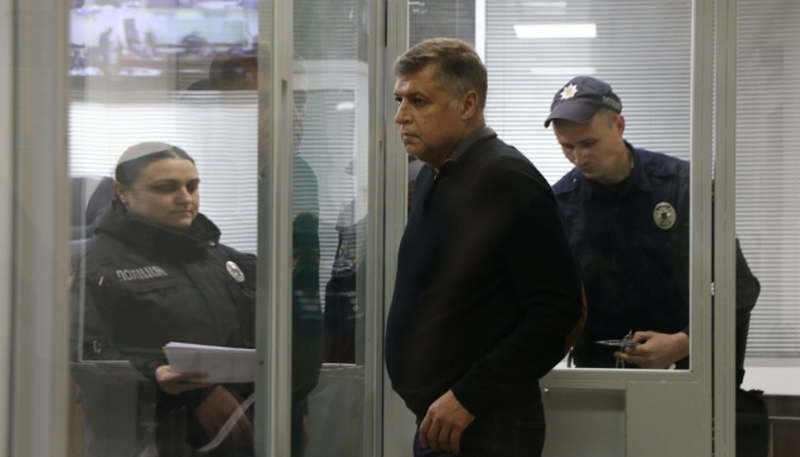
Igor Myroniuk in court. Source: Ukrinform
Myroniuk’s name also appears in the Slovak commercial register. To this day, he is a partner and executive director of the company UKRCI s.r.o, which was founded in 2014. Its revenues have been modest in recent years. In the past, he also co-owned another company with his ex-wife and son.
Myroniuk’s family members are connected to Slovakia not only by the company, but also by a Slovak address and, according to Ukrainian investigators, a residence permit. This was one of the reasons that he was taken into custody. The prosecutor feared the risk of him fleeing abroad. According to the evidence obtained, he himself stated that he could leave the country. The ex-advisor’s ex-wife and son also have a base in Slovakia. Since 2014, his son has owned an apartment in Bratislava’s Nové Mesto district on the 22nd floor of the Tri veže complex. In the summer of 2023, Myroniuk’s ex-wife bought a terraced house near Bratislava, just a 10-minute walk from the Danube. According to a current advertisement, one of the neighboring houses in this area is currently selling for half a million euros. In November of this year, she also appeared in the company Management alternative technologies s.r.o. as the sole owner and managing director.
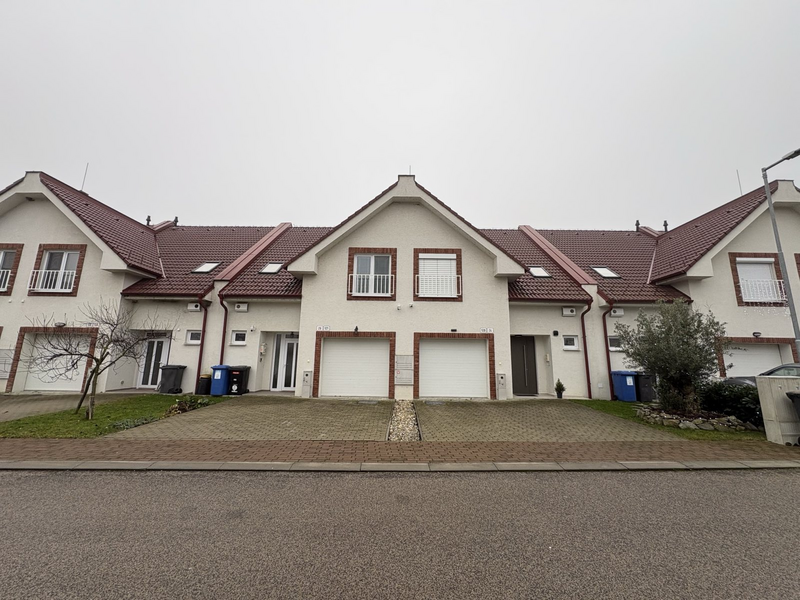
Igor Myroniuk’s ex-wife bought a unit in a terraced house near Bratislava, in Šamorín. Source: ICJK
According to information presented during the hearing, Myroniuk maintained good relations with his son and ex-wife, who have residence permits in Slovakia. According to the investigation, they received cash from Ukraine and deposited it into their account at a local bank.
We wanted to talk to them about these facts. We looked for them at the Slovak address of Igor Myroniuk’s ex-wife. However, no one opened the door, and they did not respond to the doorbell. The blinds were also drawn.
Money from the Corruption Scheme May Have Ended up in Slovakia
Slovak connections have also emerged in the corruption scheme that has rocked Ukraine. According to investigators from the National Anti-Corruption Bureau of Ukraine (NABU), the laundered money may have ended up directly in Slovakia. According to court hearings and videos submitted by NABU in the Mindich case, one of the ways in which the money was legalized was by transferring it to foreign accounts of trusted individuals and companies in the EU, Africa, North America, and Russia.
According to investigators, the way the money was laundered was as follows: The funds were transferred to the company’s account, with approximately 5 percent remaining in the accounts of front companies as a fee for “courier” services. The rest was paid in cash to Ukrainian participants in the scheme. High-ranking officials picked up packages of dollars during foreign business trips and then transported them back to Ukraine in bags. They also used cryptocurrencies.
Hundreds of thousands of dollars traveled between countries and continents in this way for several months. One of these routes was the Cyprus-Slovakia route.
Dmytro Basov, executive director for physical protection and security at Energoatom, was also said to be an important link in the whole case. According to recordings from the investigation, he and Igor Myroniuk were responsible for acquiring corporate rights for companies from various jurisdictions, primarily offshore companies in Cyprus, the Cayman Islands, the Seychelles, the Virgin Islands, Dubai, Bulgaria, and Slovakia.
They spent tens of millions of hryvnia (several hundred thousand euros) for this purpose. The companies were registered to foreigners who received a certain percentage of the turnover (roughly 10 percent). These companies subsequently received contracts from Energoatom. In this way, Minister Myroniuk’s advisor was to earn more than $5 million (approximately €4.2 million).
What is the Midas case?
On November 10, NABU announced the discovery of a criminal organization whose main activity was “systematically obtaining unauthorized benefits from Energoatom’s contractual partners in the amount of 10 to 15 percent of the value of the contracts.” NABU claims that the funds were legalized through an office in central Kyiv, through which approximately $100 million passed. The investigation showed that the premises of this office belonged to “the family of former MP and current senator of the Russian Federation Andriy Derkach, who has been charged by NABU and SAP in another criminal case.”
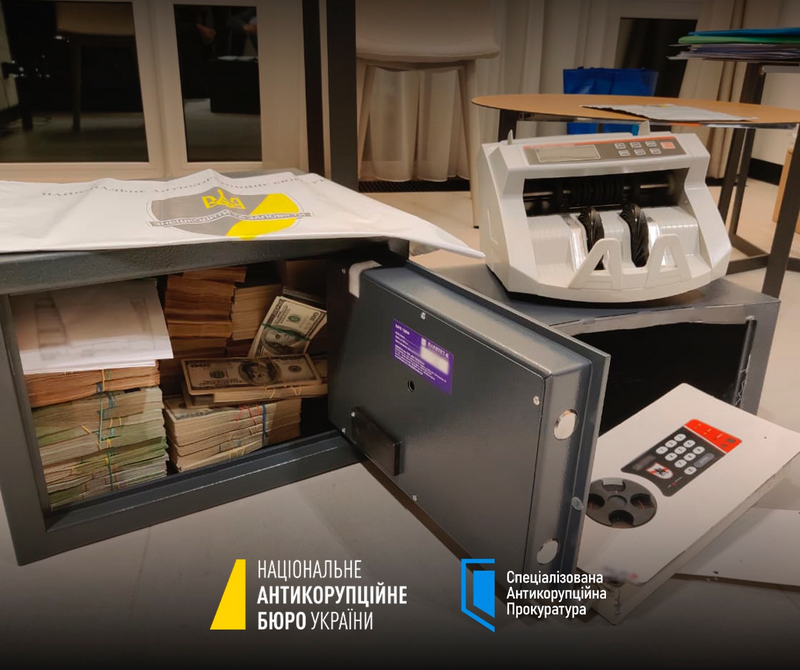
Source: NABU
Eight people have been charged in this case. The editorial staff of Radio Liberty identified seven individuals. According to law enforcement sources, they include businessman and co-founder of the Kvartal-95 studio Timur Mindich (codenamed “Carlson” in NABU recordings), former advisor to the Minister of Energy Igor Myroniuk (“Rocket”), Energoatom’s executive director for security Dmitry Basov (“Tenor”), and four other employees of the money laundering office.
A bail of 37 million hryvnia (approximately 750,000 euros) for two employees of the money laundering “office,” Lesya Ustymenko and Lyudmila Zorin, was paid by a brand new company, Vangar, with a registered capital of 1,000 hryvnia. Another private company paid bail of 95 million hryvnia (almost 2 million euros) for Igor Fursenko, who was the executive director for security at Energoatom and, according to the investigation, served as the accountant for the “money laundering office.” NABU is now investigating the origin of the funds spent on bail.
However, the court set the highest bail for former Energy Minister advisor Igor Myroniuk – 126 million hryvnia (more than 2.5 million euros). Myroniuk has not yet paid it and remains in custody.
The court rejected his defense’s appeal.
Given the Slovak connections in the Midas case, we also contacted the law enforcement authorities. We were interested in whether the National Anti-Corruption Bureau of Ukraine (NABU) or the Ukrainian Specialized Anti-Corruption Prosecutor’s Office (SAPO) had requested cooperation in the investigation. According to a statement by the police, they had not received “any official request for cooperation from the relevant Ukrainian authorities in this matter.”
The Prosecutor General’s Office stated that these are facts that are subject to “official secrecy and relate exclusively to criminal proceedings currently being conducted on the territory of Ukraine by Ukrainian authorities.” For this reason, it said, it could not provide any information about cooperation with Ukrainian authorities.
Journalists from the Ukrainian editorial office of Radio Liberty approached lawyer Igor Myroniuk with questions about his Slovak business and assets. He declined to comment and promised to respond later, after consulting with his client, but had not replied by the time of publication.
They tried to contact Igor Khmelov by phone, but without success. He did not respond to written questions about his Slovak companies and Timur Mindich.
During the hearing on preventive measures, the lawyer assigned to Timur Mindich by the state stated that he was unable to contact his client. He did not answer Radio Free Europe’s question about whether he had already managed to communicate with him and, moreover, refused to pass on questions about Mindich’s business activities in Slovakia.
This investigation was originally published in Slovak on ICJK.sk.
Subscribe to Goulash, our original VSquare newsletter that delivers the best investigative journalism from Central Europe straight to your inbox!

Karin Kőváry Sólymos is a Slovak journalist at the Investigative Center of Ján Kuciak. Previously, she was an editor and presenter at the Hungarian channel of the Slovak public service media. During her university years, she was an analyst for the only fact-checking portal in Slovakia. She was a recipient of the Novinarska Cena 2022.