




How the Residents of a Ukrainian Care Home Were Rescued from Russian Occupiers
Illustration: Viktoria Novikova 2026-04-30


Illustration: Viktoria Novikova 2026-04-30
In March 2022, the town of Popasna in Ukraine’s Luhansk region effectively ceased to be a town. It became a front line. Russian tanks and infantry moved into residential neighborhoods. Multiple-launch rocket systems struck the centre, forcing residents to leave their homes and head west. Roads leading to the town were under fire from both sides. Bodies of the dead lay along the roadside, covered with cloth.
About a kilometer from Russian positions, on the outskirts of Popasna, 127 people with disabilities remained inside a psychoneurological care home. They were mostly elderly residents and those who had no relatives. They could not evacuate on their own and depended entirely on the institution’s administration.
The decision to evacuate was made by the director of the care home and his deputy. Under conditions of continuous shelling, they independently organized the evacuation of all residents to a safer region of the country.
The Popasna Psychoneurological Care Home was the only specialized institution of this kind in the Luhansk region. Designed to accommodate 180 people, it was almost always full.
Oleksandr Kolesnikov has headed the institution for more than 10 years. He recalls that, during the escalation of hostilities in 2015, the state centrally evacuated well over 100 residents, distributing them among other care homes. At that time, two people were killed as a result of shelling: an employee and a resident. One of the shells hit a garage — two service vehicles burned, and the building sustained significant damage.
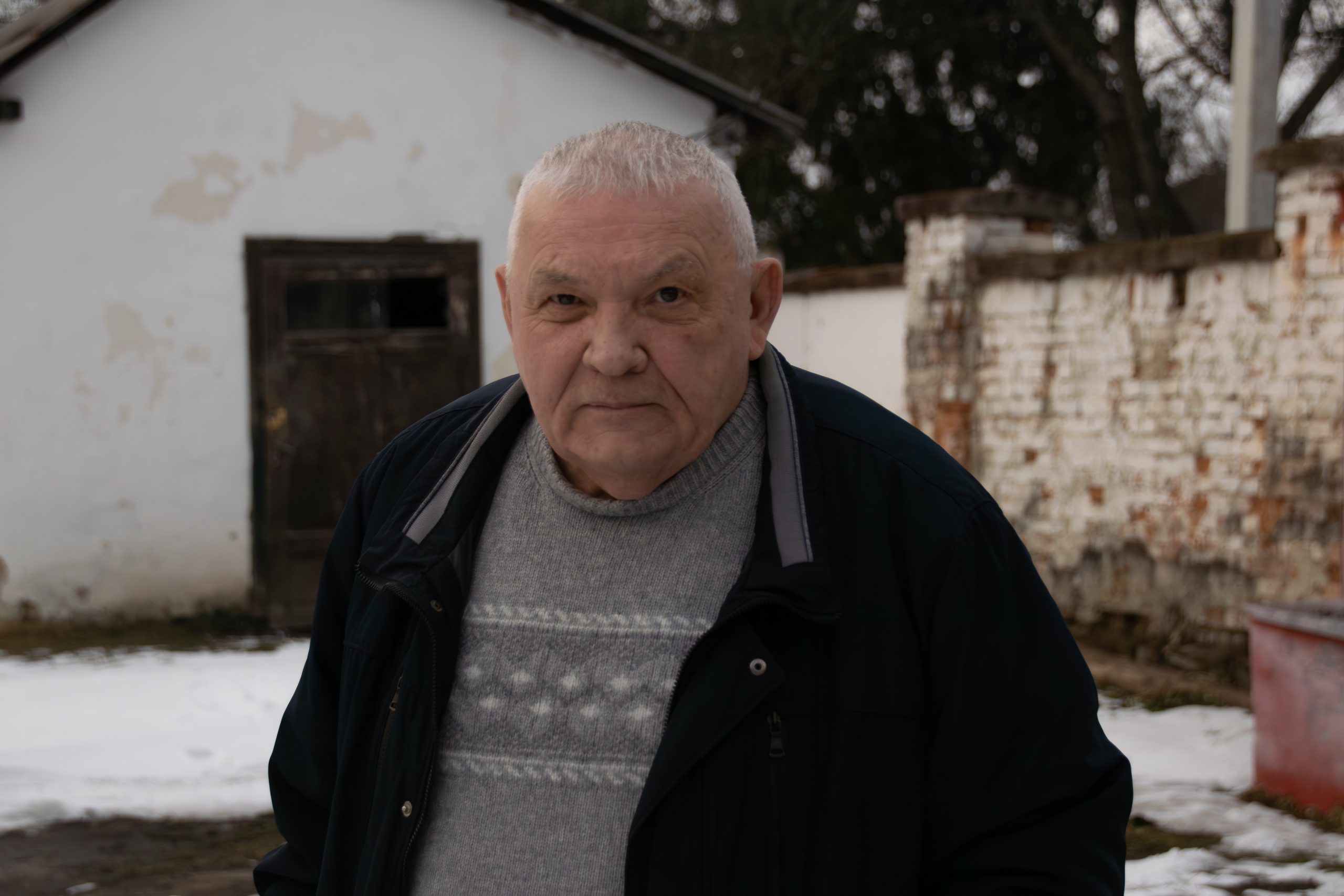
Director of the care home Oleksandr Kolesnikov, photo by Viktoria Novikova
“We restored everything then, rebuilt it. We carried out many repairs,” the director says.
Popasna lived next to the front line for eight years. Just a few kilometers from the town sits occupied territory — including the city of Pervomaisk. Residents had grown accustomed to constant tension: to distant explosions, to military equipment on the roads, to the proximity of the line of contact. Fear became part of everyday life, but fear did not paralyze it. The town functioned, institutions worked, and the care home remained full.
After the full-scale invasion in 2022, Russian soldiers dismantled metal structures, removed windows, and looted the institution’s property. The total damage is estimated at 30 million hryvnias (~ 1 million euro).
“The bakery, the kitchen unit, two large generators and other equipment remained in the destroyed building — there was no possibility to take them out,” says Deputy Director Dmytro Fedchenko, who, along with the head of the institution, organized the second evacuation.
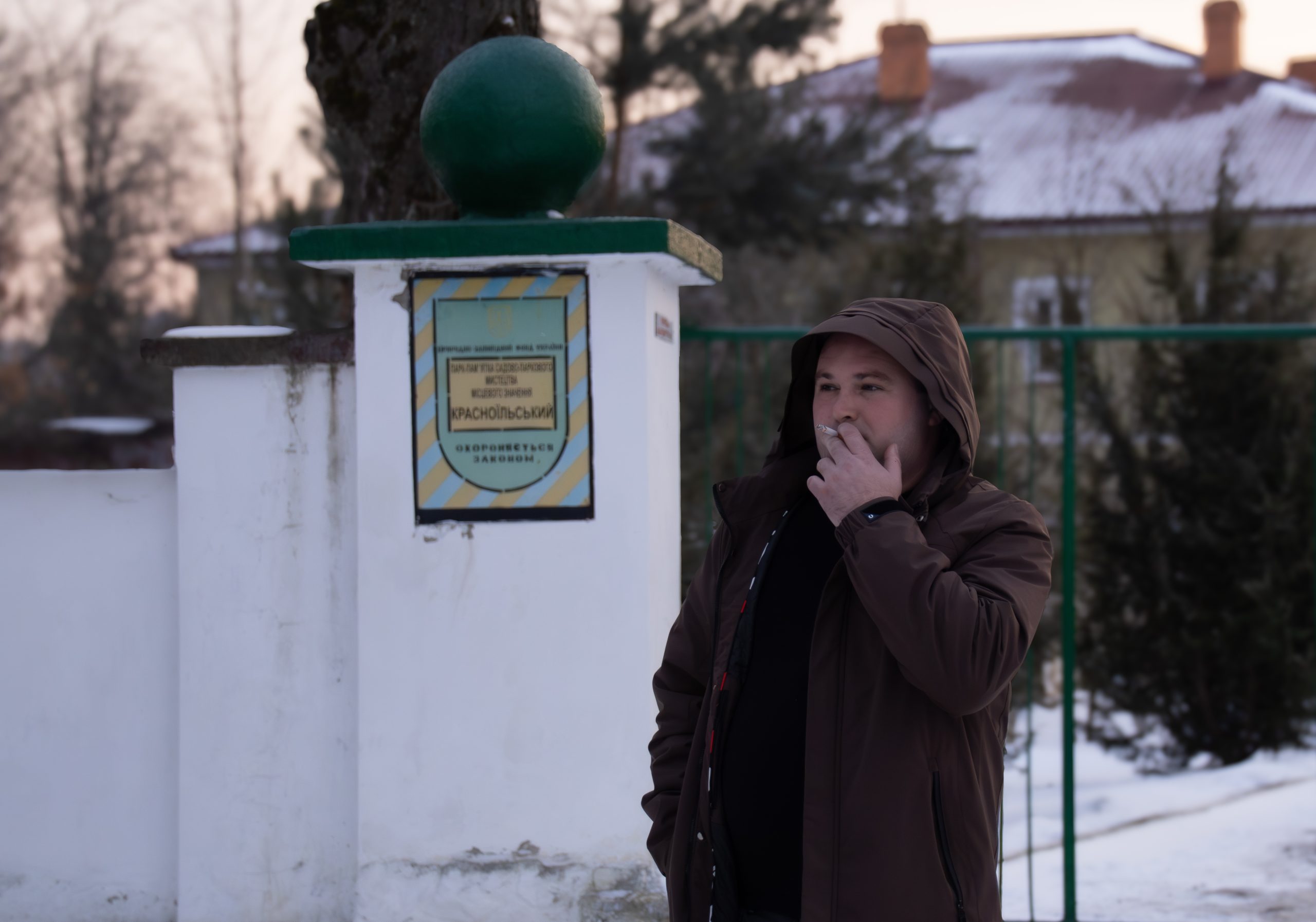
Deputy director of the care home Dmytro Fedchenko, photo by Viktoria Novikova
In March 2022, the issue was no longer the property. It was the people.
After the liberation of Popasna in 2015, the front line moved eight kilometers away.
“For eight years we lived in war,” one member of the staff at the care home says.
Before the renewed invasion, residents and the institution’s administration were morally prepared. There was no panic on February 24 2022. The front line held, and townspeople sincerely believed that Ukrainian forces would hold the territory.
But on the 2nd of March, the situation changed sharply. Shelling did not stop, and moving around the town became extremely dangerous. The care home found itself between two positions — those of the Ukrainian and Russian armed forces. Shells regularly hit the building.
About 100 employees who cared daily for incapacitated residents effectively moved into the institution, living there with their families.
“The road to the institution was under fire, so we decided that everyone would settle inside the building because it was much better there than in the open,” says Oleksandr.
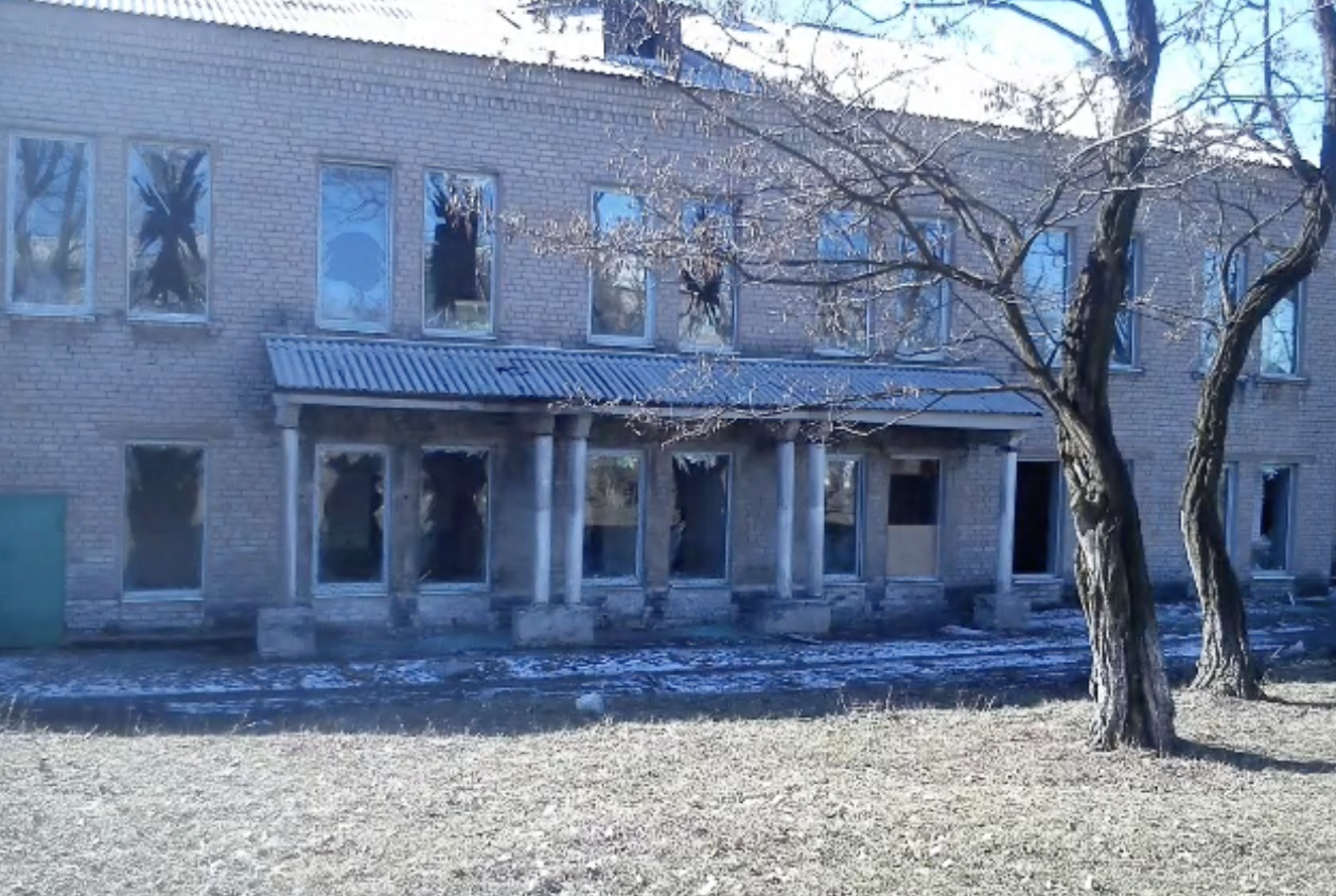
The institution’s building destroyed in 2015, photo provided by the administration
For necessary errands, he drove to the town center several times in March and saw bodies along the roadside. The dead were covered with cloth.
As a result of the rapid westward advance of Russian forces, only two of the nine care institutions in the social protection system of the Luhansk region were evacuated. The rest remained in occupied territory, and the subsequent fate of many of their residents remains unknown.
One of those institutions was a geriatric boarding home in the town of Kreminna, about 40 kilometers northwest of Popasna. On March 11 2022 the building was shelled during the Russian offensive. According to official data, at least 56 residents were killed. Those who survived were taken further into occupied territory by Russian soldiers.
Oleksandr’s daughter was working at the regional office of the State Emergency Service at that time. Along with her colleagues, she arrived in Kreminna to try to rescue people from the burning building.
“My daughter worked in the State Emergency Service… And when she arrived in Kreminna to put out that fire and somehow get someone out of there… they simply did not let them in. And so many people died,” he says.
Thereafter, the question wasn’t whether to evacuate people, but how.
Most residents in Popasna came from territories that Russia had occupied in 2014: Antratsyt, Starobilsk, Martivka, Luhansk. The residents of the care home often spoke by phone with relatives in the occupied areas and heard reassuring words from them: that Russia would not attack and that everything would be fine.
“We had situations like this: we pack our things, collect documents, medical records, passports — put them in boxes. They talk to their relatives on that side and then tell us: ‘We won’t go anywhere, everything will be fine.’ And we would unpack everything again,” Oleksandr Kolesnikov recalls.
But after another incoming strike, the mood would change back again. People felt intense fear from explosions nearby and urged the staff to get out of the town as quickly as possible. This went on for several weeks.
The evacuation finally began on March 19. By that time, all services had already left the town and there was no state transport available. The local authorities, who had also evacuated, and the director of the institution arranged with drivers from other regions. But only one bus arrived for the residents.
“The driver told us he would make several trips. We did not rush; calmly gathered the first batch of personal belongings and documents and seated several dozen people,” a staff member recalls.
But after the first trip, the driver refused to return for the others. He said it was too dangerous to drive under constant fire.
Then, almost as if by magic, two more buses were found. Fire from the Russian side was intensifying, so people were literally being loaded under bullets.
“March was cold then. We went into the rooms, whoever we saw — we grabbed them and loaded them onto the bus in whatever they were wearing. There was no talk about belongings. Equipment, archives — everything was left behind,” recalls Dmytro Oleksandrovych.
People in robes, in pajamas, in wheelchairs were seated on the bus several to a seat because there was not enough space. Wheelchairs and medical equipment were not taken.
All the buses headed to the railway station in Kramatorsk. Another evacuation train was being assembled there. Volunteers gave people tea and helped them board.
The institution’s administration recalls the moment at the station warmly:
“All our people gathered on the platform. They truly felt fear while leaving the war-stricken town and were waiting for salvation. Four carriages were allocated for us and closed from both sides. It was comfortable to travel into the unknown, but farther away from the explosions.”
Three weeks later, that same station would be struck by a missile carrying cluster munitions of the Tochka-U type. On that day, civilians on the platform were also waiting to evacuate to safer areas. As a result of the strike, 52 civilians were killed, including five children, and more than 100 people were injured to varying degrees.
At first, the management did not know exactly where the train carrying the Popasna residents was going. Only once they were in the wagons were they told that they departed to Chernivtsi.
At the new location, the residents quickly recovered from the war and settled into new walls in a quiet region of Ukraine.
They enthusiastically recount how they were rescued in 2022. “Almost nothing of Popasna remains,” one of the residents added.
The occupied town has now been destroyed and looted. The building of the care home there has also been destroyed.
But 127 people left the town alive.
And in those conditions, that was the most important thing.
The text was created in collaboration with The Reckoning Project, a global team of journalists and lawyers documenting, publicising and building cases of atrocity crimes.
This story was originally published in Hungarian on Átlátszó.
Subscribe to Goulash, our original VSquare newsletter that delivers the best investigative journalism from Central Europe straight to your inbox!