




Magyar Purges Orbán-Era Spy Chiefs, Names Russia Hybrid Warfare Expert


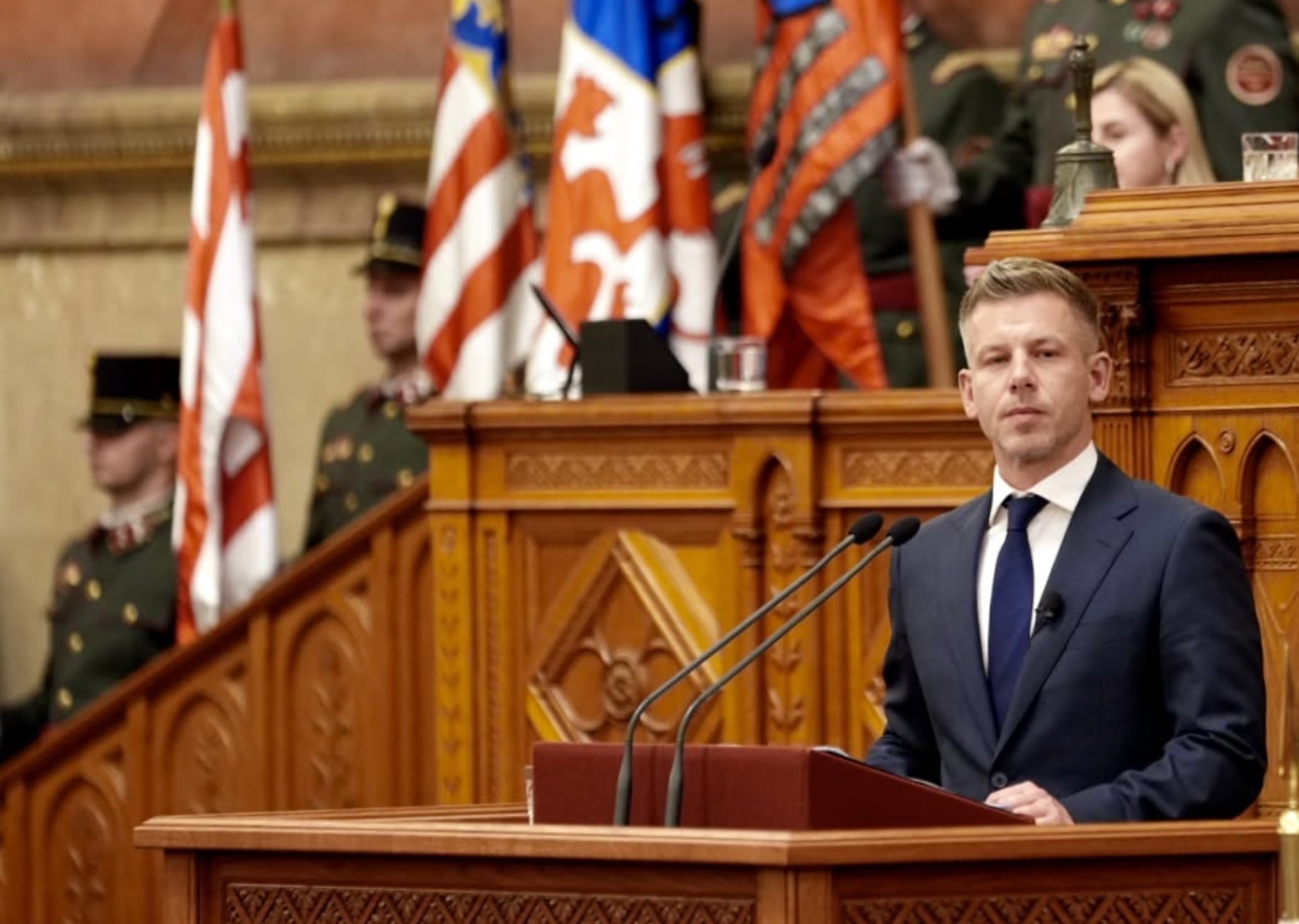
Hungary’s new government led by Péter Magyar has dismissed every Orbán-era director-general of the country’s intelligence agencies. Tapped to oversee the sweeping shake-up is Péter Buda, a respected former counterintelligence officer and outspoken critic of Orbán’s pro-Russian foreign policy.
In a dramatic shake up, Péter Magyar’s new Hungarian government has sacked all of the directors-general of Hungary’s intelligence agencies who served under Orbán. New heads are being appointed gradually, but the most important move is that Péter Buda — a widely respected national security professional whom independent Hungarian media and VSquare have quoted extensively in recent years — has been asked to take up the role of strategic oversight of all Hungarian national security agencies, a position in some respects resembling that of the US Director of National Intelligence.
VSquare originally reported on Buda’s appointment in last week’s Goulash newsletter.
After 16 years of Viktor Orbán’s government marred in surveillance and intelligence scandals — spying on EU institutions, hacking journalists’ phones with Pegasus spyware, surveilling opposition figures — these changes are aimed at rebuilding trust in Hungary’s intelligence community, both at home and among allies.

Péter Buda, Hungary’s new intelligence chief
“The main goal is to defend democracy,” Buda told me. He listed three priorities: depoliticizing the services, professional renewal of the intelligence community, and adjusting to a changed international political and security environment.
A former lieutenant colonel of Hungarian counterintelligence, Buda left the service years ago and went on to become one of the sharpest public critics of the Orbán government’s anti-European, pro-Russian foreign policy, its construction of an international far-right pro-Russian influence network, and its weaponization of Hungary’s intelligence agencies for domestic surveillance of critics.
Buda studied applied intelligence in the United States, Middle Eastern and Islamic studies in Israel, religious studies and international relations and world order in the United Kingdom, and the history of international relations in Switzerland (Geneva Graduate Institute), pursuing master’s and doctoral degrees in the latter two fields. He is also a popular Substack author (both in Hungarian and English), and much of his recent writing has focused on Russian hybrid warfare — a topic he has been closely associated with in his research and throughout his professional career.
“I ultimately accepted the offer because I was given assurances that the goal is to place the national security community on strictly professional footing and to establish its party-political neutrality, so that the services genuinely protect the security of the nation and of democracy, rather than serving whichever party happens to be in power against its political rivals,” Buda wrote on his Substack.
“A further consideration in my decision was the decision-makers’ complete openness to undertaking the professional modernization of the services — an obligation we can no longer defer, given the changed and steadily deteriorating international security environment described in the post above,” he added.
His new role is a state secretary-level professional position. Buda will work alongside and report to Péter Tóth, Prime Minister Magyar’s powerful former campaign manager, who is now national security advisor to the PM. Buda emphasized that his job is strictly professional, strategic, and analytical — his team at the Prime Minister’s Office will not be involved in operational intelligence.
When asked what the new structure resembles, he said it is meant to make the best use of the lessons offered by models from the United States, the United Kingdom, France, the Nordic countries, and the Baltic states. Ending the long-running rivalry between Hungary’s different intelligence services and recalibrating their work according to ‘restored transatlantic priorities’ are also among his stated aims.
On his Substack, Buda pledged that he would only stay in the position as long as his conditions for accepting the job — staying out of party politics and carrying out a professional reform of the intelligence services — were fulfilled.
“An exceptionally good opportunity for change — in an exceptionally bad situation. As long as something can be changed about the latter by seizing the opportunity on the terms set out above, it will have been worth it. But only until then,” he wrote.
This news piece is based on the story originally published in VSquare’s Goulash newsletter.
Subscribe to “Goulash”, our newsletter with original scoops and the best investigative journalism from Central Europe, written by Szabolcs Panyi. Get it in your inbox every second Thursday!

VSquare’s Budapest-based lead investigative editor in charge of Central European investigations, Szabolcs Panyi is also a Hungarian investigative journalist at Direkt36. He covers national security, foreign policy, and Russian and Chinese influence. He was a European Press Prize finalist in 2018 and 2021.