




We Found Victims of Secret Drugging — A Problem Slovakia’s Authorities Can’t See
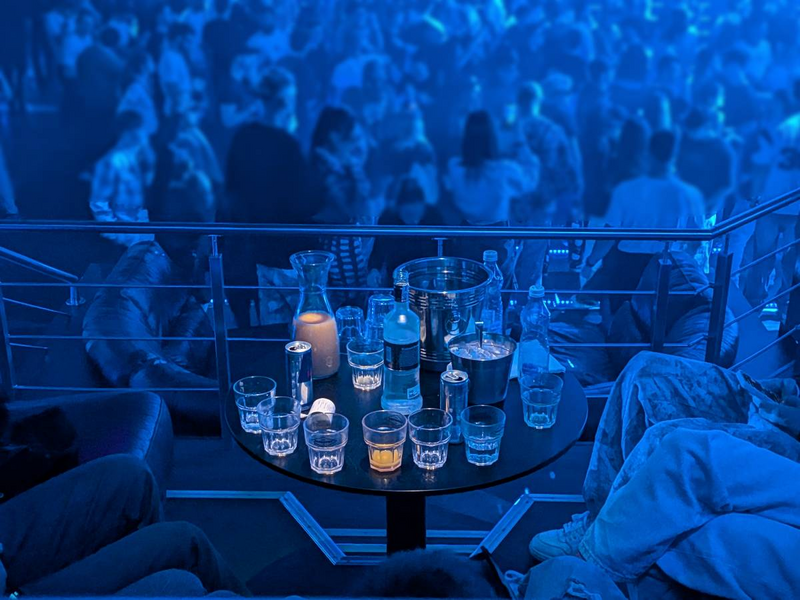
Photo: ICJK/Kristína Böhmer 2026-07-09


Photo: ICJK/Kristína Böhmer 2026-07-09
The Investigative Center of Ján Kuciak (ICJK) has documented at least 10 cases of administering a narcotic substance to another person without that person’s knowledge or consent—so-called drink spiking. We spoke with some of the victims; others we identified through court records, discussions on online forums, or through official interviews and on-background conversations with healthcare professionals and hospitals. The state takes no interest in such attacks or their victims; it doesn’t even know how many there are. Slovak criminal law does not recognize the offense of administering a substance; police and doctors lack guidelines, and victims, fearing their experiences will be downplayed, are left to cope with their trauma alone. Neighboring countries, including the Czech Republic, are amending their laws; the Slovak Ministry of Justice has not responded regarding potential changes.
Daniela and Anna spent a May afternoon at the Italian Market in front of the Eurovea shopping center in Bratislava. After shopping, they shared a mixed drink at a market stall. They stood by an empty table and listened to an Italian band perform.
“We had our purses on the table, and since we know that theft happens, we kept an eye on all our belongings—including our drinks. We just stayed right by the table,” Anna recalls. “And suddenly, we didn’t know what had happened to us.”
ICJK spoke with both women separately (we know their real identities but have changed their names to protect their privacy), and based on their testimonies, we’ve reconstructed the story of what is known as drink spiking—the act of adding an unknown substance to another person’s drink without their knowledge or consent. The perpetrator slips a sedative into the victim’s drink with the aim of robbing them, raping them, or, in some cases, just as a prank.
Slovak law does not recognize this offense, and thus no statistics on it exist. ICJK attempted to map the extent of the problem through interviews with experts and healthcare professionals from across Slovakia, inquiries to the police and the prosecutor’s office, and by seeking out victims.
Testimonies from healthcare professionals confirm that such cases do in fact occur in Slovakia. According to them, spiking occurs in nightclubs, but also at home, where the perpetrators are acquaintances of the victim and intoxicate them through food or water. Several healthcare professionals also confirmed that perpetrators administer unknown substances without consent not only to adults but also to children. In June 2025, Milan Galko, head of the pediatric emergency department in Banská Bystrica, treated a 7-year-old girl who had been drugged by a perpetrator at a swimming pool during a school swimming lesson. She had ingested a combination of methamphetamine, amphetamine, and ecstasy in a piece of chocolate.
According to spokeswoman Eva Kliská, in May of this year, the emergency room at the Kramáre Hospital in Bratislava admitted a victim of spiking and subsequent rape who was brought in by the police. What happened to the victim afterward is unclear. The Regional Police Directorate in Bratislava has repeatedly confirmed to us that they have no record of the case. In response to a follow-up question, Kliská stated that medical staff at Kramáre examined the patient, and that the police investigate whether a sexual assault occurred only if the victim files a criminal complaint.
Here we encounter the problem of a missing law. Administering a narcotic substance without consent is not a criminal offense in Slovakia, and thus the police do not record such cases. A vicious cycle ensues: the lack of statistics creates the illusion that the problem does not exist, which in turn stifles any willingness to address the situation, even though efforts to change the laws are underway abroad.
The experts interviewed by ICJK agree that the most common motivations for perpetrators are rape, robbery, or pranks. In cases of rape, so-called “date rape drugs” are used. The most common substance is GHB. “A potential sexual predator gives the victim GHB; the victim then becomes relaxed and is unable to resist the sexual act, which, unfortunately, they do not even remember afterward,” explains Milan Galko, head of the pediatric emergency department in Banská Bystrica, to ICJK.
Violence can also be a motive for drugging a victim. In a dispute between former spouses, the District Court in Nové Mesto nad Váhom pointed out situations in which the man drugged his wife with hypnotics without her knowledge. In this case, administering sleeping pills was part of a deeper pattern of violent behavior that also included death threats.
If the perpetrator exploits the act of adding an unknown substance to another person’s drink—without their knowledge or consent—to commit another crime, such as rape or theft, the police will record it but investigate the second offense. However, in Slovakia, we cannot punish the mere act of administering a narcotic substance—for example, into a drink.
The problem with not treating drugging a drink as itself as an offense is that, according to Miriam Michal Hrehová of the organization OZ Odyseus, even drugging someone as a prank or without the intent to commit another crime does not mean that the perpetrator will not cause the victim any harm. Take Anna and Daniela, for example, who were neither raped nor robbed but suffer from ongoing health problems. In the end, they did not go to the police. “Because nothing really happened to us,” they both say. They confirmed the intoxication with an over-the-counter test.
Discussions on online forums suggest that victims often decide not to report the incident partly because there is a lack of awareness about spiking—not only among institutions but also among the general public. Victims fear that their experiences will be downplayed by law enforcement and the public.
“You just had one too many,” forum participants comment, and a study from the Czech Republic confirms that police officers speak to victims in a similar manner. The combination of a lack of any system of intervention, insufficient support from those around them, and the persistent trend of blaming victims instead of perpetrators means that victims often end up not seeking help at all, remaining invisible.
When we attempted to map the true extent of this problem, we ran into an institutional wall. After contacting 11 university and teaching hospitals, all regional police headquarters, the National Toxicology Information Center, and the National Center for Health Information (NCZI), the result is clear: it is neither possible to obtain official data nor to achieve justice.
By comparison, in neighboring Czechia, a survey by the organization Beat Sexism conducted at the turn of 2024 and 2025 showed that approximately one in three people has experienced drink spiking at Prague nightclubs.
Updated June 26, 2026, 1:00 p.m.: We have received a statement from the Ministry of Justice, which claims that it has no record of a request to amend the legislation. “The fact is that the mere administration of a narcotic or psychotropic substance (e.g., GHB, Rohypnol, ecstasy) without the victim’s knowledge is considered unauthorized provision or incitement to substance abuse, which is punishable as the crime of promoting drug addiction. If the administration of a drug or other substance causes the victim to suffer an adverse health condition, collapse, loss of consciousness, psychological trauma, or severe poisoning, the act is classified as intentional bodily harm or serious bodily injury,” wrote the Ministry of Justice.
They Didn’t go to the Police
The effects of the unknown substance set in with tremendous intensity. Anna had walked just a few meters from the Italian market when she collapsed to the ground. “My friend told me, ‘Give me your hand and I’ll help you up,’ but I fell again. I told her I couldn’t even lift my arm—I was completely out of it,” Anna says, describing the moment she lost control of her own body.
Two unknown men approached them—tall, burly, dressed in white T-shirts and short jeans. They started lifting Anna and dragging her into a taxi. The next day, Daniela found photos on her phone—she’d taken them while they were dragging Anna. The men eventually let the women go in the taxi they’d called themselves and disappeared into the crowd. “We don’t really remember what happened then—whether they got scared when she took the photos, or what,” Anna reflects.
The taxi took the women to the building where Daniela, with the driver’s help, carried the unconscious Anna into the apartment. Immediately upon arrival, Anna began vomiting intensely on the floor in the entryway. Daniela, on the other hand, was unable to get the substance out of her system. However, both women continued to experience physical discomfort in the days that followed. Daniela had severe stomach pains, was shaking, and was unable to eat almost anything the next day.
The Eurovea shopping center was unaware of the addition of an unknown substance by another person without their knowledge or consent at the Italian market. Spokesperson Daniela Stričková referred us to the Italian-Slovak Chamber of Commerce, which organized the event and rented the space at Eurovea. They, too, were unaware of any spiking at the market. Neither the victims nor law enforcement authorities have contacted them, confirmed Marcela Szabová.
Two weeks after the poisoning, both women were in such poor health that Anna had to seek professional medical help. “The doctor told me she would assess the situation based on blood tests and then perform an ultrasound of my internal organs.
If the pain doesn’t subside, I’ll have to undergo a gastroscopy,” Anna says of the long-term consequences. Before publication, she told us that her liver and pancreas tests came back normal, but even after a month, she still had to take detox drops and paste.
The women were only able to confirm the cause of their symptoms thanks to an over-the-counter test from a pharmacy, which they took the day after the incident and which showed the presence of barbiturates and amphetamine. Dr. Milan Galko told ICJK that this is a “very dangerous combination”. Barbiturates have a strong sedative effect, causing extreme fatigue, as well as possible muscle paralysis and even unconsciousness. Amphetamine, on the other hand, is a stimulant that boosts performance. “They are often combined because sedatives mitigate some of the side effects of stimulants, but at the same time, the stimulant can mask certain symptoms of an overdose caused by the sedative. An incorrect ratio can cause heart rhythm disturbances, respiratory depression, and various seizures,” he added.
What to Do If You Suspect Your Drink Has Been Spiked? Advice from Veronika Šimková of the Blurred by Beat Sexism project
Ask for help: Immediately tell your friends, security, or bar staff about your condition. Do not go to the restroom alone or leave the venue by yourself.
Keep your drink: If possible, keep your drink or bottle. Synthetic drugs are flushed out of the body extremely quickly (often within just a few hours), so the drink itself remains the only tangible evidence.
Go out into the cooler air: Due to the risk of overheating and collapse, ask someone close to you to accompany you outside.
Stay in a stable position: If nausea or loss of consciousness sets in, it’s crucial to be in a stable position on your side to prevent choking if you vomit.
Hospitals and the Police: We Do Not Keep Records
The case of a young woman who arrived at the Kramáre Emergency Room accompanied by police—at approximately the same time as Anna and Daniela’s intoxication—had a different outcome, according to Eva Kliská, spokesperson for the University Hospital in Bratislava. “The young woman couldn’t remember exactly what had happened, but she suspected she had been sexually assaulted,” says Kliská, adding that the woman was examined at the hospital, samples were taken, and psychological support was offered.
According to Kliská, while she can cite this specific recent case, she is unable to provide statistics covering a longer period because cases involving the administration of an unknown substance without the person’s knowledge or consent are not recorded separately; she referred us to the police.
The situation is similar in other hospitals. Six of the 11 hospitals that responded to questions from the Ján Kuciak Investigative Center confirmed that they do not keep statistics on unintentional poisonings, and some added that they focus on the patient’s medical condition, not on the circumstances leading to the patient’s injury or harm.
ICJK inquired about the number of such reports across Slovakia at the National Toxicology Information Center (NTIC), which provides telephone consultations on acute intoxications to doctors, other healthcare professionals, and the general public.
To try to get a better sense of scope, we asked about telephone inquiries regarding spiking, cases involving substances such as GHB, GBL, benzodiazepines, ketamine, or Rohypnol—which are used for spiking—as well as about the analysis itself, toxicological testing, the likelihood that a hospital would detect GHB or GBL in urine or blood, and the recommended procedure in cases of suspected spiking. The NTIC responded that they have not recorded any cases of spiking in recent years, and that their facility is currently undergoing renovations, so they are only providing urgent 24-hour toxicology consultations.
The National Center for Health Information (NCZI) also does not have data on spiking. According to NCZI spokesperson Simona Uhlárová Jarošová, they only have information on addiction treatment.
Nor does the General Prosecutor’s Office have statistics “exclusively regarding such cases,” spokesperson Zuzana Drobová confirmed to ICJK. “However, we are aware that regional and district prosecutor’s offices have encountered such cases.” She recommended that we contact the police directly, as they have jurisdiction over these cases.
Since the term drink spiking—or any term with a similar meaning—does not appear in Slovak law, we asked the Police Presidium how they centrally record and evaluate these cases, and under which criminal offenses they are most frequently classified. Police Presidium spokesperson Lea Vilhanová responded only that it depends “on the specific factual circumstances.”
ICJK sources within the police confirmed that crime reporting—and thus statistics—are a “huge problem” in Slovakia. As a result, there is a lack of a systematic solution and data for research that could lead to reforms and improvements. According to ICJK sources, the crime reporting system is still not electronic in many cases; it is based on outdated templates, and the introduction of new criminal offenses is “a relatively big problem.” The fact that regional police headquarters do not have statistics on spiking and other offenses is, according to the source, “not an excuse, but a fact.”

Source: ICJK/Kristína Böhmer
Modus Operandi: What Is Being Poured Into Drinks?
Additional proof that date-rape drugs are available here is found in a ruling by a Bratislava court from February 2023. This case reveals in detail the dangerously simple modus operandi of the dealers of these substances. The convicted Bratislava resident purchased liquid GHB (or the substance GBL) in bulk online, likely from the Netherlands. A regular courier service delivered the shipments to him in the capital.
The perpetrator would decant liter-sized containers of the drug into small bottles in his apartment, which he then sold for 20 to 40 euros to end users in Bratislava. During a search of his home, police seized a stockpile sufficient to produce 400 doses. The man ultimately left the court with a non-probationary sentence of 8.5 years behind bars.
Milan Galko, head of the pediatric emergency department in Banská Bystrica, is also familiar with GHB and has noticed an overall increase in cases of intoxication—both intentional and unintentional—even among minors. According to Galko, GHB—gamma-hydroxybutyric acid—is a powerful sedative that causes drowsiness, amnesia, relaxation, and euphoria. In medicine, it is used under strict control, for example, to treat narcolepsy, but on the black market it is known as “liquid ecstasy.” “A potential sexual predator gives the victim GHB; the victim then becomes relaxed and unable to resist the sexual act, which, unfortunately, they do not even remember afterward,” said Galko.
Galko explains that medical personnel examine the patient “from head to toe to check for any bruises.” In cases of suspected rape, they collect DNA samples. However, gathering evidence is very challenging because, since the victim is relaxed under the influence of GHB, medical personnel may not find any signs of violence.
Furthermore, victims often do not seek medical help because they cannot explain to themselves what actually happened to them. Research suggests that after taking the substance, victims lose control of their bodies, have blurred memories, and experience intense fear, disorientation, and later, paralyzing shame or guilt. “The first symptoms are usually a sudden feeling of overheating, nausea, vomiting, and blurred vision. You feel like you’re sinking,” says Veronika Šimková from the Czech initiative Blurred by Beat Sexism.
According to Šimková, a victim has about half an hour from the first symptoms until they completely collapse.
It is therefore crucial to act immediately. If she is on a date and suspects her partner, she should approach the bar staff. “However, if they aren’t trained, it can end in chaos, and the perpetrator may ultimately have no trouble putting the victim in a taxi,” warns her colleague Blerta Sejdija.
In addition to spiked drinks, according to Sejdija and Šimková, so-called needle spiking—that is, intoxication via a syringe right in the crowd—is also becoming increasingly common in Europe. As Dr. Milan Galko confirmed to ICJK, if the perpetrator uses, for example, a thin insulin pen, the victim may not even notice the injection in a crowded club and may attribute it to a fleeting touch from a passerby. The fact that needle attacks are not an unknown phenomenon in Slovakia is also demonstrated by a trial in Nitra in 2021, during which the perpetrator broke into the victim’s home, held her there as a hostage, and forcibly injected her in the shoulder with the veterinary sedative Xylazine. After the attack, the victim lost consciousness and was hospitalized with serious health complications.
The trial of paramedic Ivo P. received particular media attention. He is accused of injecting a student named Soňa in the thigh with ketamine in Bratislava in September 2023, abducted her, and kept her in a drugged state in an apartment using other substances for approximately 25 hours, during which time, according to the prosecution, the rape occurred. The victim was found unconscious near a hospital in Bratislava’s Petržalka district.
Prague is Familiar with the Statistics
Blerta Sejdija from the organization Beat Sexism has personal experience with drink spiking. A perpetrator drugged her when she was 17, and at the time she had no one to turn to for help. There was a lack of awareness and a support network, so she ultimately did not report the incident. The organization raised the issue and discovered that this was not an isolated problem.
The results of their exploratory study, which focused on young adults and people frequenting Prague’s nightlife venues and was conducted at the turn of 2024 and 2025, showed that approximately one in three people in Prague has personal experience with drink spiking. This most commonly affected are younger age groups: just under 45 percent of survivors were between the ages of 19 and 24, and 33 percent were between 16 and 18. Perpetrators intoxicated their victims not only through alcoholic beverages but also through non-alcoholic drinks.
More than 91 percent of the victims were women. LGBTI+ people are also frequent victims of drink spiking, making nightlife in clubs more risky for them. One example is a tragic case at a Prague LGBTI+ venue, where investigators began prosecuting a man who secretly slipped liquid ecstasy (GHB) into a 27-year-old foreign national’s lemonade prior to a planned sexual act. The victim died as a result of acute poisoning and heart failure. The perpetrator faces up to 18 years in prison for causing death.
The research has so far focused on Prague, but project co-founder Veronika Šimková confirmed that the organization is being contacted by victims from various regions. Most recently, it was a woman from České Budějovice. They therefore want to expand the research, not only to regions within the Czech Republic but also to Slovakia, where accurate data on spiking is completely lacking.
As Sejdija added, “We’re talking, after all, about an invasive crime in which a narcotic substance is administered to you, and you don’t know what the consequences might be. Sometimes even fatal ones.”
How Other Countries Are Addressing This
While Slovak institutions turn a mostly blind eye to spiking, several European countries have already overhauled their legislation. The United Kingdom has gone the farthest, where secretly administering a narcotic substance—whether in a drink, food, vape, or via a syringe—carries a penalty of up to 10 years in prison. It is even a criminal offense to pour hard liquor into someone’s drink without asking, in order to get them drunk more quickly. Since the local police have adopted a clear methodology, the numbers have skyrocketed: between 2022 and 2023 alone, they recorded 6,732 cases. However, international organizations such as Drinkaware warn that this is only the tip of the iceberg, as monitoring data for 2025 indicates that only about 23 percent of victims report the assault to the police.
France primarily associates spiking with the intent to commit sexual violence and imposes a five-year prison sentence for the unintentional administration of a substance (seven years if the victim is a minor). The country began to take the issue of “chemical subjugation” extremely seriously following two major scandals: the trial of Gisèle Pelicot, whom her husband drugged without her consent for nearly 10 years and allowed to be raped by strangers, and the January conviction of former senator Joël Guerriaud for drugging his fellow lawmaker. Furthermore, the global scale of the phenomenon was confirmed by a recent CNN investigation, which uncovered hidden networks on Telegram where men share instructions on drug dosages and sell access to videos of the rape of drugged partners. The trail of one of the perpetrators led to Poland, where he was arrested by police in April 2026.
Efforts to find a systemic solution are also evident in Ireland and Germany. The Irish Parliament is currently debating a specific bill focused exclusively on spiking, which explicitly identifies the perpetrators’ motives and mandates a 10-year prison sentence. In late May 2026, German Justice Minister Stefanie Hubig presented her own proposal to amend the law, stating that rapes involving the use of sleeping pills are particularly insidious and that criminal law must respond to them with a firm hand.
Modern definitions of consent in sexual offenses are a significant aid in proving cases abroad. Countries such as Belgium, Finland, Sweden, and Poland (where the new definition has been in effect since 2025) have adopted a definition of consent based on voluntariness. If the victim is under the influence of a narcotic substance, they are unable to express their will, and any sexual act is automatically considered rape.
The neighboring Czech Republic is also currently amending its law. In the Czech Republic, just as in Slovakia, current legislation does not consider drink spiking to be a criminal offense or an aggravating circumstance, and there is no legal definition for it. According to Šimková, such incidents usually fall under the categories of bodily harm or rape, if it can be proven that rape occurred. As she adds, “only the consequence was addressed, not the initial act.” The base sentence for committing this new criminal offense would be up to one year in prison. A perpetrator who sought to facilitate another criminal offense by spiking a drink with a narcotic substance could face up to three years in prison. If the unauthorized administration of a narcotic substance resulted in serious bodily injury to the victim, the court could impose a prison sentence of up to eight years. In cases where the victim dies, the offender could face up to 10- years in prison.
Zuzana Drobová, spokesperson for the General Prosecutor’s Office, confirmed that they are closely monitoring legislative developments regarding “spiking” in other countries; however, the Ministry of Justice is responsible for drafting legislation. The Ministry did not respond by the deadline to questions from the ICJK regarding whether the Minister of Justice is aware of the problem and whether Slovakia will amend its laws as neighboring countries have done.
A comparative analysis by the Czech Parliamentary Institute, which was made available to ICJK, shows that penalties for the administration of a substance and the subsequent act vary significantly across Europe.
This investigation was originally published in Slovak on ICJK.sk.
Subscribe to “Goulash”, our newsletter with original scoops and the best investigative journalism from Central Europe, written by Szabolcs Panyi. Get it in your inbox every second Thursday!