




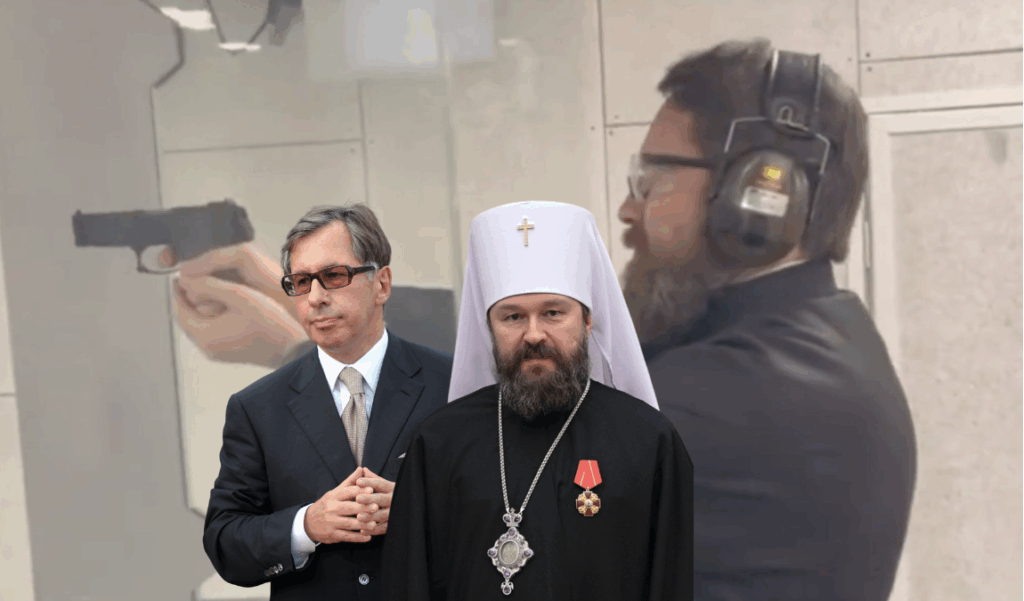
FSB-Linked Priest Meets Sanctioned Billionaire — While Hungary Lobbies on His Behalf
Illustration: Re:Baltica 2025-12-04


Illustration: Re:Baltica 2025-12-04
Sanctioned Russian oligarch Petr Aven has been visited in Latvia by a high-ranking priest of the Russian Orthodox Church, who at the time represented its interests in Hungary, according to information available to Re:Baltica. Hungary regularly lobbies for Aven’s removal from the European Union (EU) sanctions list.
“The meeting was in no way connected to sanction-related issues,” Aven told Re:Baltica in a written statement. He explained that he has been well known in Hungary since his time working in Russia’s government and long cooperation with the banking sector. “As far as I know, I was supported not only by Hungary, while Latvia — represented by Foreign Minister Baiba Braže — was essentially the only country that aggressively pushed for my name to remain on the European Union sanctions list. This happened despite the fact that I am a Latvian citizen.”
The Russian Orthodox Church supports the Kremlin’s policies and is used as a vehicle for Russia’s soft power abroad. Its Patriarch Kirill blesses Russian soldiers and justifies the invasion of Ukraine in sermons.
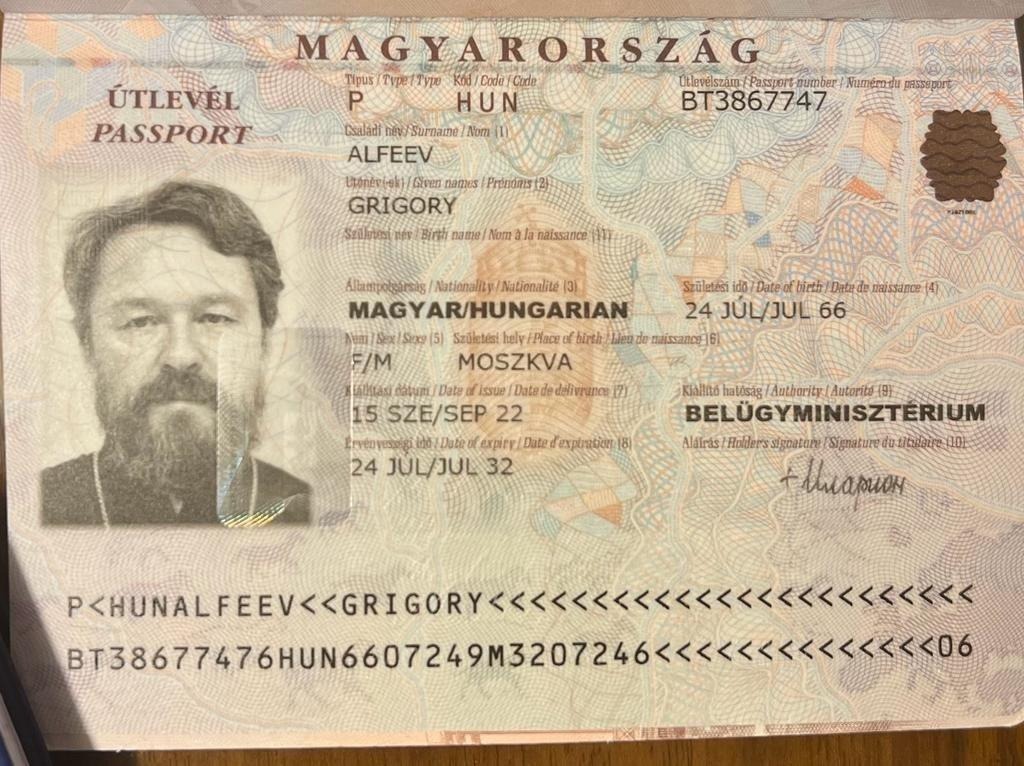
Metropolitan Hilarion of Hungary (real name Grigory Alfeyev) arrived in Latvia in October 2023 to meet with Aven. Until mid-2022, he headed the Department of External Relations of the Russian Orthodox Church, essentially acting as its minister of foreign affairs. He was rumored to be in line to become the next patriarch. However, in mid-2022, he was sent to lead the work of the church in Hungary, where the Kremlin-friendly Viktor Orbán is in power. Later, publications appeared in the media in which Hilarion was described as a liaison between the Kremlin and the Orbán government. Hilarion was also granted a Hungarian passport, which allows him to travel freely within the EU.
From Lithuania to Madona
In autumn of 2023, Hilarion arrived in Latvia from Lithuania, where he had participated in celebrations in honor of the bringing of an Orthodox icon to Vilnius. “He took part in the festive service and the procession of the cross, during which we especially prayed for the end of the war and start of peace in Ukraine. The nature of the visit was private,” Maria Yakubovska, the press secretary of the Lithuanian Orthodox Church, told Re:Baltica. She noted that Hilarion has special ties with Lithuania. He served in Kaunas in the 1990s and advocated the restoration of Lithuania’s independence, for which he later received official recognition from the Lithuanian state.
When Hilarion entered Latvia, he was met at a gas station in Jēkabpils by a car sent by Aven and taken to the oligarch’s Klauģi manor. The clergyman was accompanied by his then assistant George Suzuki, who later accused the patron of sexual harassment, having an excessively lavish lifestyle for a clergyman, and of collaboration with Russian special services (Hilarion denies the accusations, links them to blackmail, and promises to sue). Suzuki gave Re:Baltica colleagues based in Hungary photo and video evidence proving Hilarion’s visit to Aven.
Re:Baltica has no information about the priest’s meeting with any other people in Latvia or whether he performed official church functions, as Hilarion did not respond to questions.

On October 10, 2023, a car sent by Aven waiting for priest in Jēkabpils.
Avens: We Talked about Old Times
Aven, who responded to Re:Baltica’s questions in writing through his representative, stated that “the main purpose [of the meeting] was my long-standing and in-depth interest in the events in Russia in the 1990s.” He says he is writing a third book about this period and also wants to make a film about the subject. As Hilarion is deeply familiar with changes the church underwent at the time, Aven claims to highly value him as an author and intellectual, and was interested in his perspective and memories.
The visit was allegedly spontaneous: “We called each other when Hilarion was in Vilnius, and agreed to meet and talk. We [have been] acquainted since the early 1990s and occasionally met in Moscow.” He said he knew nothing about the clergyman’s possible ties to intelligence services and has not met him since that day.
Hilarion’s then-assistant Suzuki offers a different version of events: the cleric was a liaison between the Hungarian government and Russian oligarchs. This could be one of the reasons that the Hungarian government advocated for Aven’s removal from the EU sanctions list (Hungary also fought against the plan to include Patriarch Kirill on it). Hilarion allegedly told the aide that he wanted Aven to support him financially, but that the priest had to fulfill a number of conditions.
Aven stressed to Re:Baltica that the meeting had no connection whatsoever to sanctions-related matters. According to him, he is well known in Budapest due to his work in the Russian government and his cooperation with the banking sector. “As far as I know, I was supported not only by Hungary, while Latvia – represented by Foreign Minister Baiba Braže – was essentially the only country that aggressively pushed for my name to remain on the EU sanctions list. This happened despite the fact that I am a Latvian citizen,” Aven said.
Why Was Aven Subjected to Sanctions?
- Aven built a business empire in Russia in the early 1990s. The most prominent of those businesses is “Alfa Group.”
- After Russia’s invasion of Ukraine, the EU, US and UK placed Aven on their lists of sanctioned entities, believing that the companies he owned provided strategically important services to the Russian economy.
- The EU sanctions justification states that Aven is one of approximately 50 Russian oligarchs who have met regularly with the Russian president, including immediately after the invasion. “The fact that he was invited to participate in this meeting demonstrates that he is a member of the inner circle of … Vladimir Putin,” the statement said. It claims Aven has supported the Russian regime responsible for the annexation of Crimea and the destabilization of Ukraine, and has also benefited from it.
- Aven challenged this decision in the EU Court and won at first instance. Latvia appealed this decision.
- Aven is connected to Latvia by citizenship, which he was able to claim because his grandfather, a Latvian rifleman, had it. The KNAB investigated suspicions that political corruption had played a role in granting citizenship in 2016, because Aven did not speak Latvian fluently, which is one of the prerequisites. No corruption was found. Talk of possible reviews to revoke citizenship remained just talk.
- Before the sanctions were extended, lobbying campaigns were visible in the Latvian public space, arguing that “the state should not turn against its citizen” who invests in charity.
- So far, those campaigns have been unsuccessful. The last time EU foreign ministers extended the sanctions against Aven for six months was in September 2025. Hungary again advocated for removing him and several other oligarchs (who also have properties in Latvia) from the list, but ultimately backed down.
Czech Republic Wants to Impose Sanctions
Re:Baltica could not reach Hilarion, but his career has been on a steep decline since the events described here. After an assistant’s public accusations in the summer of 2024, the clergyman was removed from the church leadership in Hungary. Now he serves at a church in Karlovy Vary, Czech Republic, the same church of which previous leader, Nikolai Lishchenyuk, was expelled from the country due to the potential threat to national security. Czech intelligence has described the church as a secret meeting place for Russian spies.
Meanwhile, a video released to and making its rounds in the media shows Hilarion practicing at what is said to be the FSB shooting range in its headquarters in Lubyanka, Moscow. The Hungarian journalist who published it, VSquare’s Szabolcs Panyi, told Re:Baltica that the video was most likely taken in the first half of 2022. The FSB shooting range was identified by people familiar with the building’s structure, and Suzuki says the clergyman told him about it. Hilarion himself said to the BBC that some of Suzuki’s materials are “falsified” and promised to sue. He claimed that he has never worked for Russian intelligence: “I have never had any tasks, duties or requests from them.”
According to Panyi, however, several intelligence agencies of Central European countries held other views. A source in the Hungarian government told him that, during Hilarion’s time in Budapest, the services had linked him to the FSB. It was unclear whether he was an officer or a secret agent. The Hungarian Constitutional Protection Office opposed granting citizenship to Hilarion/Alfeyev in 2022 due to security risks. While the government ignored this advice, Hungarian counterintelligence informed counterparts in other European countries of its worries.
Czech media reports that, after information emerged about the clergyman’s possible cooperation with the FSB, the Czech government is considering including him on its national sanctions list. The Czech Republic’s next prime minister, Andrej Babiš, who is considered an ally of Viktor Orbán, is allegedly not opposed to it. The Czech Foreign Ministry refused to reveal to Re:Baltica how far they have gotten with the sanctions proposal. “We never comment on that in advance as that would contradict the essence of the sanctions,” said its press secretary Daniel Drake.
Ildikó Kovács from 24.hu contributed to this report.
This investigation was originally published on Re:Baltica.
Subscribe to Goulash, our original VSquare newsletter that delivers the best investigative journalism from Central Europe straight to your inbox!