




Orbán’s Foreign Payroll: How Hungary Spent a Fortune to Buy Influence on the Western Right
Illustration: Montage by Átlátszó; image sources: Danube Institute, Eurasia magazine 2026-05-27


Illustration: Montage by Átlátszó; image sources: Danube Institute, Eurasia magazine 2026-05-27
Átlátszó has been granted access to contracts signed by the Danube Institute, a key component of the Orbán government’s attempt to build a network between European right-wing populists and the MAGA world. Just before the election, the Danube Institute signed contracts with foreign partners worth record amounts, using public funds to make inroads on the Anglo-American right, and increasingly, in Asian countries.
The Lajos Batthyány Foundation (BLA), which operates the Danube Institute, a hub for the global populist right, has paid over €420,000 (HUF 150 million) to its international fellows. In 2025, months before the election that led to the stunning defeat of Viktor Orbán’s ruling Fidesz party, BLA doubled its spending to its foreign partners, and particularly to public figures of the Western right-wing media and think-tank world.
Since 2021, the formerly private BLA has been operating as a so-called public-interest asset manager, distributing billions of forints in public funds, provided by the Prime Minister’s Cabinet Office, led by Orbán’s second-in-command, minister Antal Rogán.
Although BLA professes to “support for democratic public life in Hungary,” its spending clearly reflected the interests of the ruling party, providing a fortune for Hungarian GONGOs (government-organized non-governmental organizations) campaigning for the ruling party.
Its main beneficiaries included groups such as the Center for Fundamental Rights, best known for co-organizing CPAC’s events in Hungary.
Hungary as MAGA’s Test Lab
BLA lavishly supported Viktor Orbán’s effort to build an international network of the far right through the organization called the Danube Institute (DI). Átlátszó first investigated DI in 2023: as we reported at the time, the institute provided support in the form of research fellowships to numerous foreign public figures, particularly Americans close to Donald Trump and the Republican Party.
Their contracts went beyond standard research grants: DI fellows were also instructed to appear in foreign and Hungarian media, and to network and find new contacts in media, academia, and right-wing circles abroad.
Reading the publications by DI fellows, one notices that they tend to contain a uniform message: that the Orbán government is a leader in a rising international right-wing movement, the policies of which could serve as a model abroad, particularly in the United States.
We obtained DI’s research fellows’ contracts through freedom of information requests. The total value of these contracts increased year by year: in 2022, a total of €214,700 EUR (HUF 76.76 million) was paid to a few dozen partners; in 2023, the figure rose to €500,667 (HUF 179 million) and in 2024, it reached €794,354 (HUF 284.6 million).
However, our requests were not completely fulfilled. BLA only allowed us to view redacted copies of the contracts, most of them lacking the names of the researchers.
BLA cited the EU’s GDPR data protection initiative and had fellows sign statements asking to have their names redacted from the contracts (despite the fact that they received public funding from the Hungarian state, and that their names are otherwise freely available on DI’s website).
Regardless, several fellows’ names can be deduced from the topics of their research, the titles of their lectures and writings, and, in some cases, their GDPR statements, including Timothy Burns, Carlos Roa, and British conservative politician Lord David Frost.
Record Spending Before Election Year
In 2025, DI’s partners entered contracts with a total value of more than €1.1 million (HUF 389 million), more than any year before. The 2025 list includes contracts that will expire in 2026, meaning that, even after the election, Orbán’s international admirers are continuing to receive Hungarian public money.
Below is a detailed table of DI’s visiting fellows’ contracts. We have indicated where the name of the contracting party is known or can be clearly inferred.
A typical DI visiting fellow receives a monthly sum well over the Hungarian median wage. Some received fees for ad hoc assignments, with sums of several million forints exchanged for short, several-week-long projects – the highest amount going to British political scientist Timothy Burns, who received approximately €11,000 (HUF 4.5 million) in 2024 for holding a seminar.
The majority of contracts contain recurring elements: most partners are commissioned to prepare some form of research paper, sometimes on a specified topic and word count, sometimes without any detail. Whether these projects are ever actually completed is unknown, as the BLA tends not to publish these studies.
Most researchers were also expected to appear in the Hungarian media, which typically involved giving interviews to pro-Orbán publications such as Mandiner or Magyar Nemzet.
Not Your Standard Research Grant
Most contracts also stipulate that the BLA may, if necessary, ask researchers to participate in international conferences, in which case the foundation covers travel costs.
In addition to international conferences, two researchers also received funding to attend the Bálványos Summer Free University and Student Camp (also known as Tusványos) – a yearly festival held in Băile Tuşnad, Romania, the highlight of which is a speech by Viktor Orbán. Nearly all fellows were also expected to publish at least once in the semi-governmental publications Hungarian Conservative and Hungarian Review.
For example, American analyst Logan C. West wrote about Viktor Orbán’s political director Balázs Orbán’s foreign policy strategy in the 2024 July issue of the magazine Eurázsia (Eurasia). In the magazine’s promotional material, West is quoted as saying that “Hungarian diplomacy shows caution in the face of a chaotic past and is aimed at building a more stable future.”
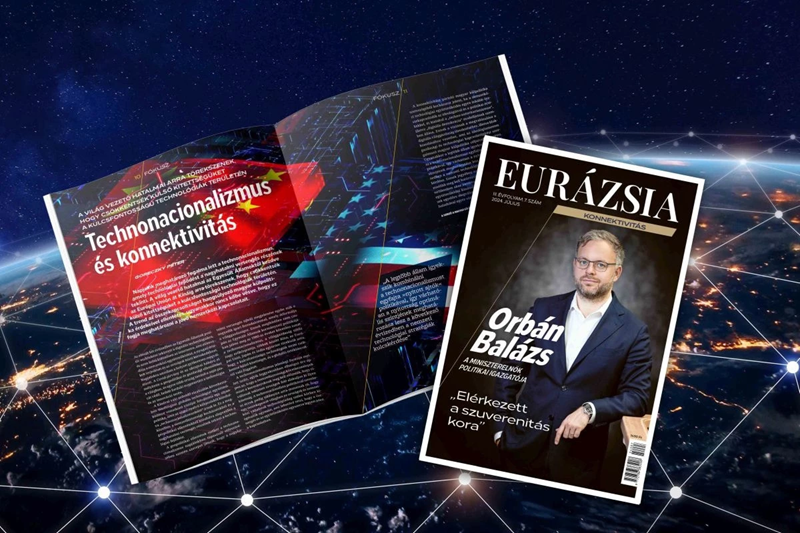
Source: Promotional image of the ‘Eurázsia’ issue with Logan C. West’s article
At the time, West was receiving a monthly salary of €4,000; appearing in Hungarian media was one of his tasks, along with organizing conferences, workshops, and other assignments. Several researchers also received funding to publish articles in foreign publications picked by BLA: most often, The Spectator, The American Conservative, The Economist, and The Wall Street Journal.
For example, articles by Carlos Roa, one of the DI’s highest-paid researchers, on topics unrelated to Hungary appeared in the American Conservative and The Wall Street Journal.
Roa, who worked for over a year for a monthly salary of $10,000, made foreign policy recommendations to the Trump administration in both publications.
Some partners received funding for their own existing publications and programs. For example, American philosophy professor Peter Boghossian received funding for six episodes of his series Spectrum Street Epistemology.
Boghossian received a gross monthly salary of $5,300 until the beginning of this year, for which he had to continue producing his series, appear in Hungarian media, and provide advice on improving the DI brand.
Inroads with the British Right
Besides the MAGA world, there is significant overlap between DI’s fellows and the editorial staff of the British publication UnHerd. Like The Spectator, UnHerd is owned by the hedge fund manager Paul Marshall, who is one of the premier patrons of British right-wing media and who also donated to the Brexit campaign in 2017.
We identified one contract, dated last summer and worth €5,000 per month, as Philip Pilkington’s based on its content (networking in the British media). Pilkington, who is also a researcher at the Hungarian Institute of Foreign Affairs and the founder of the “Multipolarity” podcast, is a regular contributor to UnHerd.
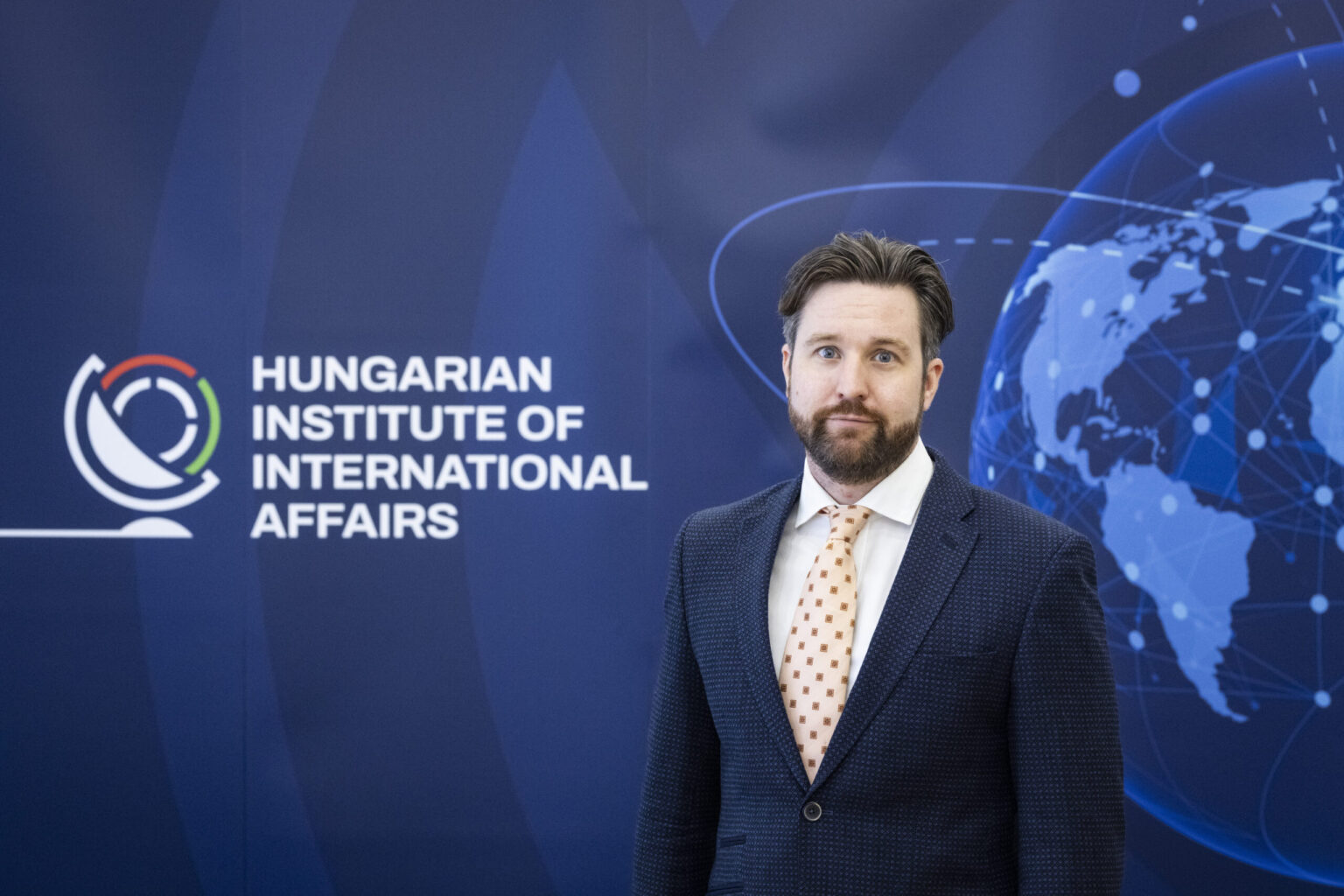
Philip Pilkington, Source: Hungarian Institute of International Affairs
Gavin Haynes also works on the podcast, as well as UnHerd, in addition to his research at the DI. His name was also redacted; he presumably had a seven-month contract with a monthly salary of €4,000.
Nathan Levine, who is also a fellow at the Heritage Foundation (Heritage also has a cooperation agreement with DI) has published slightly fewer articles in UnHerd. Levine, who worked for DI in 2024, was publicly received by Péter Sztáray, then-State Secretary for Foreign Affairs of Hungary.
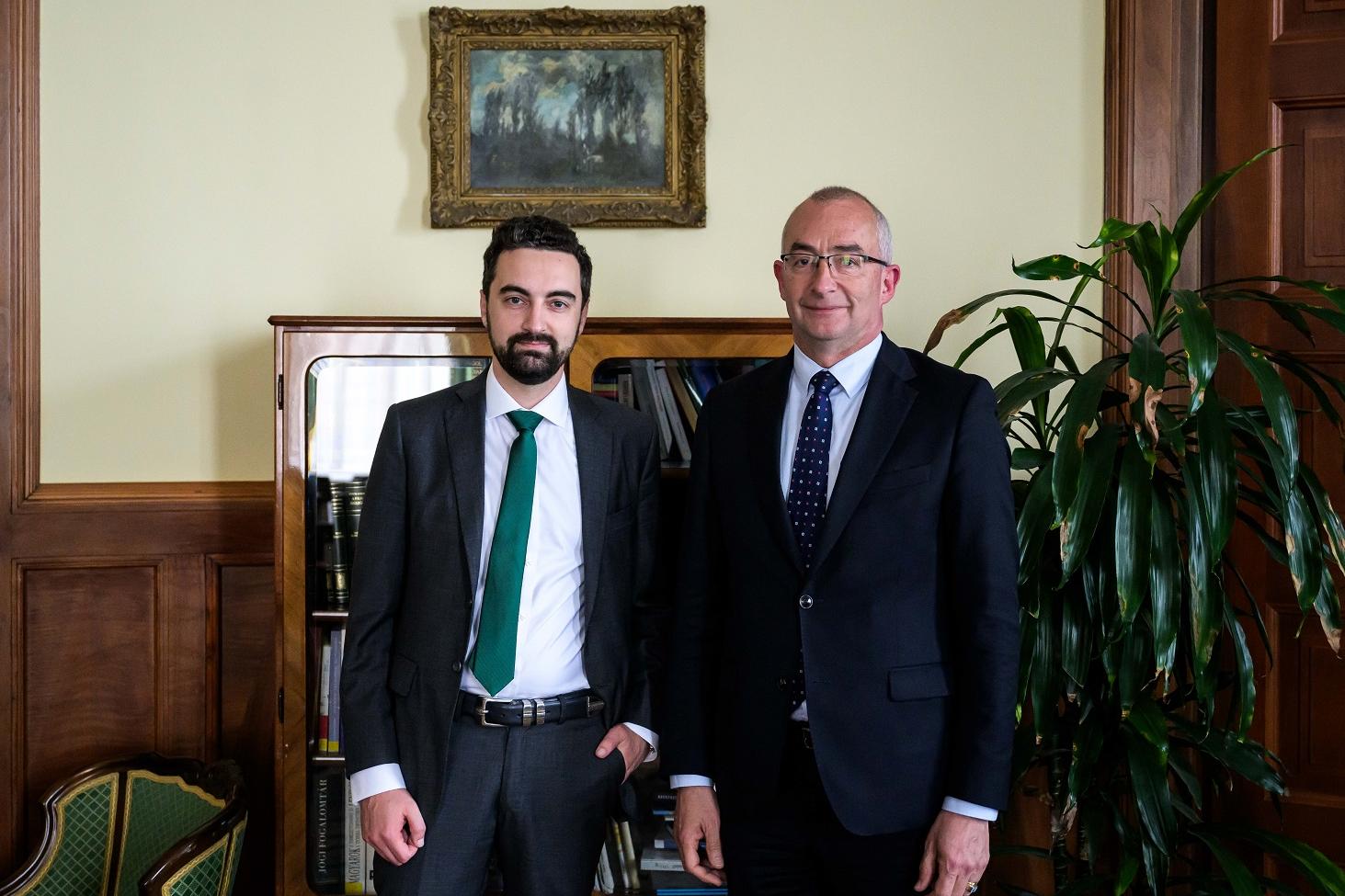
Nathan Levine (left) with State Secretary Péter Sztáray. Source: kormany.hu
Eastern Opening
In addition to its ties with the United States and Britain, DI’s efforts to build relationships with the East — particularly in the last year — are also evident. This is illustrated, for example, by the contract signed by Ibrahim Mammadov, head of the DI’s Turkic-Western Relations Program.
Mammadov signed a one-year contract with the institute in November for a gross monthly salary of €3,000. According to the contract, his duties include building relationships within the Turkic world and representing the BLA at conferences held in Central Asian countries (for which the BLA covers travel expenses).
The contract also stipulates the writing of a total of 10 articles, some of which are to be published in international journals selected by the BLA.
We also found a year-long contract signed last December in which the unnamed contractor agreed, for a monthly salary of $5,400, to undertake, among other things, “international networking, particularly toward China and South Korea.”
Another fellow, hired in March 2026 and working for a monthly salary of $5,000, signed on to build connections in the “American and East Asian” direction, specifically to identify and reach out to 10 contacts.
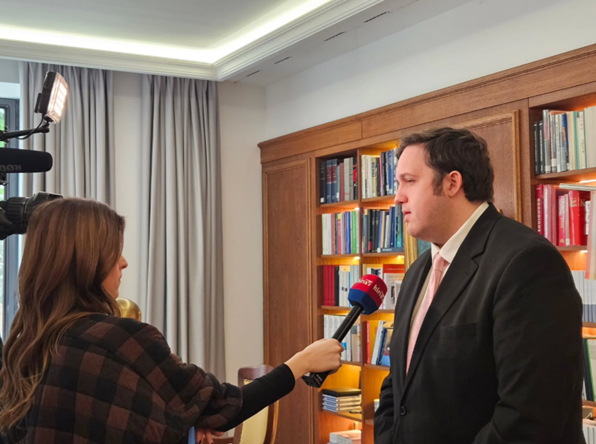
Sean Nottoli speaks to HírTV; Source: Danube Institute Instagram
Sean Nottoli, who served as regional director for the Trump campaign in 2024, has expertise on US-Japanese relations. We believe he is the signatory of a seven-month contract signed last September, which provided for a monthly salary of $5,000 to build international relationships in the US-Japan context.
A Hail Mary or Preparing for the Future
This year, the institute signed six new research fellow contracts, totaling more than €185,000 (HUF 66 million). A significant portion of these payments will continue through the second half of the year, meaning that foreign backers of the ousted Orbán government will continue to receive funds even after the change in government.
One of the research fellows, whose duties include building relationships with Israel and the Middle East, will be able to work until the end of the year for a monthly salary of the equivalent of €7,500 EUR, which is considered high even for DI.
Isaiah Smallman, the producer of the documentary “The Future at the Gate” about the migration crisis, also received a last-minute one-time payment of $12,500. The film was screened just before the elections, on April 8, at a grand premiere held at the historic Uránia National Film Theater cinema in Budapest. According to a report by Mandiner (a magazine published by MCC, another arm of Viktor Orbán’s international influence operation), the premiere also served as a last-minute campaign event:
“This Sunday, we are not electing a government, but deciding our fate,” said Dr. Tamás Dezső, chairman of the board of trustees of the BLA, during his speech at Uránia, prior to the screening of “The Future at the Gate”.
In addition to paying visiting researchers, film production and organizing their own conferences were also among the main activities of the DI and the BLA. In May, for example, they screened the film “Magyarok” (Hungarians), published by the institute, and previously, the DI organized an annual geopolitical forum in collaboration with the Heritage Foundation.
We have submitted a freedom of information request regarding the costs of the films and events; our next article will cover these.
We contacted the above-mentioned scholars, researchers, and experts to confirm details of their contracts, but they did not respond substantively to our requests. Gavin Haynes replied by directing us to submit a FOIA request – which we had already done.
We edited the article after publication to reflect Átlátszó’s modifications to its original article, removing a section about a contract covering security issues related to Ireland and Northern Ireland.
Creede Newton, a journalist with Hope not Hate, contributed to the analysis of the contracts and their background. The Hungarian version of this story was published in Átlátszó.
Subscribe to Goulash, our original VSquare newsletter that delivers the best investigative journalism from Central Europe straight to your inbox!

Zalán Zubor began working at Atlatszo.hu in 2022. Zubor covers topics related to Russian influence in Hungary and corresponding security risks, as well as the Hungarian government’s stance on the war in Ukraine and refugees in Hungary.