




Why Slovakia Is Once Again a Safe Haven for Italian Organized Crime
Illustration: Claudio Capellini (IrpiMedia) 2025-12-09


Illustration: Claudio Capellini (IrpiMedia) 2025-12-09
Antonino Vadalà has been in prison in Reggio Calabria for a year, but only his close relatives know it. There were no news reports. In eastern Slovakia, where he lived, people only began noticing his absence a few months ago. In Italy, his name is unknown to most — just one of many convicted for drug trafficking. In Slovakia, however, he had rattled the government.
In 2018, he was on the front page of every newspaper because of a scandal that directly involved the country’s prime minister, Robert Fico. What they had in common was a woman: a business partner of Vadalà and an assistant to Fico. A link that suggested how the power structure in Slovakia appeared to have become permeable to Italian organized crime — the entrepreneurial kind, the kind that mobilizes votes. The kind that enriched itself with European agricultural funds to the tune of millions of euros.
IrpiMedia and the Slovak investigative journalism center, the Investigative Center of Jan Kuciak (ICJK), have discovered that other entrepreneurs — connected to the ’Ndrangheta and in contact with Vadalà in Slovakia — have launched new business ventures precisely in the grasslands along the border with Ukraine. And both have ended up under investigation for ’Ndrangheta money laundering.
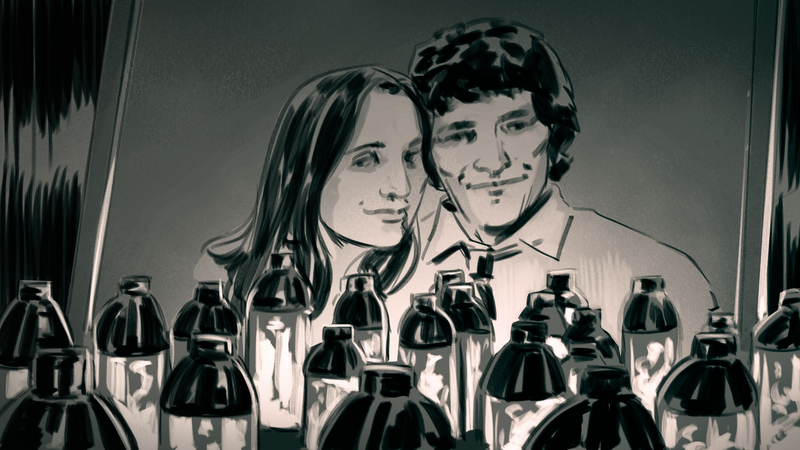
It was the Slovak journalist Jan Kuciak who first suspected that Antonino Vadalà was not just a successful businessman. He had noticed not only the European subsidies received by Vadalà’s companies, his influential political connections, the link to the office of Prime Minister Fico, but also his ties to the underworld of organized crime.
Kuciak never had time, however, to uncover that Vadalà was also a drug trafficker. The journalist was killed on 21 February 2018, in a murder case for which a Slovak businessman, Marian Kočner, is currently on trial.
In March 2018, Antonino Vadalà was arrested. A few months later, he was extradited from Slovakia to Italy. There, he spent four years in prison in Turin for trafficking cocaine with a criminal organization linked to the ’Ndrangheta. After the initial conviction, the Supreme Court ordered a retrial and the release of the defendants.
From Bova Marina, his hometown on the Ionian coast of Calabria, Vadalà returned to Slovakia. In the summer of 2022, he was again spotted in the east of the country, where he had built his stronghold of agricultural and commercial businesses with several of his relatives. Then, in October 2024, the new conviction was upheld, and Vadalà returned to prison.
The investigation that led to Antonino Vadalà’s conviction is known as Picciotteria, and was conducted by the Venice financial police. The inquiry began in 2014, but it was only in February 2018 that the judge who presided over the preliminary investigations signed the pre-trial detention order for Vadalà and other suspects.
On 22 October 2024, Vadalà was sentenced to seven years, one month, and 10 days in prison for drug-trafficking conspiracy and money laundering. The following day, he turned himself in at Reggio Calabria to serve his sentence in the city’s prison, where he will remain until February 2028.
Vadalà had already been mentioned in other anti-drug investigations, but he had not been formally under investigation. In 2011, the Palermo financial police were investigating a group of Sicilian and Calabrian drug traffickers. At the end of 2013, after the arrest of a major cocaine wholesaler, alternative suppliers began to emerge. And this is where two other investigations — by the anti-mafia units of Reggio Calabria and Florence — converged.
One of the identified suppliers was a Slovak phone number belonging to a certain “Nino,” who was described as having “significant economic interests in Slovakia,”and was later identified as Antonino Vadalà. The calls passed through various Slovak numbers considered “used by Vadalà” but registered to family members, and the Florence financial police requested authorization to wiretap them. A check revealed that one of these numbers was registered to Diego Rodà, Vadalà’s father-in-law.
In Palermo as well, two Slovak phone lines “used by” Vadalà were intercepted, and from them links emerged between Vadalà and “prominent members of Calabrian organized crime involved in drug trafficking and, through his economic interests, with Italian and Slovak public officials.”
It was through this investigation that a conversation between Vadalà and the current Slovak prime minister, Robert Fico — previously in power between 2012 and 2018 — was reportedly intercepted.
In 2014, Vadalà also came under the scrutiny of the Venice financial police in the Picciotteria investigation. In August of that year, among the guests at Vadalà’s wedding was a prominent ’Ndrangheta member from the Morabito-Tiradrittu clan of Africo, who proposed going into business together in Venice. The clan claimed to have a partner there with an import-export company. In reality, that “partner” was an undercover financial police officer, but the traffickers did not know it. From the conclusion of the undercover operation in 2015 until the moment the pre-trial detention order was issued in 2018, there is no evidence that Antonino Vadalà continued to take part in any drug-trafficking activity.
Source: Claudio Capellini/IRPIMedia
Today, however, there are hardly any investigators left in Slovakia working on transnational organized crime. Since Robert Fico returned to power at the end of October 2023 — the prime minister hwas forced to resign in 2018 after the Kuciak murder — he has practically dismantled Slovakia’s anti-mafia structures.
“He dismantled the anti-mafia prosecutor’s office that had been created after the journalist’s killing, assigning its prosecutors to minor administrative matters and replacing many of the heads of the investigative police. The purge also targeted the anti-corruption units, turning Slovakia into a paradise for organized crime,” an investigative source who must remain anonymous tells IrpiMedia.
This was also stated by the European Chief Prosecutor, Laura Kövesi, in a recent speech before the Slovak parliament: “There is no way to sugarcoat reality: Slovakia has become an important transit point for money flows originating from criminal activities. A key country for criminals, who invest the proceeds of VAT fraud in drug trafficking, human trafficking, and arms trafficking.”
Deep in the State
In March 2014, Antonino Vadalà was following the results of the Slovak presidential election, in which Fico was a candidate, and in a private conversation said: “Let’s hope (he wins) — my friend.” Had Fico won, he would have left the office of prime minister to become president of Slovakia.
The Palermo District Anti-Mafia Directorate had also intercepted a direct conversation between Robert Fico and Antonino Vadalà. When Irpi reported this in 2019, the Slovak prime minister denied ever having spoken on the phone with the Italian businessman.
Reached again by ICJK, Fico did not comment.
That Vadalà was very close to the top ranks of Fico’s party, Smer, is well known. His main contact was Viliam Jasan, member of the Slovak parliament for Smer and later secretary of the Slovak Republic’s Security Council under the Fico government.
Vadalà was also a business partner of a woman, Maria Troskova, who had served first as Jasan’s assistant in Parliament and later as Fico’s. According to Vadalà himself, Troskova became Fico’s assistant thanks to him — he had placed her there through “Vilo,” Jasan’s nickname. This statement emerged from a text exchange between Vadalà and Troskova contained in the Slovak prosecutor’s case file on the Kuciak murder, which was given to OCCRP journalists by an anonymous source.
The dataset, known as the Kočner Library and managed by ICJK, also contains other investigations into criminal activity in the country. In the database, Vadalà emerges as a tireless entrepreneur, constantly seeking new contacts and new business opportunities. In 2017, he even submitted an application to the Italian intelligence services. “The phenomenon of individuals close to the ’Ndrangheta applying to join the intelligence services is well known. They possess key information about corrupt power structures, and in return they receive protection,” an anti-mafia prosecutor who previously investigated Vadalà told IrpiMedia.
Vadalà also appears to have worked behind the scenes in the regional elections in Košice, the area where his business interests lay. In July 2017, he was in contact with a woman capable of delivering hundreds of votes, who addressed him by calling him boss, chief. “For now we have 600 [votes] confirmed, but we’ve only just begun!”
Beša Caput Mundi
The village of Beša is located about fifty kilometers from the Ukrainian border in the Košice region of eastern Slovakia. A cluster of houses surrounded by fields, home to a few hundred people.
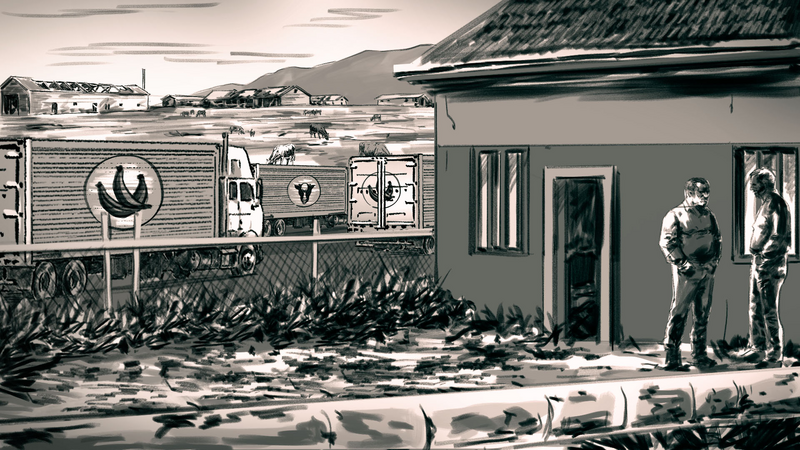
At the beginning of 2025, local media reported that Antonino Vadalà had returned to Beša to breed bulls. In reality, Vadalà was already in prison in Reggio Calabria. However, in Beša there is a derelict former agricultural cooperative that Vadalà began renovating in 2017. Today, the livestock operations there are run by one of his cousins, Pietro Catroppa, who rents the cooperative’s stables through the company Prodest (formerly owned by Jasan).
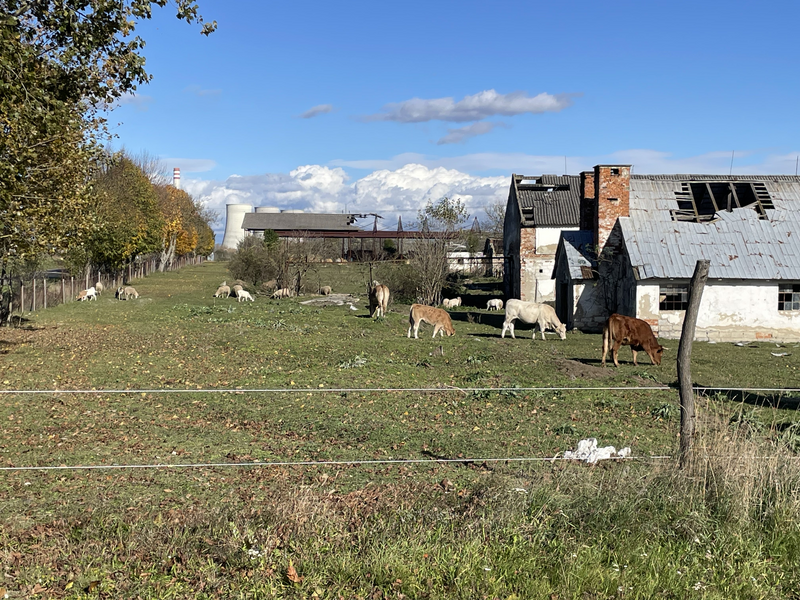
Animals of the Prodest company graze among the ruins of stables.
For years, Vadalà’s cousin was his right-hand man in managing the farms. He, too, is originally from Bova Marina and is the son of a man tried for a mafia association who, until 2007, was considered the “mastro di giornata” of the Vadalà-Talia clan — that is, the person responsible for recruiting new members and coordinating local criminal activities.
The concentration of Italian entrepreneurs is strikingly high in the small village of Beša. It was here, in fact, that in early 2024 the businessman Michelangelo Rodi launched a freight transport company, Miro Car.
In February 2025, the Brescia prosecutor’s office uncovered a scheme involving 250 million euros in false invoices: among the indicted was Rodi himself. According to wiretaps reported in the press, the operation was allegedly managed by “the head of the ’Ndrangheta in the Brescia area.”
Rodi’s company is registered at a house in Beša that a web of corporate ties leads back to Vadalà. The house has a new roof, but the rest is in a state of neglect. The paint has peeled off the rusted fence. Weeds have overrun the yard.
The house belongs to a Slovak woman — a candidate in the same regional elections in which Vadalà was active — who also served as a manager of Miro Car and who, during the period when Vadalà returned to Slovakia, registered two additional companies at that address.
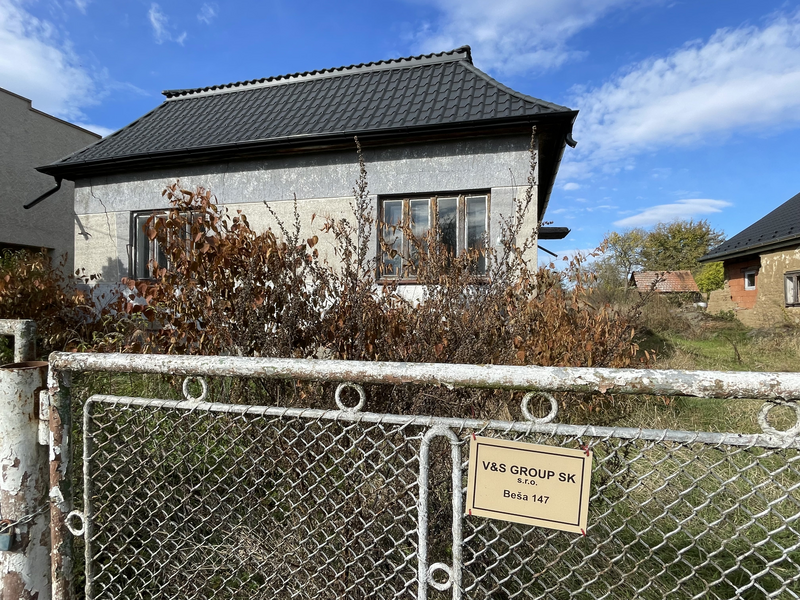
The house in Beša, where Michelangelo Rodi’s company is based.
But there is a more direct connection between her and Vadalà. An information exchange between Slovak and Italian anti-mafia authorities, until now unpublished, reveals that, in August and October 2018, the woman visited Vadalà in the Turin prison.
But the neighbors of the house in Beša have never heard the names Rodi or Vadalà. They do recognize the latter when journalists show them a photo of him. Vadalà had asked whether they were willing to sell their house and land. “He wanted to join the two yards and have a parking area for trucks,” they say. “Try going to the farm at the entrance of the village; that’s where we talked to him about selling the house,” they suggest. They are referring to the old cooperative where Vadalà’s cousin raises livestock.
The road in front of the farm is muddy and runs alongside a fence behind which bulls and goats graze. Of the stables, only the crumbling walls and roof beams remain. In the back section — the only part that has been renovated — a small excavator is at work. The operator stops.
“And who would that be?” he asks when he hears Rodi’s name. Then he adds that it sounds familiar, but Rodi has nothing to do with the farm. Standing behind the closed gate, the man refers the journalists to the owner’s phone number.
Mid-sentence, he is interrupted by a call. On the other end of the line is an agitated woman’s voice. She wants to know who is at the farm and why. She must have spotted the journalists through the security camera mounted above the gate. “You need to leave,” he says firmly.
It was not possible to reach Rodi for comment. The woman who visited Vadalà in prison did not to comment.
That Meeting in Košice
IrpiMedia and ICJK learned that, in mid-March 2023, Rodi and Vadalà allegedly met at a hotel in Košice. With them, in addition to Vadalà’s cattle-breeding cousin, was another entrepreneur: Vincenzo D’Amico.
D’Amico, too, has been implicated in an investigation into the ’Ndrangheta. In 2020, he was acquitted of mafia association but convicted for helping the Gagliostro-Parrello ’ndrina of Palmi launder money through commercial activities. The appeal trial is ongoing.
Two years after the first instance conviction, D’Amico opened a trading company in Slovakia, S.c. Perlight.Sk, in Trebišov, half an hour from Beša — one of the areas where Vadalà had conducted business in cattle farming.
D’Amico’s company has not recorded any significant activity, declaring zero revenue in 2023. However, commercial data show that, in July 2022, Perlight received a shipment of 22,000 kilos of bananas from the port of Guayaquil, Ecuador, arriving at the port of Rotterdam in the Netherlands. The supplier was Makergrammy, an Ecuadorian company whose containers have, at least in one case, been contaminated with cocaine. On 10 May 2021, 51 kilos were seized at the port of Hamburg, having been hidden in the false floor of a banana container shipped to a German company.
Contacted through his lawyer, D’Amico declined to comment.
Source: Claudio Capellini/IRPIMedia
European Funds as a Foundation
For more than a decade, Antonino Vadalà and his closest relatives maintained ties with another family, the Rodàs, who had been in Slovakia since the 1980s but were originally from Condofuri, next to Bova Marina. When Vadalà settled in Slovakia in the early 2000s, he was welcomed by the family patriarch, Diego Rodà, who offered him a job as a cattle breeder. In 2008, Vadalà struck out on his own. The method is simple, and Vadalà likely learned it from Rodà himself: businesses are launched using European agricultural funds as their foundation.
Both families, the Vadalàs and the Rodàs, became wealthy thanks to the pastures: they raised cattle, obtained European subsidies, and reinvested in new farms. But the cowboys of the Slovak grasslands did not convince certain Slovak investigators, who began taking an interest in Diego Rodà — the cattle breeder who drives around in a Ferrari.
Unpublished documentation shows that in 2013 the Slovak police had in fact opened an investigation into Rodà, who specialized in “obtaining European Union subsidies in the agricultural sector” and was suspected of fraud, as well as of “various cases of corruption linked to the granting of undue VAT refunds.”
The Slovak police, through Interpol, had written to Italian law enforcement authorities. Rodà, they said, owned 12 companies and had “several prior criminal convictions for tax fraud” dating back to the late 1980s and early 1990s, adding that “since 2004 there have been at least 14 proceedings against him, mostly closed before indictment.” They did not rule out “a connection between Diego Rodà and foreign criminal groups.”
In Italy, Diego has no criminal record.
When Slovakia, through Interpol, requested an “operational check” from Italy, what emerged above all was the connection between Diego Rodà and Antonino Vadalà. The two appeared to be very close: in fact, Rodà’s eldest daughter married Vadalà in August 2014.
The year before, another line of investigation into Vadalà was already underway.The exchanges were between the Slovak liaison officer in Rome and the Italian Anti-Mafia Investigation Directorate (DIA). Slovak police suspected that Vadalà had formed a ’Ndrina on Slovak territory.
The DIA replied that Vadalà occasionally returned to Bova Marina, where “he associates with prominent members of organized crime, in particular showing proximity to the Vadalà-Talia clans of Bova Marina and the Libri-Zindato clan of Reggio Calabria.”
The Slovak authorities also suspected cases of corruption involving public officials to obtain European agricultural funds. They wrote that Vadalà had purchased “several agricultural cooperatives” through “non-repayable financial loans from the European Agricultural Fund for Rural Development and the European Agricultural Guarantee Fund,” the two funds that make up the European Union’s Common Agricultural Policy (CAP). For these loans, he allegedly used properties with artificially inflated values as collateral.
Some of these companies declared their corporate purpose as the breeding and sale of cattle to Turkey. However, investigators wrote that “there is suspicion that this may be a cover for drug trafficking along the Balkan route.”. These suspicions on the part of the Slovak police never resulted in charges against Vadalà.
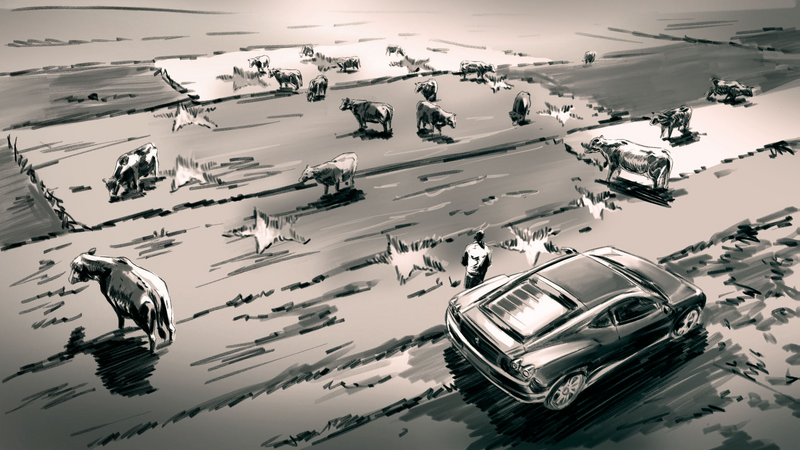
Source: Claudio Capellini/IRPIMedia
In his last, unfinished article — on which Irpi also collaborated — journalist Jan Kuciak wrote about the substantial subsidies granted to Vadalà and Rodà’s companies, raising questions about the oversight of how these funds were distributed. Only after his death did the Slovak Ministry of Agriculture publish the list of subsidies paid to the two families’ businesses over nearly 14 years: 67 million euros from 2004 to 2018.
Through a series of freedom of information requests, ICJK and IrpiMedia were able to calculate how much European agricultural funding Rodà and Vadalà’s companies have received from 2019 to the present. Antonino Vadalà has exited all corporate structures, and his family’s companies have no longer received CAP funds. The Rodà family’s companies, on the other hand, have continued to be subsidized, though at much lower levels than in the past, for a total of 3.4 million euros. One of the companies, registered in the name of Rodà’s wife, received more than 400,000 euros in 2024 alone.
The Slovak agency responsible for payments to farmers explained that EU funds can be blocked only if beneficiaries are “the subject of a final judgment that imposes on them a ban on receiving aid and support provided by EU funds.”
Neither Antonino Vadalà nor Diego Rodà, contacted through their lawyers, responded to questions from IrpiMedia and ICJK.
The Interrupted Channel
There is one wiretap that went unnoticed. It reveals what happened in the Italian drug-trafficking world after the brief arrest of the Rodàs and the Vadalàs, who were suspected of involvement in the Kuciak murder in early March 2018. Antonino Vadalà, Diego Rodà, and five other relatives were released after 48 hours and were never again considered suspects in the killing. But that alone was enough to throw a wrench into the plans of those in Rome who were supposed to supply several drug-dealing markets. On 11 March 2018, a man originally from Condofuri was speaking with an important cocaine wholesaler in Rome. He needed to supply a group of dealers in the capital who were ready to buy as much as 15 kilos of cocaine vper week. But his supply channel had been abruptly cut off. The man was a relative by marriage of the Rodà family, and he was talking about one of them.
“They arrested my brother-in-law… they took his brothers too, did you hear about those from Slovakia over there?” he sadi, referring to what happened after the journalist’s murder. From the rest of the conversation, investigators deduced that the arrest of the Rodàs and the Vadalàs — and the attention that followed — had been enough to disrupt his drug-supply channel.
Released by the Slovak police because they were not considered involved in the Kuciak murder, they nonetheless ended up exposed. “They really arrested my brother-in-law with guns… and now they’re left like this,” the man explained on the wiretap.
During the brief arrest in Slovakia, the police had indeed seized several weapons from Diego Rodà and Antonino Vadalà: a loaded revolver, two rifles, two double-barrel shotguns, a Benelli semi-automatic shotgun, two Beretta pistols, and a Glock. An arsenal worthy of real cowboys, added to the investigation file along with tablets, computers, and mobile phones.
This text was created as part of a project supported by Journalismfund Europe.

Subscribe to “Goulash”, our newsletter with original scoops and the best investigative journalism from Central Europe, written by Szabolcs Panyi. Get it in your inbox every second Thursday!