




“Sinister” and “Unacceptable”: Europe Responds to the Kremlin Hotline Investigation
Anna Gielewska (FRONTSTORY)
Szabolcs Panyi (VSquare)
Holger Roonemaa (Delfi Estonia)
Ilya Ber (Delfi Estonia)
Michael Weiss (The Insider)
Lukas Diko (ICJK)
Illustration: Shutterstock 2026-04-03


Anna Gielewska (FRONTSTORY)
Szabolcs Panyi (VSquare)
Holger Roonemaa (Delfi Estonia)
Ilya Ber (Delfi Estonia)
Michael Weiss (The Insider)
Lukas Diko (ICJK)
Illustration: Shutterstock 2026-04-03
European and Ukrainian leaders respond to our joint report that Hungary’s foreign minister was doing his Russian counterpart’s bidding while the Hungarian government clings to claims of sovereignty.
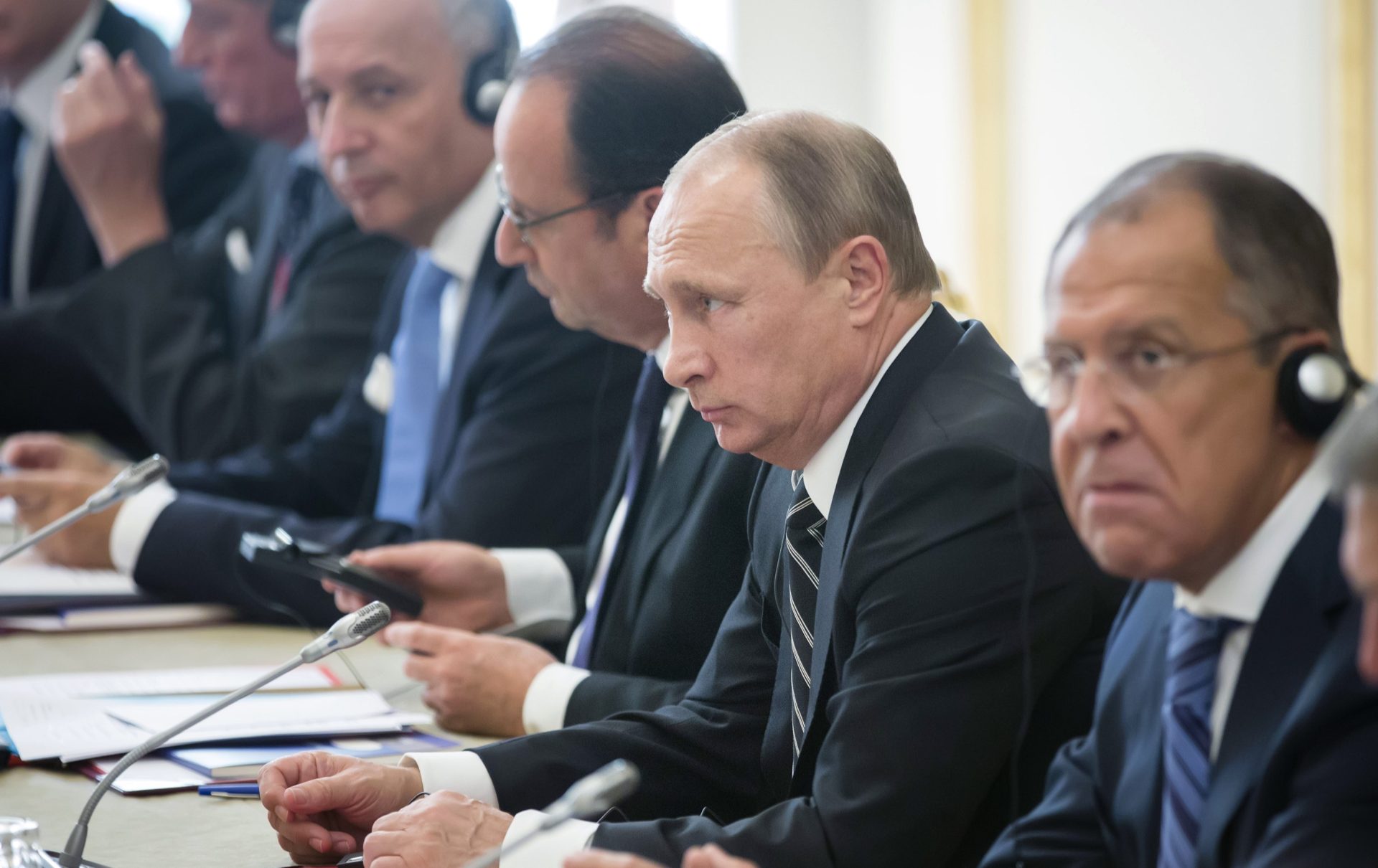
Europe is reeling from our investigation, “Kremlin Hotline,” which revealed that Hungary and Russia have been coordinating their efforts to remove EU sanctions on Russian oligarchs, banks and the shadow fleet. The direct line of communication, which existed for several years between Hungarian Foreign Minister Péter Szijjártó and his Russian counterpart Sergey Lavrov provided Moscow with strategic intelligence on EU decision-making about how to impose economic costs on Russia for its full-scale invasion of Ukraine. Szijjártó, as one former European official put it, has been acting as “Putin’s mole” in Brussels.
The audio recordings attached to our investigative consortium, combining VSquare, Delfi Estonia, FRONTSTORY, Investigative Center of Jan Kuciak and The Insider, created an international scandal just ten days before Hungary’s high-stakes national election on April 12. The government of longtime incumbent Prime Minister Viktor Orban, who has turned the race into a referendum on his anti-Ukraine policies, is 20 points behind in the polls, trailing challenger Peter Magyar, a former loyalist turned centre-right rival.
The “Kremlin Hotline” demonstrated that Lavrov routinely prevailed upon Szijjártó for help in delisting certain Russian actors, such as Gulbahor Ismailova, sister of powerful Russian billionaire Alisher Usmanov. Szijjártó in turn gave Lavrov detailed accounts of sensitive European Commission meetings, including the thinking of his more Kremlin-leery colleagues and potential Russian targets for new sanctions. Szijjártó also sought out Lavrov’s counsel on how to dress up nakedly pro-Russian policies in the garb of Hungarian national interest. As one European intelligence figure told us, reading their conversations was like witnessing a case officer handling an agent.
Szijjártó has not denied the calls took place but has framed the leak as a “clumsy intervention” by foreign secret services. He maintains that maintaining a line to Moscow is “sovereign diplomacy” necessary for Hungary’s energy security.
“Diplomatic Quarantine” in Brussels
Our revelations triggered immediate and fierce reactions across European capitals. In Brussels, sources within the European Commission suggest an informal “diplomatic quarantine” is already in effect.
“European ministers should work for Europe, not Russia,” said EU High Representative Kaja Kallas.
Polish Prime Minister Donald Tusk described the calls as “disheartening.” “What these recordings have revealed is more than just the political dependency of the Budapest government on Moscow; it has exposed just how unacceptable and bizarre this relationship truly is,” he said. Tusk noted that, “one could hardly imagine anything more repulsive” than a foreign minister of an EU country asking for patience while carrying out tasks in Russia’s interest.
Micheál Martin, PM of Ireland, labeled the development “sinister” and “unacceptable,” highlighting the “alarming deferential tone” of the conversations.
Czech President Peter Pavel has called on the country to reassess relations with Hungary, and what information it shares with Budapest.
Estonia’s Foreign Minister Margus Tsahkna: “New evidence from investigative journalists exposes direct coordination between Hungary’s FM Péter Szijjártó and Russia’s Sergey Lavrov, showing how Hungary and Slovakia have been acting on the Kremlin’s behalf. This undermines our security, EU unity, and the steps we are taking to hold Russia accountable for its aggression.”
Andrii Sybiha, Foreign Minister of Ukraine, called for a full inquiry, describing the calls as “obsequious reporting to Russian patrons.”
“You know, today I took the time, despite everything happening, to listen to these conversations that have become public in the media space,” Sybiha said. “For me, this is not a conversation. This is obsequious reporting to Russian patrons. It is disgusting, it is a disgrace. And it should indeed be the subject of an investigation,” the Ukrainian minister stressed. He noted that the profession of a diplomat requires caution in conversations, so, understanding the situation, Ukrainians “were even more diplomatic than usual” with the Hungarians. “What has now become public poses a threat. In fact, it threatens the discussion platforms that exist within the European Union, including closed ones.”
Hungary’s Defense: “Secret Service Scandal”
Seemingly confirming the authenticity of his conversations with Lavrov, Szijjártó characterized the leaks as a targeted operation by “foreign secret services” intended to influence the Hungarian election. He also claimed the entire story was a nonstarter because he talks to everyone. “For four years we have been saying that sanctions are a failure, causing more harm to the EU than to Russia. Hungary will never agree to sanction individuals or companies essential for our energy security, for achieving peace, or those with no reason to be on a sanctions list. However, the wiretap list is not complete. I have also regularly consulted with foreign ministers from several non-EU countries on sanctions-related matters.”
Viktor Orbán’s government has largely echoed this “sovereignty” narrative, framing the leaks as a Western attempt to unseat the Fidesz party during its most challenging election battle in 16 years.
Hungarian opposition leader Péter Magyar, poised to become Hungary’s next prime minister, commented the following: “Under the Hungarian Penal Code, this is defined as treason – and is punishable by life imprisonment. Just saying, for the sake of clarity.” Multiple legal and intelligence experts in Hungary have pointed out that Szijjártó’s activities may be prosecutable under a different section of the Hungarian Penal Code. In the early 2010s, when Hungarian far-right Member of the European Parliament Béla Kovács was exposed as a Russian spy, the country’s parliament amended the Penal Code by introducing a new offense: “espionage against the European Parliament, the European Commission, or the Council of the European Union on behalf of a third country outside the European Union.”
Slovakia: “Let Everyone Call Whoever They Want”
Slovak Prime Minister Robert Fico, whose government was implicated in the leaks as a partner in delisting Russian entities, dismissed the concerns. Fico stated he had seen “no evidence” of wrongdoing and maintained that he saw nothing unusual in such communications, saying, “Let everyone call whoever they want.”
According to Fico, removing someone from an EU sanctions list requires the agreement of all 27 member states: “So you cannot accuse anyone of being a Russian agent; then you must accuse all 27 member states of being Russian agents if they have reached a decision,” he said.
However, former Slovak minister of Foreign Affairs Ivan Korčok commented, “This is no longer a matter of suspicion. We have the evidence. Findings of the Ján Kuciak Investigative Center show that Slovakia together with Hungary pushed for abolition of sanctions against Russian oligarchs. That’s why we don’t talk about one mistake anymore. We are talking about a pattern of behavior. Slovakia does not behave as a sovereign state that protects its own interests, but as a country that Moscow and Budapest use as their pawn. We’ve been asking Juraj Blanár about this for several weeks — and the answer is still not forthcoming. The Slovak public is owed an explanation. Why did Slovakia want to eliminate specific Russian oligarchs from the sanction list? What was the Slovak interest in it? Who decided to do this? Was there coordination with Hungary — and did Moscow know about it? If the government talks about foreign influence, it cannot ignore Russian influence at home. Therefore, I urge Minister Blanár to immediately publish the numbers of members of the Russian diplomatic mission in Slovakia.”
Slovak Foreign Minister Juraj Blanár did also comment on the matter. Instead of explaining the situation, however, he attacked Ivan Korčok, accusing him of interfering in the Hungarian elections.
This investigation was published in collaboration with FRONTSTORY.PL, Delfi Estonia, The Insider, and the Investigative Center of Ján Kuciak (ICJK). You can also read the Russian version on Delfi Estonia’s Russian language site.
Subscribe to “Goulash”, our newsletter with original scoops and the best investigative journalism from Central Europe, written by Szabolcs Panyi. Get it in your inbox every second Thursday!

Co-founder and editor-in-chief at FRONTSTORY.PL, Wojciech Cieśla is an award-winning Polish journalist who, since 2016, has worked with Investigate Europe. He is the co-founder and chairman of Fundacja Reporterów (Reporters Foundation). He is based in Warsaw.

Anna Gielewska is co-founder and editor-in-chief of VSquare and co-founder of Polish investigative outlet FRONTSTORY.PL. She is also vice-chairwoman of Fundacja Reporterów (Reporters Foundation). A journalist specializing in investigating organized disinformation and propaganda, Gielewska was the John S. Knight Fellow at Stanford University (2019/20) and has been shortlisted for the Grand Press Award (2015, 2021, 2022) and the Daphne Caruana Galizia Award (2021, 2023). She was the recipient of the Novinarska Cena in 2022.

VSquare’s Budapest-based lead investigative editor in charge of Central European investigations, Szabolcs Panyi is also a Hungarian investigative journalist at Direkt36. He covers national security, foreign policy, and Russian and Chinese influence. He was a European Press Prize finalist in 2018 and 2021.

Head of the investigative desk at Delfi Estonia, Holger Roonemaa has extensively investigated topics related to national security, including Russia’s espionage, interference, and influence operations in Estonia and the wider region. He is a member of the International Consortium on Investigative Journalists (ICIJ). Estonia’s national media association named him the journalist of the year in 2020 and 2021.
Lukáš Diko is the editor-in-chief at the Investigative Center of Ján Kuciak (ICJK). An experienced journalist and media leader, he was previously director of news and journalism at RTVS and editor-in-chief of news at Markíza television.