




“Democracies Do Not Disappear Voluntarily”: Slovakia’s Year of Upheaval
Photo: Shutterstock 2026-01-02


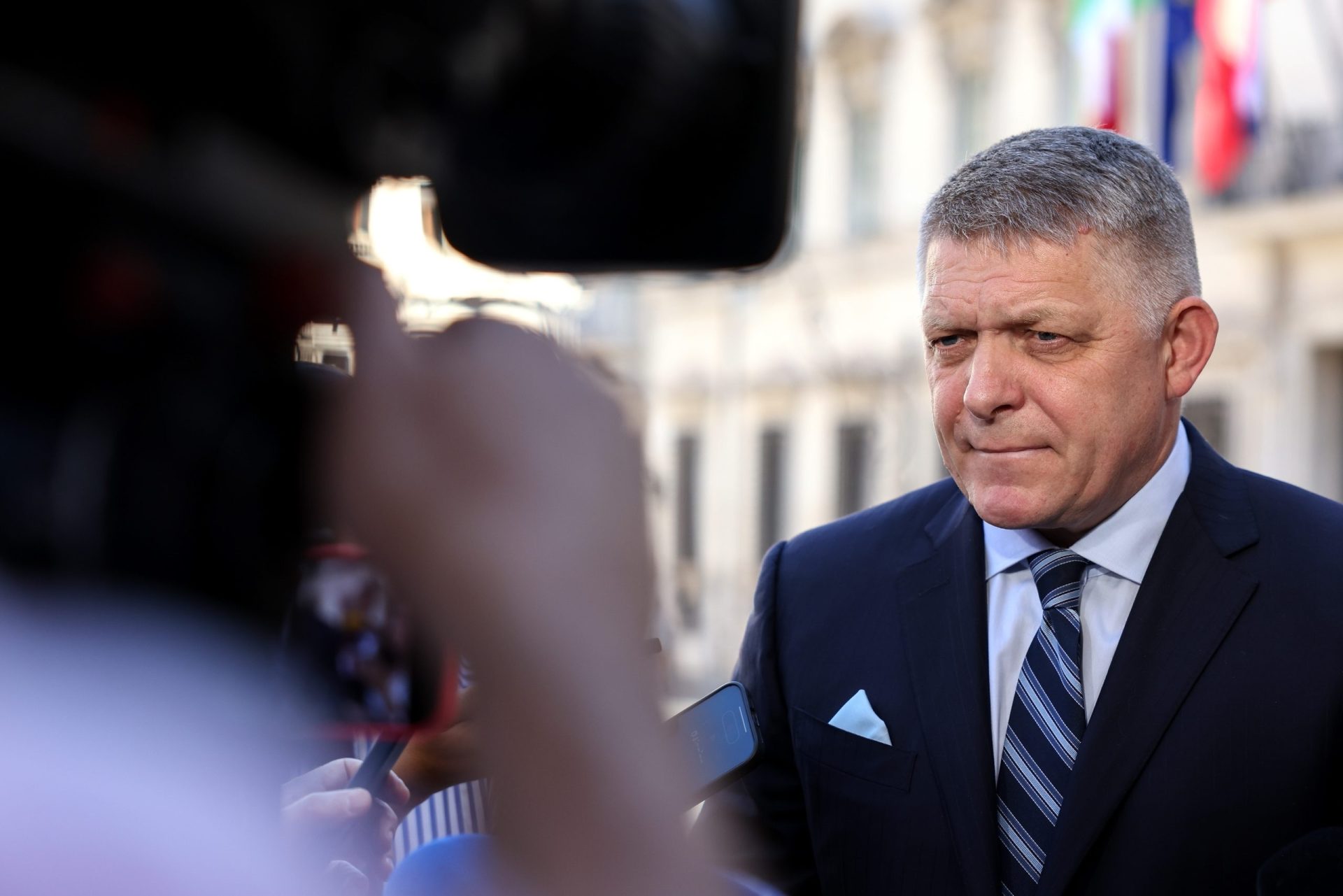
Slovakia has gone through a turbulent year marked by sweeping change. Shifts have rippled through society and the institutions that govern it — from amendments to criminal law and constitutional changes to a sharp turn in foreign policy under the Robert Fico’s ruling coalition. At the same time, the government has steadily moved closer to Russia, while domestically Slovakia has slid in international press-freedom and democracy rankings. In this interview, Victor Breiner, an expert on hybrid threats and foreign influence, unpacks the key political trends shaping Slovakia in 2025, explains how the country arrived at this point, and outlines what may come next.
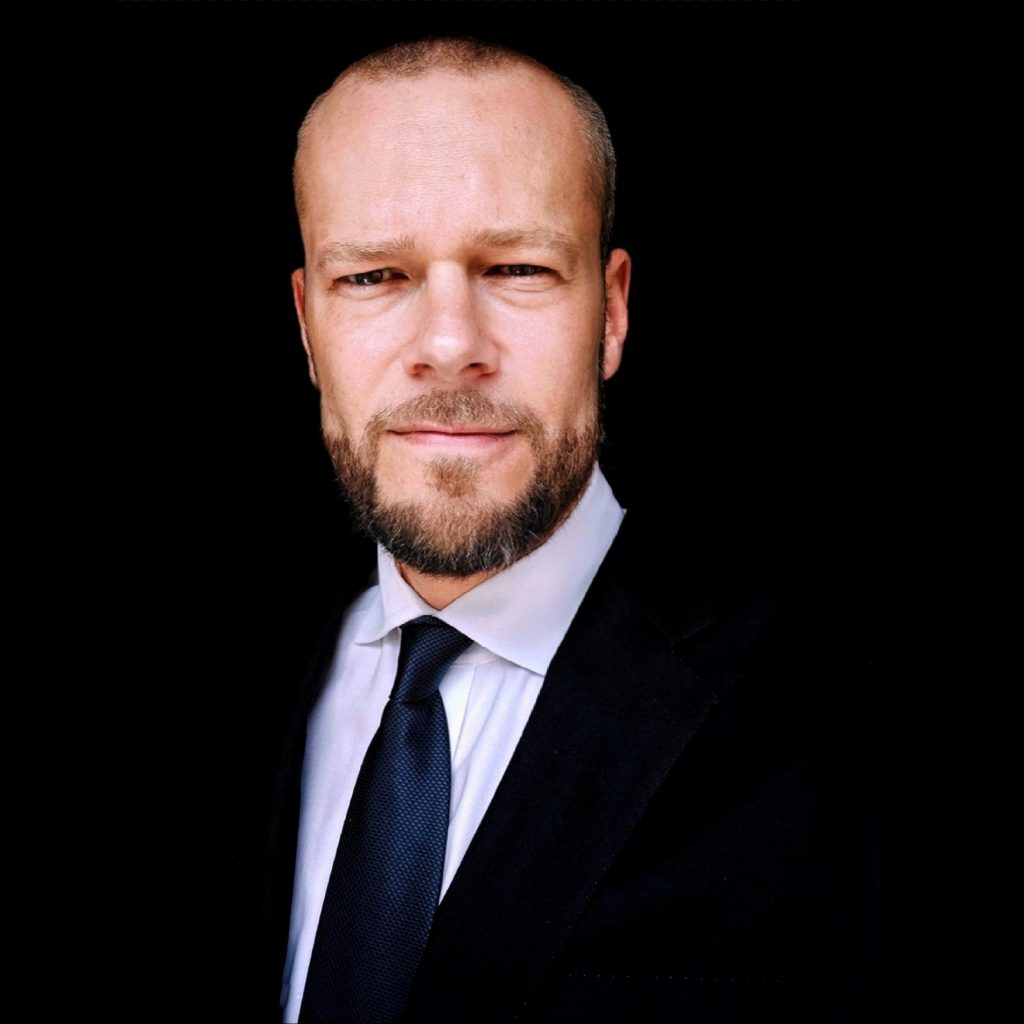
Breiner founded Infosecurity.sk, the Disinfo Report podcast, the Slovak Media Monitor, and the Institute for Resilience Building. He previously served as an adviser to Slovakia’s Minister of Defense, Jaroslav Naď (2021–2022), and earlier worked as a foreign correspondent in the Middle East, Africa, and Ukraine.
Looking back at 2025, how did Slovakia’s foreign policy evolve? Did the slogan “foreign policy towards all four corners of the world” materialize in any meaningful way? What were the achievements of Slovak diplomacy and the Foreign Ministry under Juraj Blanár (Smer)?
Slovak diplomacy under Juraj Blanár has been a complete failure. It’s hard to name a single success that meaningfully strengthens Slovakia’s position — either domestically or geopolitically. And this comes at a moment when we are living through one of the most turbulent periods of the 21st century: Europe’s security architecture is being rewritten, NATO is under strain, and transatlantic relations between Europe and the United States are changing rapidly.
The slogan of “foreign policy towards all four corners of the world” is an euphemism meant to obscure the real direction of Slovak diplomacy. In reality, it is not oriented toward all corners of the globe. It is oriented eastward — toward Russia and other former Soviet Union states. Crucially, these are not the countries that are now part of the EU or NATO.
This shift is reflected not only in policy but also in personnel decisions. Under Blanár’s leadership, the Slovak diplomatic corps has undergone a sweeping purge. According to open sources and testimony from a senior diplomat who was once part of Blanár’s inner circle, more than 40 experienced, Western-oriented diplomats were dismissed. Many of them built their careers during Slovakia’s negotiations to join the EU and NATO. They were replaced by graduates of Russian diplomatic institutions — most notably MGIMO and St. Petersburg University — schools long known as recruiting grounds for Russian intelligence services.
As a result, Slovak diplomacy is now largely sidelined in key European debates. The formal channels still exist, but in practice Slovakia is absent from the rooms where decisions are shaped. When the European diplomatic kitchen is busy cooking, Slovak diplomats are nowhere to be found. In the end, they are simply handed the finished dish and told: “Here you go.”
A recent data analysis by EUobserver examined European Parliament resolutions related to Russia, focusing on MEPs who consistently blocked measures aimed at limiting Moscow. Two Slovak MEPs top the list, each with 16 such votes: Milan Uhrík, the leader of the far-right party Republika, and Milan Mazurek, also from Republika.
Mazurek recently drew international attention when a speech he gave in the European Parliament—claiming the “oppression of the white race”—was shared by Elon Musk. For context, both Uhrík and Mazurek began their political careers in Marian Kotleba’s ĽSNS, a radical far-right party. Mazurek also holds the distinction of being the first Slovak MP to lose his parliamentary seat over racist remarks.
The governing party Smer, which currently has five MEPs in the European Parliament, is not far behind. Its MEPs voted against 14 Russia-related resolutions up to the time of the analysis. Altogether, five Slovak MEPs—two from Republika and three from Smer—rank among the most pro-Kremlin members of the European Parliament based on their voting records.
In the latest opinion polls in Slovakia from early December, Progressive Slovakia leads with 23 percent, followed by Smer at 18 percent and Republika at 11 percent. Do you think Republika’s MEPs are voting this way as a deliberate attempt to boost their domestic popularity, or do you see a different, more specific strategy behind these votes?
I don’t think Republika’s behavior can be explained purely as a communications strategy. Their positions appear to reflect genuine ideological — and likely personal — connections to people in Russia. I wouldn’t go so far as to call them intelligence assets, but in Russia the line between diplomacy and intelligence services is extremely blurred, making any clean distinction difficult.
Looking at Republika’s origins helps explain this. Milan Mazurek and Milan Uhrík are long-standing figures in Slovakia’s neo-Nazi scene. They openly glorified the wartime Slovak fascist state and its president, Jozef Tiso, who was responsible for the deportation of around 88,000 Jewish citizens to Nazi concentration camps. While both men now publicly distance themselves from their neo-Nazi past in interviews and media appearances, there is no credible evidence that their core values have changed since their time in Marian Kotleba’s party — the first far-right movement to enter the Slovak parliament.
Smer is a different case. Its pro-Russian rhetoric is often framed as opportunistic: if democracy, reforms, and rule-of-law narratives no longer mobilize voters, then Russian talking points fill the gap. But to understand this shift, it’s crucial to look at how Smer returned to power and how Robert Fico became prime minister for the fourth time.
After resigning in the wake of the murders of Ján Kuciak and Martina Kušnírová, Fico systematically rebuilt his political influence through social media. Over time, this evolved into the full adoption of Russian propaganda narratives — not only in his personal messaging, but across the party’s communication and election campaign.
By embracing these narratives, Smer effectively embedded itself within Slovakia’s broader pro-Russian and pro-Kremlin media ecosystem: influencers, websites, web radios, social media profiles, open and closed groups, and coordinated disinformation networks. Because Fico had built stronger networks than any other political actor — and because these disinformation channels now wield enormous influence in Slovakia — he was able to win the election without relying on traditional media at all.
That’s why this isn’t just about messaging tactics. It was a transaction. And given that reality, we shouldn’t be surprised if Fico and his allies now represent Russian interests inside European institutions.
This year alone, several European countries have held crucial elections — among them Romania, Moldova, and the Czech Republic — and in the spring, Hungary will head into parliamentary elections. In each case, the level of foreign interference differed, as did the way the information ecosystem functioned during the campaign and election period. Given these varied experiences across the region, how prepared is Slovakia to deal with hybrid threats?
For almost 15 years, the fight against Russian influence — especially in the information space — has rested on the shoulders of a small group of activists. The state and its institutions have failed to respond in any meaningful way. Try asking anyone in Slovakia’s expert community a simple question: which measures has the Slovak Republic taken that have had a measurable impact on reducing Russian influence in Slovak society? You won’t get a single concrete answer.
Between 2020 and 2023 — during the interim period between Robert Fico’s third and fourth governments — democratic politicians formally created departments and positions meant to address hybrid warfare, disinformation, and related threats. But these existed mostly on paper. They were given no real budgets and served largely as public-relations tools.
Yes, departments were set up. Teams were announced. Strategic documents were drafted. But none of these units received a single euro from the state budget. In fact, the government’s unspoken rule — something I know firsthand, having written one of these documents at the Ministry of Defense — was that such strategies would only be approved if they had no budgetary impact. From the outset, this turned the entire effort into an academic exercise rather than a real policy response.
As a result, Slovakia has become a showcase of successful Russian influence: the capture of political elites and the manipulation of public opinion to such an extent that today the EU no longer has just Viktor Orbán as an outlier, but Viktor Orbán and Robert Fico.
You mentioned that activists have been carrying most of the burden when it comes to raising awareness about hybrid threats in Slovakia. Let’s look at other civic initiatives that became visible this year in response to different developments.
For example, Otvorená Kultúra (Open Culture) protested what it sees as a political takeover of the cultural sector. Mier Ukrajine (Peace for Ukraine) organized demonstrations against Robert Fico’s pro-Russian policies. And the so-called “Chalk Revolution” began with a simple message written on a sidewalk ahead of Fico’s visit to a high school, just before the anniversary of the Velvet Revolution.
Despite their visibility, these movements have not translated into real political impact — especially when compared to the mass protests of 2018. How do you explain this difference? Do you see specific reasons why today’s civic mobilization has been less effective?
A lot has changed, and I wouldn’t say these civic initiatives were unsuccessful at all. In fact, Slovak civil society — aside from a few organizations now struggling financially because the grant system has largely collapsed — has a lot more to do with the Trump era policies than with Robert Fico.
The reality is that Slovak civil society has grown significantly stronger. Organizations are more active, better organized, and far more interconnected in terms of people and know-how. They have also adapted financially, moving away from reliance on grants toward direct public support — and for the most part, they’ve managed that transition successfully.
One concrete example is the creation of the Platform for Democracy, which has brought around 50 organizations together under a single legal entity. This allows them to coordinate and, when necessary, speak with one voice.
As for the second part of the question — why this hasn’t translated into political consequences like ministerial resignations, the removal of intelligence chiefs, or even the fall of a prime minister, as happened after the murders of Ján Kuciak and Martina Kušnírová — I think the explanation goes beyond Slovakia. This is part of a broader global trend. Today, Donald Trump can say or do almost anything without any serious expectation that he will resign. In the United States, there are far more serious breaches of rule-of-law than anything we see in Slovakia, yet accountability remains elusive.
At the domestic level, Robert Fico clearly learned one lesson from 2018: resigning was a mistake he would never repeat. No matter how intense the pressure becomes, it’s hard to imagine a scenario in which he would step down voluntarily.
Let’s turn to the media landscape and press freedom in Slovakia. According to Reporters Without Borders’ Press Freedom Index, Slovakia is at its lowest point in 15 years, currently ranking 38th after dropping nine places. In addition, Robert Fico has been added to Reporters Without Borders’ list of press freedom predators for his intimidation of journalists. Since you work closely with the media yourself, what changes are you seeing — both in your day-to-day work and at a broader, systemic level?
I operate more or less as a one-person editorial office, so these changes don’t affect me directly. At Infosecurity, we actually started shifting our funding model over the summer — from grant-based financing to being fully reader-supported — and so far it’s working well. Our reporting is mainly produced in cooperation with one of Slovakia’s three major outlets: Aktuality, SME, or Denník N.
Despite the political pressure these outlets face, I don’t see signs of self-censorship or editorial compromise. Journalists there continue to work freely and rigorously. That resilience is largely rooted in Slovakia’s long tradition of reader-supported media. We were pioneers in this area as early as 15 years ago with Piano Media — a system that was later exported abroad, even to the United States. Public willingness to financially support independent journalism is deeply embedded here, which allows these newsrooms — and people like me — to operate without worrying about who pays the bills.
This model also gives us legitimacy: we are funded by Slovak citizens, which means the public has every right to be critical about our work, since they are funding us and the government cannot hold against us, that we’re financed by foreign grants — as it used to be in the past.
The real problem lies with public service media, which is now undergoing a political takeover. After a change in the law, RTVS no longer exists and has been replaced by STVR. The rules for appointing the management of public television and radio were rewritten so that the government’s influence now outweighs that of parliament, fundamentally undermining the independence of public broadcasting.
In practice, this means Slovakia now has government television rather than public television. The new director, Martina Flašíková, is the daughter of Fedor Flašík — Robert Fico’s longtime election campaign manager and the figure behind the pro-government disinformation outlet E-report.
Unfortunately, a similar logic now shapes both public and private television. These stations function primarily as profit-driven businesses in which news plays only a marginal role. Prime time is not about informing or even entertaining viewers; it’s about selling advertising. As part of this model, broadcasters have effectively agreed to avoid politically sensitive topics in most prime time news programs.
A clear example came in early December, when the government officially abolished the Office for the Protection of Whistleblowers, an institution designed to protect people who expose high-level corruption. Markíza TV, which airs the country’s most-watched news program, did not mention this once in its evening news coverage.
First, it was Slovak public television. More recently, the Whistleblower Protection Office, whose abolishment has since been paused by the Constitutional Court. Both were abolished and then re-created under new names, following the same pattern. Do you expect this model to be applied to other institutions in the near future? If so, which ones do you think would be the most crucial or vulnerable?
Robert Fico does not want himself — or anyone close to him — to be investigated for anything related to his political activity. To prevent that, he needs to consolidate power. From the very beginning, Fico understood that this would require two full terms, which means he is determined to win the next election and will do everything possible to ensure that both the vote itself and the surrounding conditions work in his favor.
If that requires abolishing institutions or replacing their leadership, he will do it — provided it is politically feasible. It’s hard to say which institution might be next. However, Slovakia’s EU membership sets certain limits; this cannot become a fully Russian-style system. Still, the framework of democracy as it currently exists is sufficient for him to secure another victory.
And we know from history that democracies do not disappear voluntarily. People now see clearly what Robert Fico and his government represent. If they choose to re-elect him, that decision cannot be dismissed. The same logic applies to upcoming elections in the United States or Israel. After one term of such open, norm-breaking governance — still formally within democratic rules — re-election would amount to a voluntary surrender of democracy itself.
These are the boundaries within which Robert Fico is operating. And, in my view, they are boundaries that the current democratic opposition in Slovakia does not fully grasp. They lack a clear, strategic understanding of both their own position and the full range of tools and methods available to Fico and his circle.
Subscribe to “Goulash”, our newsletter with original scoops and the best investigative journalism from Central Europe, written by Szabolcs Panyi. Get it in your inbox every second Thursday!

Tamara is a journalist from Slovakia, currently based in the Netherlands. Besides VSquare, she writes for The European Correspondent.