




Did Slovakia’s Defense Ministry Bankroll Czechoslovak Group’s Stock Market Debut?
Illustration: Shutterstock 2026-03-05


Illustration: Shutterstock 2026-03-05
Since Robert Fico’s fourth government took office, the Ministry of Defense — led by Robert Kaliňák — has signed contracts worth over €60 billion with the Czechoslovak Group (CSG), Czech businessman Michal Strnad’s arms empire. The vast majority of these contracts are framework agreements that companies are not required to — and may not even have the capacity — to fulfill. Nevertheless, these contracts may have inflated the perceived value of CSG’s shares ahead of its stock market debut, helping Strnad become the third-wealthiest person in the world under the age of 40.
In January 2026, 33-year-old Michal Strnad achieved the crowning success of his career — and that is saying something for a man who, at 25, became the youngest Czech billionaire. He built his fortune after his father, Jaroslav Strnad, transferred control of the CSG arms empire to him in 2018. Over the next eight years, Michal expanded and consolidated the group, eventually deciding to take it public. The move was a spectacular success: on January 23, 2026, Michal Strnad became the world’s richest arms manufacturer.
However, as this analysis by the Investigative Center of Ján Kuciak (ICJK) reveals, his business achievements may owe as much to his managerial talent as to his relationship with the Slovak state. Since Robert Kaliňák became minister of defense, state contracts awarded to CSG and its portfolio companies have reached unprecedented volumes.
To put the scale in perspective: during CSG’s exceptionally successful Amsterdam Stock Exchange debut, shares surged 32 percent; the group raised €3.8 billion in a single day; and its total market value reached approximately €31.6 billion. The contracts signed by the ministry with CSG since Kaliňák took office are worth nearly double that market value — over €60.357 billion. That is €60.204 billion more than CSG and its companies received from the Ministry of Defense under the previous five governments combined over the past decade (those led by Ódor, Heger, Matovič, Pellegrini, and Fico after 2016).
The volume and details of some contracts — worth hundreds of millions to billions of euros — have long raised questions about the responsible use of public funds. The matter is now particularly salient given that 2026 marks the third consecutive year of fiscal consolidation, with the government seeking to save €2.7 billion through spending cuts and tax increases. That figure is only a fraction of what Kaliňák’s ministry has promised to pay Strnad.
ICJK’s investigation also suggests that some of these contracts may never be fulfilled, as the companies involved likely lack the production capacity to deliver on them. We also managed to refute several claims made by Minister Kaliňák regarding a framework mega-contract for tank and artillery ammunition worth €58 billion over the next seven years. The Ministry of Defense signed this agreement with ZVS Holding, which is half-owned by the Slovak state and half by CSG, at the beginning of December last year.
Did Kaliňák Help Boost the IPO?
ICJK sources suggest that the true purpose of at least one major contract may have been to boost investor confidence ahead of CSG’s stock market listing, potentially inflating the share price at the time of its Amsterdam debut.
CSG denies this. “Given that the fulfillment of the framework agreement is conditional on specific future orders, this agreement has no impact on CSG’s economic results in the period prior to the IPO,” said CSG spokesman Andrej Čírtek for ICJK. He added: “Although CSG’s new projects may send a positive signal to investors, the key criteria remain verifiable financial data — achieved results and confirmed backlog orders.”
The Defense Ministry’s spokesman, Michal Bachratý, also denied any link: “The framework agreement was signed with the understanding that it would be fulfilled through international customers, as a pro-growth measure for Slovakia. Framework agreements without specific content cannot help in an IPO, as they cannot be counted as future revenues — they carry no real customer commitment. And it is worth noting that the state owns 50 percent of the supplier company.”
Yet the investor prospectus issued by CSG ahead of its Amsterdam IPO tells a different story. It explicitly lists this contract as one of the “significant contracts expected to support future growth and strengthen CSG’s position in the defense and manufacturing sectors.” The prospectus also defines “backlog” broadly and in such a way as to include framework agreements: “The Group categorizes backlog orders as orders from signed and effective contracts, long-term framework agreements, and contracts not yet fully finalized but included in forecasts as near-certain based on prior experience and the nature of negotiations.”
ICJK’s findings point strongly to the conclusion that signing this contract shortly before the IPO was intended to send a positive signal to investors.
Further doubts arise over whether ZVS plants could realistically fulfill such a contract at all, even if they produced ammunition exclusively for Slovakia for seven straight years.
Since December, ICJK has repeatedly asked both semi-state-owned ZVS and CSG about their current and planned annual production capacities. Initially ignored, we were eventually told that this information could not be disclosed for security reasons.
“We do not disclose exact production capacities for individual ammunition types for security and competitive reasons. The volume of the framework contract corresponds to actual production and commercial capacities over its term,” said Čírtek.
According to our analysis of available sources, the production capacity for 155mm artillery shells at the Dubnica nad Váhom plant stood at around 100,000 complete rounds in 2025. When launching a new production line in December, Minister Kaliňák cited a maximum capacity of 280,000 shells by a three-shift operation (three eight hour shifts, covering a 24 hours operation).
“The €58 billion figure represents the total maximum capacity of the manufacturing sector — what they are capable of producing in three shifts, multiplied over a seven-year horizon,” Kaliňák told the newspaper Pravda.
However, ICJK understands that large-caliber ammunition is currently produced in two shifts, not three — a fact confirmed in the company’s own press release. CSG did not respond to questions about shift patterns or whether a move to three shifts had ever been requested. “Production is carried out in full compliance with Slovak law. Multi-shift operation is implemented only where permitted by applicable legislation,” Čírtek replied.
The Defense Ministry also pushed back: “Your information is fundamentally incorrect. Critical components can also be manufactured in three-shift operation,” said spokesman Bachratý.
Kaliňák defended himself against suspicions of favoritism by claiming he was unaware of the planned IPO at the time the contract was signed in December 2025. Yet reports about CSG’s planned stock market listing had appeared months earlier — in August 2025 — in Seznam Zprávy, Bloomberg, Forbes, and J&T Bank‘s Czech website. CSG itself referenced the IPO in its half-year investor presentation published on September 2, 2025.
When ICJK asked whether Kaliňák truly had no knowledge of the planned IPO, his spokesman replied that the minister “sees no reason why he should know about such internal economic matters of a supplier company.”
Will the EU Foot the Bill?
Kaliňák has argued that the €58 billion ammunition framework agreement is not intended solely for Slovakia. “The €58 billion contract does not mean Slovakia will purchase all the ammunition. Other countries already want to join — Croatia, Greece, Romania, Italy, Poland, the Czech Republic, Belgium, and the Netherlands,” he told Pravda.
The involvement of other countries is critical to another of Kaliňák’s arguments: that ammunition purchases could be co-financed through loans under the European Union’s SAFE program.
“Slovakia is in a genuinely difficult position — the army lacks critical supplies and capabilities. The EU offers a solution: by 2030, SAFE should allow us to rapidly address the most serious capability gaps in air defense, mobility, critical infrastructure protection, artillery, and drones,” said MEP Lucia Yar (Progressive Slovakia), who served as the Renew Europe faction’s negotiator for the SAFE program and sits on the European Parliament’s Security and Defense Committee.
“We can indeed use favorable SAFE loans to finance ammunition such as that produced by ZVS Holding. But the government has declared it only intends to use a fraction of SAFE funds for this — around €40 million. So where are the remaining tens of billions from the other countries Kaliňák claims will route their purchases through the Slovak Ministry of Defense?” Yar added.
It is also worth noting that SAFE financing requires participation from at least two EU member states. A current exemption to this rule expires at the end of May 2026. If Kaliňák does not secure partners by then, EU funding for the ammunition purchases will no longer be available.
Robert Kaliňák insists that these ammunition purchases could also be financed through loans from the EU’s SAFE program: “because it is the best way to help the Slovak economy grow. Moreover, in January, the European Commission approved this agreement to SAFE. Other programs also anticipate drawing on this agreement for countries that join it,” wrote the ministry spokesman.
In cooperation with journalists from the OCCRP international investigative network, ICJK contacted the defense ministries of all the countries named by Kaliňák, plus several others. None confirmed any intention to join the Slovak agreement. Several responses directly contradicted his claims.
The Czech Republic initially appeared to be a genuine candidate — but any consideration was halted by its Office for the Protection of Competition (ÚOHS). “The Ministry of Defense considered various options, including the possibility of joining the Slovak framework agreement. Before any decision was made, the ÚOHS prohibited the option of a joint ammunition purchase with Slovakia without a competitive tender,” the Czech Ministry of Defense replied.
Belgium confirmed it had been approached but declined: “The Slovak government has indeed opened its contract to other governments within the SAFE framework. Belgium is not currently considering joining this initiative,” said the Belgian Defense Ministry’s press office.
The Netherlands was similarly dismissive: “This is not currently relevant for the Netherlands. We already have robust framework agreements with suppliers for ammunition. In addition, the type classification process for this ammunition within the Slovak initiative would require significant time and resources,” said Dutch Ministry spokesman Arvid Staarink.
Romania’s Defense Ministry spokesman Daniel Nistor also denied any discussions at the ministerial level about joining the Slovak contract under the SAFE mechanism.
The Croatian ministry of defense said it was considering the option but had not yet decided, noting that any decision would depend on whether the ammunition meets technical and compatibility requirements, as well as on price, quality, and delivery terms.
Poland and Greece provided vague, non-committal responses. Greece’s situation is particular: in late January 2026, CSG and the Greek state company Hellenic Defense Systems signed a joint venture — Hellenic Ammunition S.A. — to produce large-caliber ammunition domestically in Lavrio. This would make it illogical for Greece to source the same ammunition through the Slovak contract for the next seven years.
No other European country contacted by ICJK confirmed plans to join the agreement. Latvia, for instance, signed its own ammunition supply contract with MSM Group (a CSG subsidiary and co-owner of ZVS) in January 2025, and said there were “no active negotiations on joining new contracts.” Denmark, despite having no contracted supplier for this ammunition and urgently needing to procure it, confirmed it has been in contact with CSG but said it is not considering the Slovak framework — and has not been contacted by Slovak authorities.
Italy’s Ministry of Defense did not respond to our questions.
“If no real interest materializes in the coming months, it will be proof that Kaliňák abused his ministry and a semi-state-owned company to benefit CSG,” said MEP Yar, who views the mega-framework agreement as a mechanism to help Strnad impress investors ahead of the stock exchange listing. “The framework agreement came just before the Amsterdam IPO, and through it, Strnad was able to present a massive state contract and project future cash flow and profits to new investors,” she concluded.
Minister Kaliňák, through his spokesman, maintained that interest from several countries is still being registered. “Negotiating a contract does not happen overnight. It would be better to revisit this question after the contract has been in force for a year,” said Bachratý.
Even Without the Mega-Contract, the Billions Keep Flowing
CSG has enjoyed remarkable commercial success in recent years, reflected in the steady growth of its contracts with the Slovak Defense Ministry since 2020 — and particularly since Russia’s full-scale invasion of Ukraine in 2022. A radar framework contract signed under the Matovič government was worth over €23 million, of which the subsequent Heger government spent more than €20 million.
The total value of signed contracts, including framework agreements, rose from just over €13.5 million during the 2016–2020 period (the third Fico and Pellegrini governments) to nearly €63 million during the 2020–2023 period (the Matovič, Heger, and Ódor governments).
Under Kaliňák, those figures are in a completely different league.
When ICJK asked the ministry how it responds to the fact that contracts with CSG have increased more than 800-fold compared to the previous five governments combined, spokesman Bachratý replied: “It is not possible to give a clear answer to such a question. Simply put, modernization of the most outdated parts of the armed forces — air defense and logistics — has begun.”
The bulk of the more than €60 billion total consists of framework agreements, which set out terms for future orders that the state may or may not actually place. This includes the €58 billion ammunition contract.
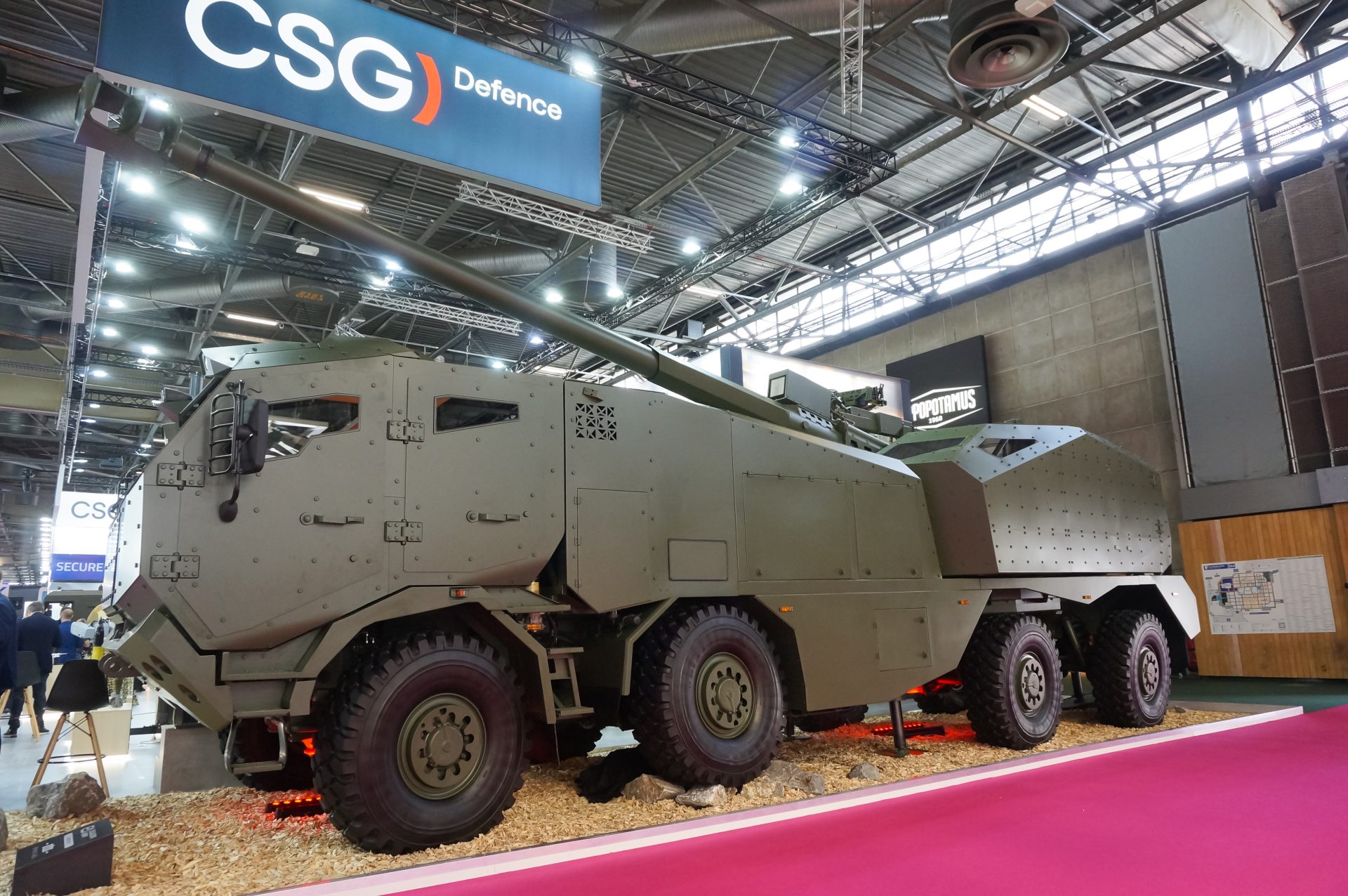
Beyond that deal, Kaliňák’s ministry has also signed two major contracts for Tatra trucks with Strnad’s companies. In December 2024, a €700 million purchase was designated a strategic investment by the government. A year later, another framework contract for Tatra trucks worth over €1 billion was signed. Both purchases were made without competitive tendering.
ICJK has found that Tatra Defense Systems — the Strnad-linked company that won the €700 million contract — had a concealed shareholder who has connections to both oligarch Miroslav Výboh and Robert Kaliňák himself: The shareholder structure includes Nika Development, in which Slovak businessman Viktor Jelínek was a stakeholder. Last October, CSG acquired Jelínek’s share in Nika Development.
Jelínek is involved in several UAE-based companies and also appears in the background of Al Saqr Management Consultancy, which previously owned half of Kaliňák’s own consulting firm, KALLAN Consulting. Peter Šimko — Kaliňák’s neighbor on the Croatian island of Pag — is listed as the managing director of Al Saqr, though the company no longer holds a stake in KALLAN.
Through Šimko, ICJK has previously linked Defense Minister Kaliňák to Jaroslav Strnad, Michal’s father. Šimko holds a stake in one of Strnad Sr.’s food companies, and Strnad Sr. himself has received contracts from Kaliňák’s ministry — including a €250 million deal to supply Black Hawk combat helicopters.
The list of cases in which the Slovak defense minister appears to have tilted state resources in favor of the Strnad arms group continues to grow. The most recent involves the November lease of land and repair workshops in Moldava nad Bodvou, previously operated by state-owned Konštrukta Defence. The ministry leased them without a competitive process to MSM Group, a CSG subsidiary.
In December, it emerged that CSG plans to use the site to assemble Tatra vehicles from a separate billion-euro order — this time for Indonesia. The lease agreement does not appear in the Central Register of Contracts, and the Ministry of Defense has declined to clarify the terms.
“The Slovak Ministry of Defense does not own any land or buildings in Moldava nad Bodvou. This is a business relationship between Konštrukta Defence and MSM Land Systems,” said Bachratý, the spokesman. Konštrukta Defence is a state-owned company fully controlled by the Ministry of Defense through the state holding company DMD GROUP.
Whether — and how much — the Slovak state will actually benefit from this billion-euro arrangement remains an open question.
This investigation was originally published in Slovak on ICJK.sk.
Subscribe to Goulash, our original VSquare newsletter that delivers the best investigative journalism from Central Europe straight to your inbox!

Tomáš Madleňák is a Slovak journalist who has worked for the Investigative Center of Ján Kuciak since 2020. He is based in Bratislava.