




Pro-Russian Propaganda and Hate Speech Going Live on Polish TikTok
Illustration: Solen Feyissa; Wikimedia Commons 2026-03-19


A Warsaw-based think tank monitored 114 accounts over three months, documenting eliminationist anti-Ukrainian rhetoric, the use of the French flag to promote Russian messaging, and calls for Polexit – amplified by the platform’s own recommendation tools.
For three months, researchers at the CEE Digital Democracy Watch tuned in to live broadcasts, using TikTok LIVE function in Poland, where participants discussed whether to handle Ukrainians the way “the Japanese did in Manila” — a reference to a 1945 massacre of over 100,000 civilians. They documented streams where Jewish identity was treated as an insult, where participants demanded Poland leave the European Union, and where Ukrainians were reduced to the Azov battalion, hoping that “Azovism disappears from the world.” They watched as TikTok’s own recommendation engine pushed these broadcasts onto the feeds of Polish users who had never followed the accounts in question.
The report The Hidden Power of TikTok LIVE in Poland documents how TikTok’s livestreaming function has been used by far-right networks in Poland to broadcast hate speech, organize real-world mobilization, and generate income — in real time, and largely without platform intervention.
114 Accounts, Over 1,000 Linked Profiles
Between October 18, 2025, and February 13, 2026, CEE DDW researchers monitored 114 Polish-language TikTok accounts using the LIVE feature. The accounts were identified through lists of known far-right actors, hashtag searches, recommendation trails, and by tracking who appeared as co-broadcasters in monitored streams. Further analysis of follower networks, hashtags, and repost patterns revealed over 1,000 potentially linked accounts.
During the entire observation period, TikTok removed three of the monitored accounts.
The researchers note that the 114 accounts do not form a single centrally directed network. They seem to be several interlocking clusters that share a set of common characteristics: high daily activity, mutual followership, and common visual branding. A significant number of cases are explicitly connected with the front gaśnicowy, the “fire extinguisher front,” a movement named after far-right MEP Grzegorz Braun, who gained international attention in 2023 for extinguishing Hanukkah candles in the Polish parliament.
Creators typically launch a TikTok LIVE and invite other accounts to join as co-broadcasters instead of streaming alone, producing panel discussions with three to ten simultaneous participants. The grid layout, with multiple faces on screen at once, resembles the visual format of a television debate. The rotating cast of participants allows streams to run for extended periods, extending the window during which content circulates before any moderation can occur.
Russia’s Colours, Broadcast in Polish
According to the research, pro-Russian narratives and symbols were common throughout the monitored streams. Russian national colours — white, blue, and red — appear across the accounts: in usernames, profile descriptions, and profile pictures. The report identifies this as in-group signalling, for example by referencing Slavic unity directly in usernames. Participants use information from Russian-language Telegram channels during broadcasts.
Direct quotes documented by researchers from these broadcasts include: “You know that safe countries are being made in the east now, Asia, and above all Russia”; “Russia is better than Ukraine, it’s Ukraine you should be afraid of”; “Russians don’t want war either, who in their right mind would want it.” In several cases, anti-Ukrainian rhetoric escalated into explicit incitement of violence against Ukrainians. Almost every LIVE that discussed Ukrainian migrants and refugees in Poland called for their deportations.
Such narratives correspond to Kremlin information warfare objectives in Poland: eroding public support for Ukraine, undermining trust in democratic institutions, and advancing the claim that Poland’s government is controlled by hidden foreign forces.
-
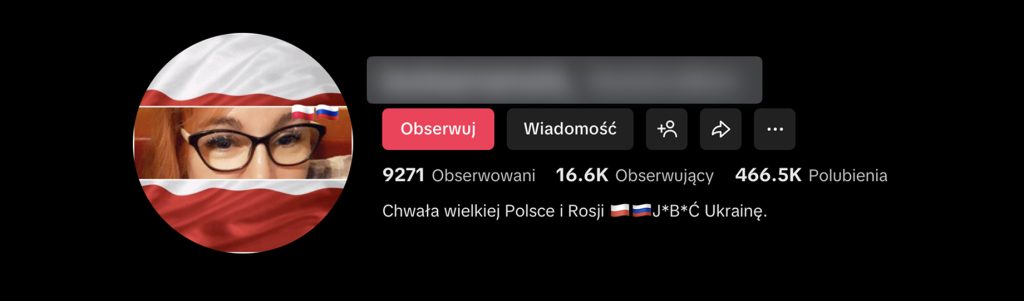
- Translation: Glory to great Poland and Russia. F*** Ukraine
-

- Translation: This is not our war
-

- Translation: “Us Slavs” Panslavianism is a common trope in Russian influence operations, aiming to build closeness between Russia and other Slavic nations
-
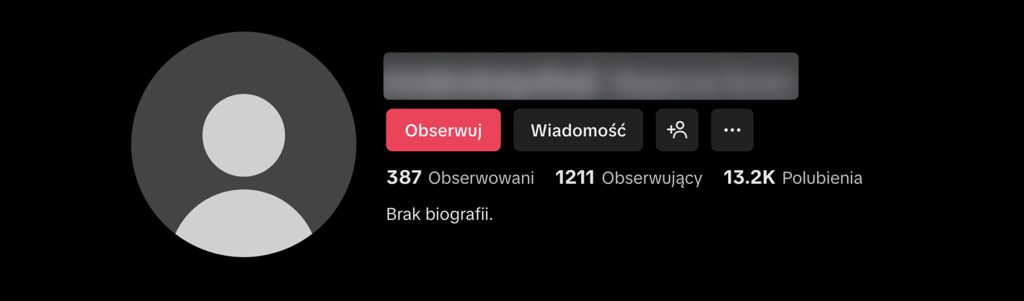
- Translation: Putin’s Moderator
-
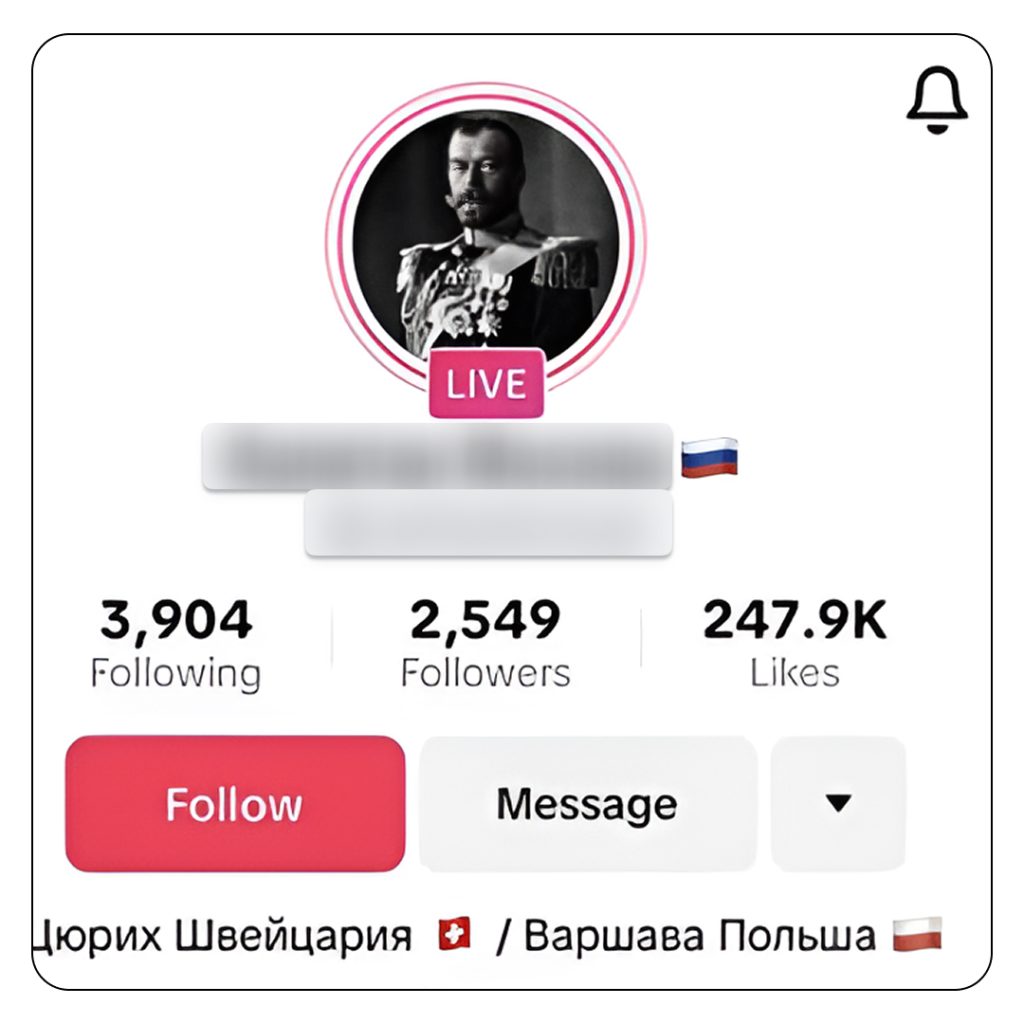
- Translation: Captain Moscow Zurich Switzerland / Warsaw Poland
-
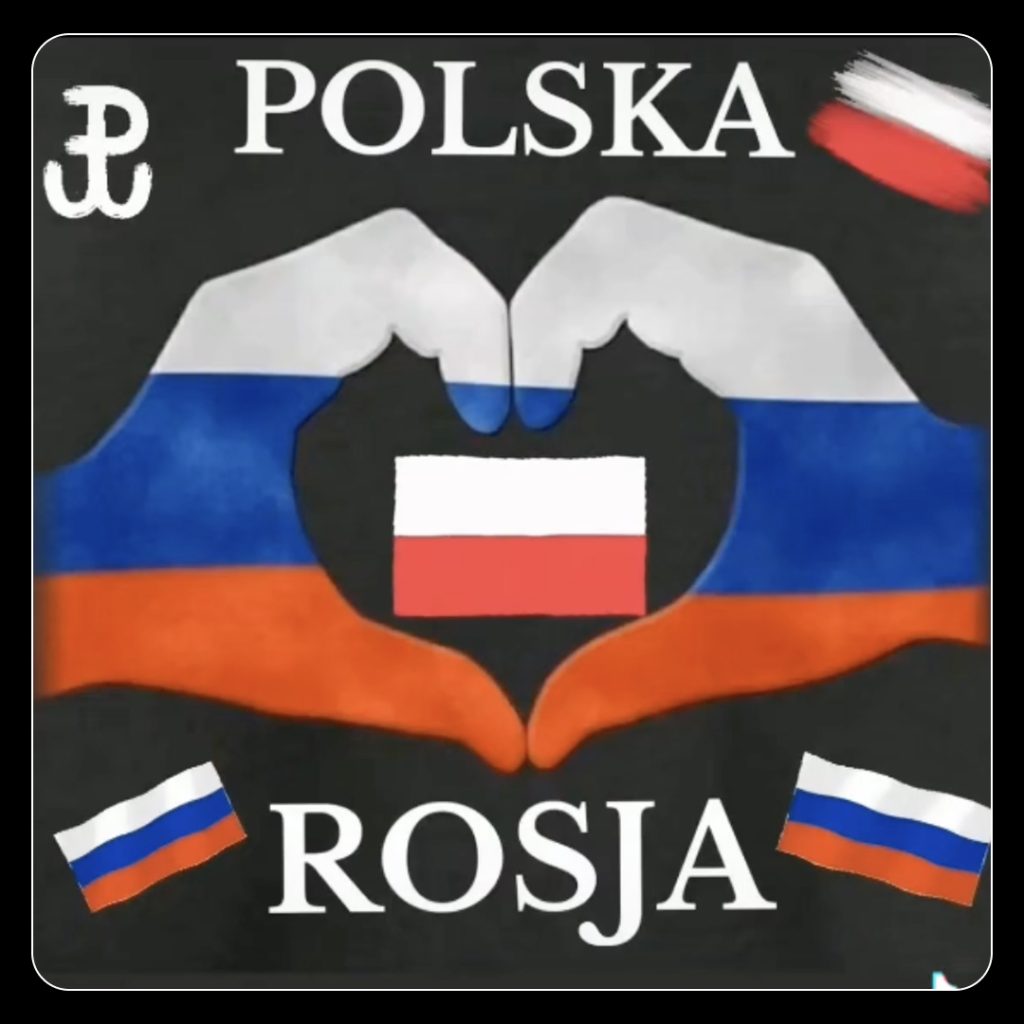
- Translation: Poland, Russia
The report also documents a specific visual moderation-evasion technique. Researchers found that the French tricolour, instead of the Russian flag, was frequently displayed by accounts with apparent pro-Russian sympathies. The explanation is the colour scheme: France and Russia share the same three colours. To a casual viewer, a French flag appears neutral. The report identifies this as a form of “algospeak” — the use of words, symbols, or visual cues to communicate meaning to in-group members while evading automated content moderation. The same logic is documented in emoji patterns in comment sections and coded phrases in usernames.
-
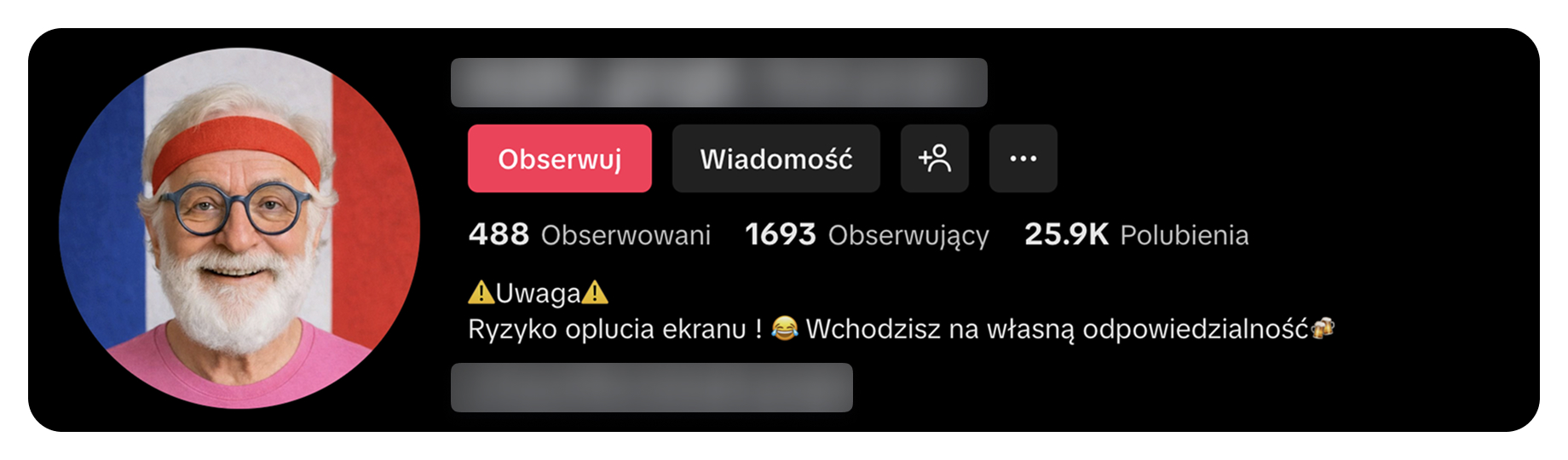
- Translation: Uncle Google Warning Risk of getting spit on your screen! You are entering at your own responsibility”
-
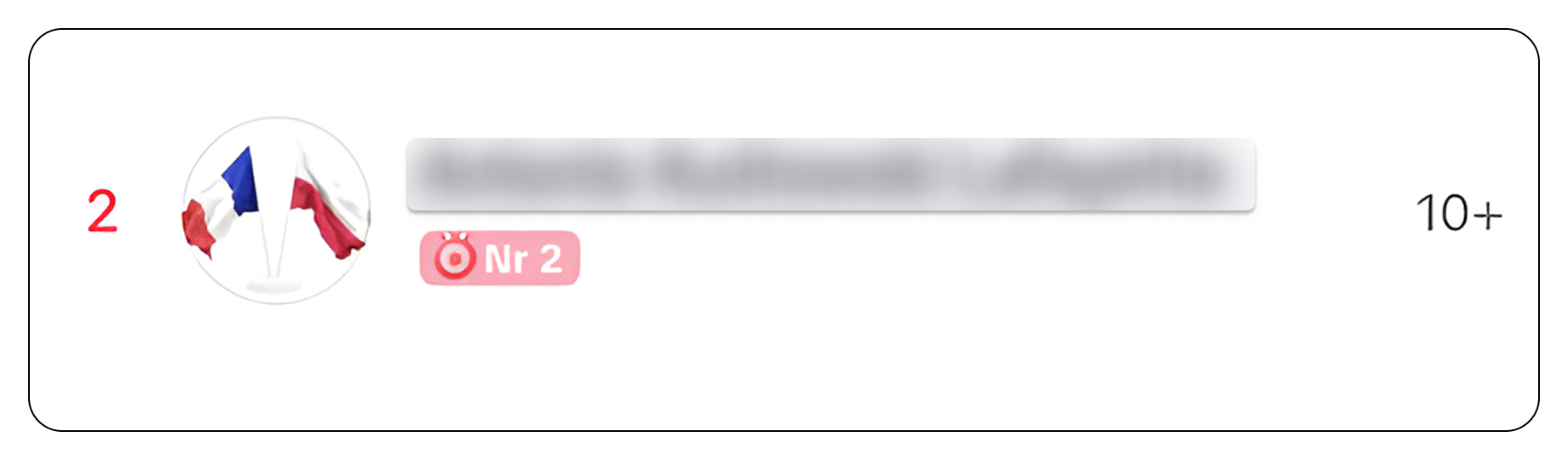
- Example of using the French flag as a signifier of support for Russia
-
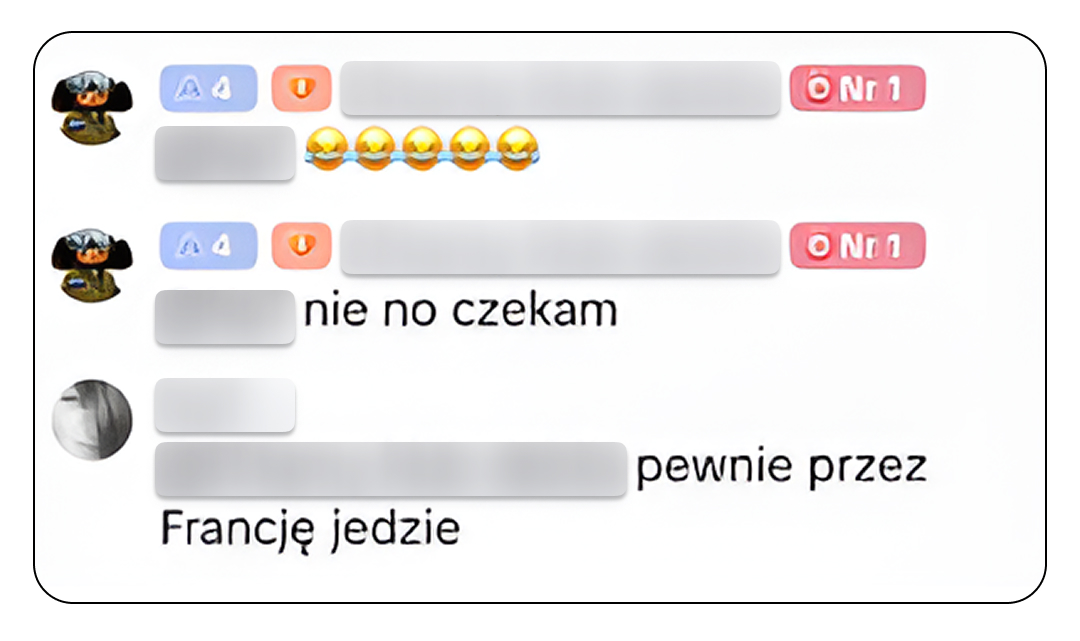
- Translation: He’s probably going through France. Used in the context of someone travelling to Poland from the east
Polexit, Antisemitism and Conspiracy Narratives
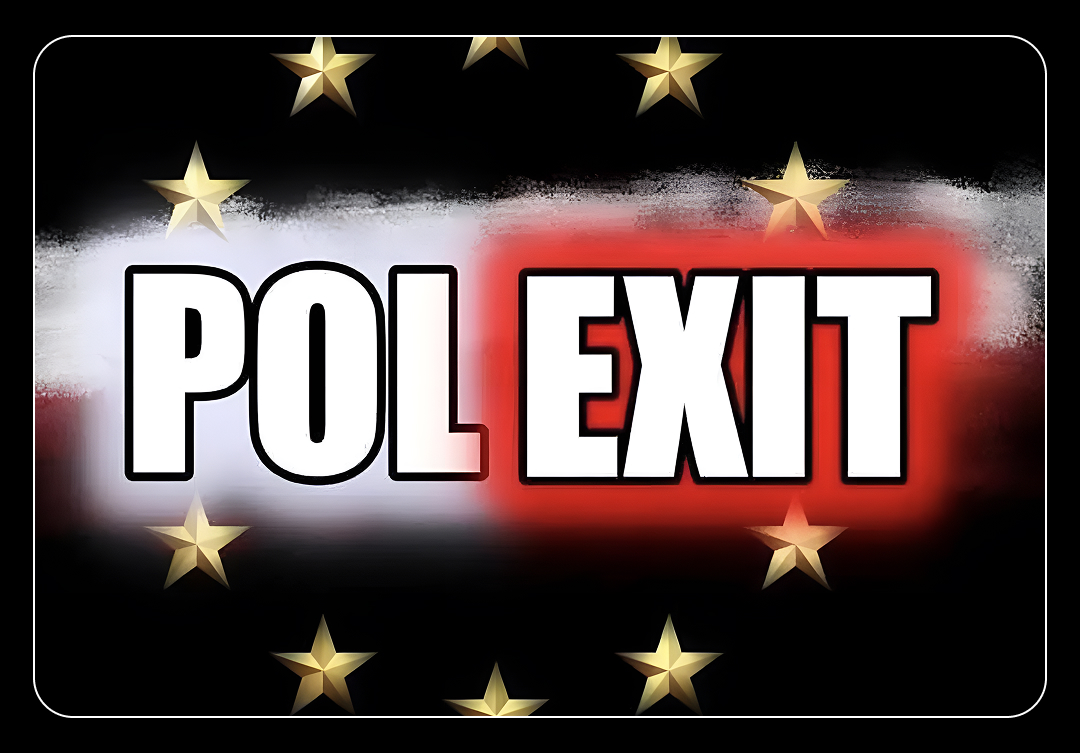
The CEE Digital Democracy Watch authors found out that hostility toward the European Union is widespread in the discourse on TikTok LIVE streams. “Participants actively discuss and develop policy proposals for Poland’s departure from the EU, framing Polexit as a necessary act of national liberation.” They often refer to farmers’ protests that swept across Poland and other EU member states, as evidence that Brussels imposes economically destructive policies on Polish agriculture and the broader population.
Hosts and participants of streams repeatedly described political figures as Jewish, treating the identification as derogatory. The report documents the claim that Józef Piłsudski, one of the most prominent figures in the Polish national canon, was secretly Jewish and a Russian agent. The “Żydokomuna” trope and the “Judeo-Bolshevik” conspiracy theory with roots in Polish far-right discourse appeared regularly across the monitored live streams.
The report documents images of European Central Bank president Christine Lagarde and European Commission president Ursula von der Leyen placed beside a Zyklon B label, which was the chemical agent used in Nazi extermination camps. An AI-generated cartoon shows von der Leyen instructing workers to “be obedient.”
TikTok’s own Community Guidelines explicitly prohibit “hateful conspiracies targeting a protected group” and classify stereotypes targeting religion or ethnicity as ineligible for the For You Feed.
The accounts documented in the report remained active. Several carry posts dated as recently as March 2026.
-
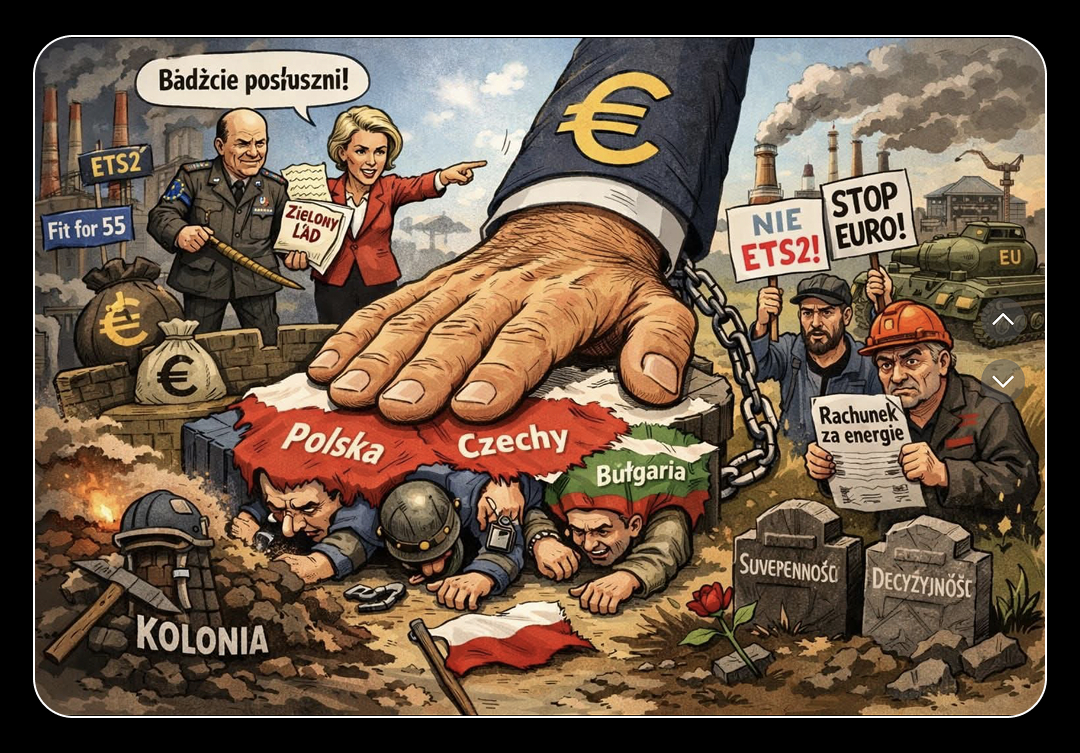
- Translation: “Be obedient” says Ursula von der Leyen in this AI-generated cartoon. Miners and workers hold up an energy bill, while sovereignty and decisiveness supposedly lay dead
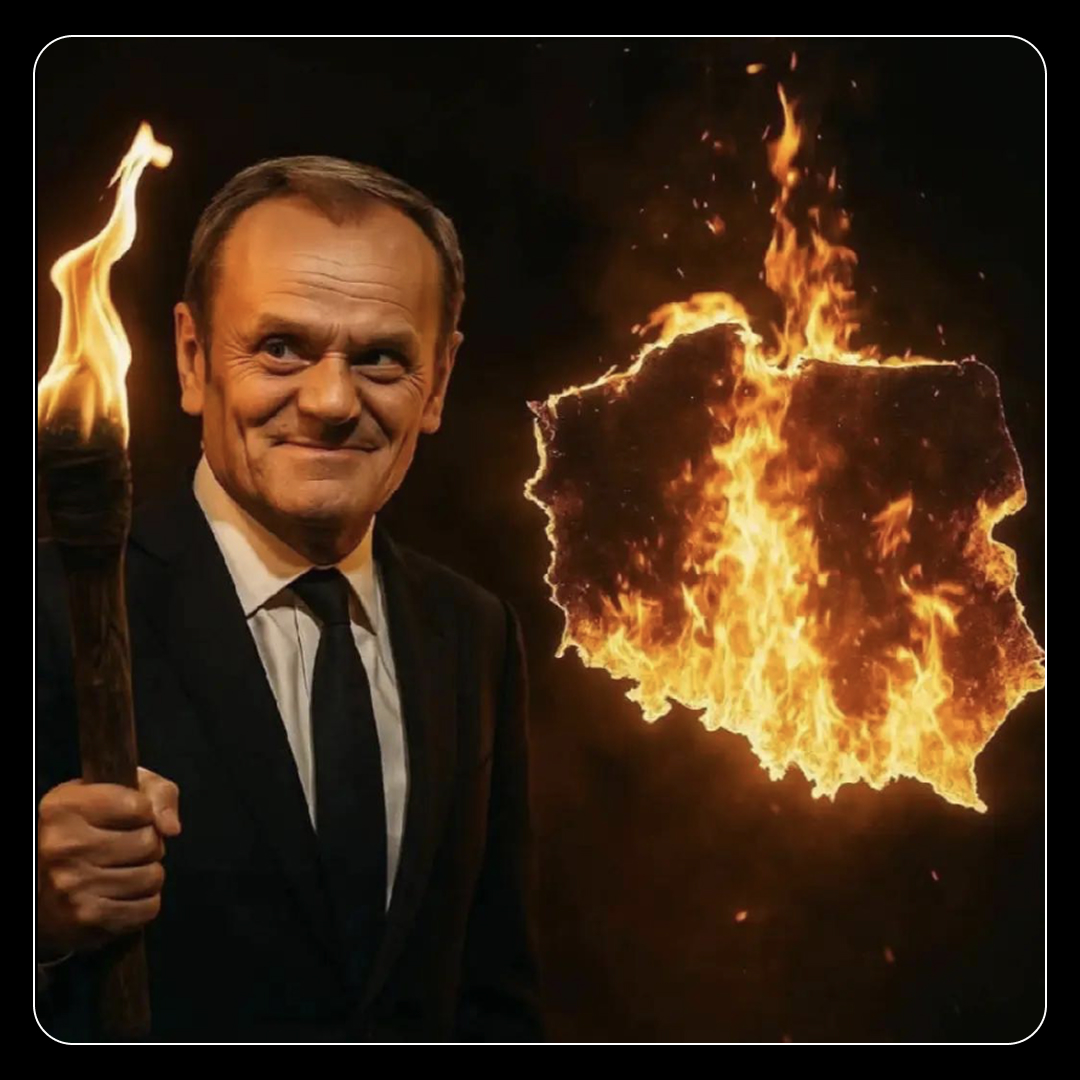
-
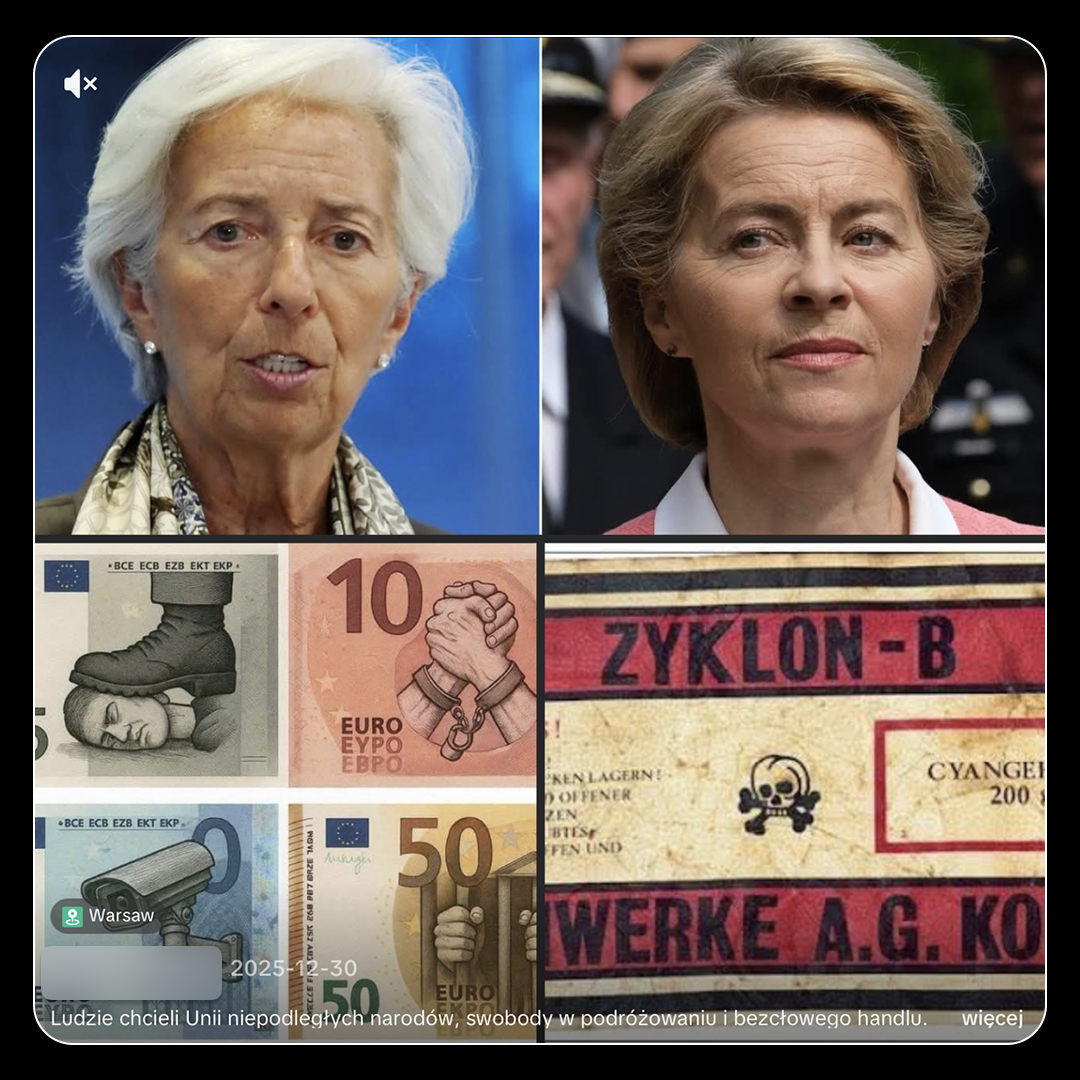
- Faces of ECB President Christine Lagarde and EC President Ursula von der Leyen alongside fake AI-generated Euro notes depicting EU’s supposed oppression and surveillance and an image of a Zyklon B label
Hate Speech Turned Directly Into Money
TikTok’s virtual gifting system allows viewers to purchase in-app coins with real money, send animated gifts to livestreamers during broadcasts, which are then converted into an internal currency called Diamonds, and finally exchanged for cash — with TikTok retaining a commission.
TikTok became the first app to exceed $1 billion in consumer spending in a single quarter, with LIVE playing a central role, according to data cited in the report. A 2025 Ipsos study found that 68% of TikTok users surveyed had already tried gifting on LIVE, with half indicating they were likely to do so again within the month.
Previous research by Digital Methods Initiative on 314 far-right extremist accounts in Germany found streamers monetising their broadcasts through micro-donations while spreading hate speech, earning between tens and hundreds of euros per day. The highest single-stream earnings recorded in that study was €114.
In Poland, the native gifting figures appear to be smaller, according to the researchers. The monetisation ecosystem, however, extends beyond TikTok’s built-in tools. Researchers documented accounts sharing BLIK codes (Poland’s widely used instant mobile payment system) during broadcasts, displaying phone numbers for direct transfers, sharing links to external crowdfunding platforms such as Buy Me a Coffee, and in some cases advertising cryptocurrency wallet addresses.
“The dissemination of antisemitic conspiracy theories, eliminationist anti-Ukrainian rhetoric, and anti-democratic sovereign citizen narratives,” the report concludes, “is not merely tolerated by the platform’s infrastructure but actively rewarded by it.”
The Algorithm as Amplifier
TikTok states that certain categories of content, including hostile and profane language, and hateful conspiracies, are ineligible for its For You Feed, meaning the algorithm should not proactively push such content to users who haven’t sought it out. CEE DDW researchers found LIVE streams containing such narratives appearing on the main feed of accounts which did not follow the profiles producing them. In several cases, TikTok sent push notifications alerting non-followers to active streams from these accounts, based on “recent history.”
TikTok LIVE’s real-time format creates a specific moderation challenge. Unlike pre-recorded videos, LIVE content is broadcast as it happens. There is no pre-publication review window. And because LIVE streams are not archived and are inaccessible to external researchers after broadcast, post-hoc accountability is limited.
The European Commission opened formal proceedings against TikTok under the Digital Services Act (DSA) in February 2024, followed by a second investigation in April 2024 after TikTok introduced its TikTok Lite product in France and Spain without prior risk assessment. In December 2024, proceedings expanded to cover election-related risks. In May 2025, the Commission issued preliminary findings that TikTok’s advertisement repository failed to meet DSA transparency requirements.
The report argues that none of this has produced changes in how TikTok handles its LIVE function. In Poland, where TikTok declares 144 moderators in its DSA Transparency Report for the first half of 2025, the system has not effectively addressed high-profile violations. Moderation resources across the broader region are thinner: Latvia has 11 moderators, Estonia and Croatia 10 each, Lithuania 5.
The policy recommendations in the report include suspending TikTok LIVE functionality in the EU “until moderation, transparency, and content archiving measures are in place” and “treating LIVE monetisation with the same regulatory rigour currently applied to political advertising.”
Primary Source of Information About Elections
TikTok has over 13 million users in Poland and is the country’s third most popular social platform. More than 50% of Poles use it at least once a week, with 42% doing so more frequently, according to a 2026 IAB Polska report. The platform has over 2 million users aged 7–14 in Poland, and nearly the same number aged 60–75.
Research conducted by UCE Research for Onet, also cited in the report, found that in 2025, TikTok was the primary source of information about Poland’s presidential election for 43.7% of respondents aged 18 to 25.
At the same time, the election-related disinformation on the platform is back. As CEE DDW researchers found out, the network called UCiDK, or Office for Civic and Democratic Control, a pseudo-legal body that encourages Poles to withdraw from electoral registers and claims constitutional authority to issue “warrants” for the arrest of public officials, reappeared on the platform.
The full report “The Hidden Power of TikTok LIVE in Poland”, authored by Dobromił Wereszczyński and Aleksandra Wójtowicz, with contributions from Jakub Szymik and Konrad Kiljan is available here: https://ceeddw.org/wp-content/uploads/2026/03/TheHiddenPower.pdf
Subscribe to Goulash, our original VSquare newsletter that delivers the best investigative journalism from Central Europe straight to your inbox!