





The Babiš File: What’s Next in the French Investigation?
Illustration: Shutterstock 2025-12-22


Illustration: Shutterstock 2025-12-22
Journalist Abdelhak El Idrissi, of the French newspaper Le Monde, has been covering the investigation into Andrej Babiš. We worked with Abdelhak on the Pandora Papers investigation, which revealed how Andrej Babiš bought real estate on the French Riviera through a loan he granted to himself. We met in early December in a Paris park near the university where Abdelhak lectures and discussed how the case would turn out and whether its resolution was imminent. This interview’s English version has been lightly condensed and edited for clarity.
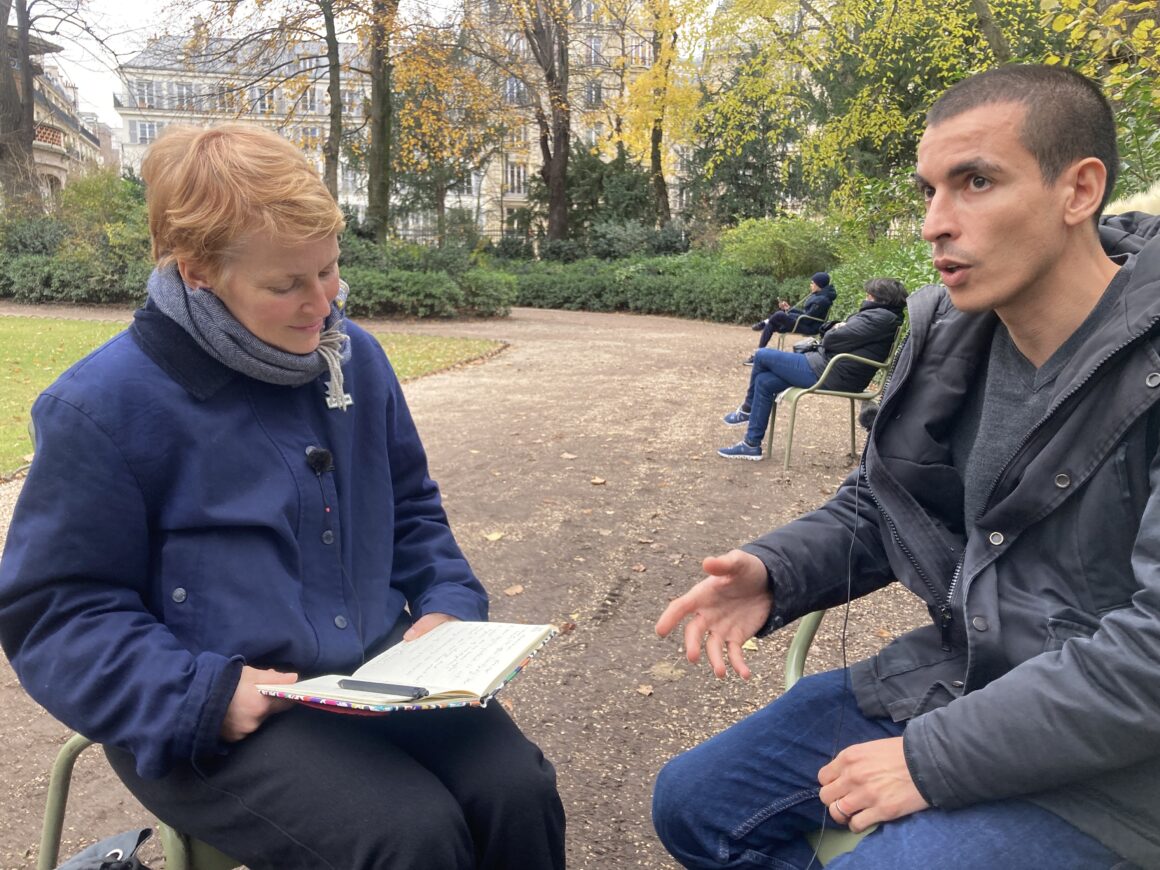
Journalist Abdelhak El Idrissi from the French newspaper Le Monde during an interview with Pavla Holcová. Source: investigace.cz
So what is the proper name of the office investigating the case or the prosecutor in charge of the investigation?
It is the Parquet National Financier, which was created in 2014 after a big scandal in France when it was discovered that the minister in charge of budgets — so, in charge of fighting against tax fraud — was himself a tax fraudster. It caused a big scandal and many changes have been adopted and this Parquet National Financier was created with a new investigative unit in charge of fighting corruption and financial crime. The unit in charge of the Babiš case — a large unit, called the central office of corruption — is inside this new investigative unit.
Have they already solved any big cases?
They are in charge of the most important and most complicated tax fraud cases against not only individuals who are suspected of tax fraud, but also against companies — big companies, like American companies like McDonald’s and Google, which have been under investigation for tax evasion and tax fraud. So it’s like an elite unit in charge of the most complicated and most sensitive cases.
Are they in charge of the case of Babiš?
Yes, they are. The Parquet National Financier decided to open an investigation about this journalistic project both of us worked on, which was the Pandora Papers, and after they discovered our articles, yes, they decided to open a case. That’s not something that is, like, unique. … It happened a lot that they opened investigations after journalistic investigations and articles. So that’s not something that’s unique to Andrej š.
Do they have any other big cases that are similarly about politicians from the EU?
In France, we have this former minister who was, at some point, wanted to be a candidate, to be president: Dominique Strauss-Kahn. And this is also someone…
He was also in the bank…
Exactly. So Dominique Strauss-Kahn was also a person that we reported on as someone that we found was inside the Pandora Papers documents. His case was different from Babiš’s case, but it was also related to suspicion of money laundering and tax fraud regarding a company he opened in Dubai.
So Babiš is not the only one who has been under investigation after the Pandora Papers.
No, it’s much more like they already have some experience with investigating prominent people, or sensitive cases such as this one.
Yes, the most sensitive case was this former French minister in charge of fighting tax fraud who was also suspected of tax fraud. He was under investigation by this unit.
It’s been something like two years since the start of the Babiš investigation. Could you sum up what happened during this time? Or where we stand regarding the case?
I cannot say exactly from the outside. It can be surprising that a criminal investigation has been open for two years and nothing has happened. But it is very important that people that listen to us know that we have a big problem in France with financial crime investigation because there is a lack of investigators. So in this unit, you have an investigator dealing with many, many, many cases. And they have to deal with many cases, the most complicated ones. So two years is not that long for a financial crime investigation. I’m not smiling. It’s not a good thing that it takes so much time. And when there is something that needs to be done abroad, that’s complicated and that takes even more time. What I know is that, of course, after they open an investigation, the first thing was to check [the veracity of reports].
Because it’s not [the position of investigators that] because things are written in articles that they’re true. Even if we know that we are just reporting facts. But from the judiciary perspective, they need to check and to validate it. So that was the news I had at the beginning. And I think that now it’s complicated because they need to say if there was tax fraud.
And I will not go into the details of the case that we reported on. We all know that Andrej Babiš used complex offshore structures to lend money to himself. This is not an obvious tax fraud and the authorities will have to clearly argue why they consider it a fraud.
And the context is complicated also because there is this political background in your country that I think doesn’t make things easier for French investigation.
So who is the prosecutor in charge of the investigation? And what do we know about her?
I don’t know who the prosecutor in charge of this particular investigation is. And I think that it’s not relevant because the Parquet National Financier is working as a team. And so many times they are working two by two. Like not one investigator. Not one prosecutor alone. You were saying she because you are referring to the prosecutor who is not in charge of this investigation. She’s in charge of answering questions from journalists.
Okay. So she’s a media person.
She’s a prosecutor member, a magistrate. But she is not conducting the investigation because she has a lot of things to do to manage, to participate in, to manage the team. Even if she’s not like the big boss. But she belongs to the team. To the management. And also she’s in charge of answering journalists’ questions. But we cannot say that she’s the one in charge of this investigation.
Is there any information on who is legally representing Andrej Babiš? Or if there is anyone?
Andrej Babiš has not yet been summoned for questioning, so if he already has a lawyer in France, this information is not public. I don’t know in this particular case if he is already a journalist. Or even if contact has been made between prosecutors and Andrej Babiš or his lawyer. But in this case, I don’t know if he has a lawyer or what is going on. If a contact has been already established [by the investigating prosecutor] with formal questions. That’s something I don’t know. Yeah.
There is a theory that Andrej Babiš created this offshore scheme to bypass paying a so-called solidarity tax. What is solidarity tax? Could you explain?
It was the former name of this tax on wealthy people. When you’re rich, at some point, let’s say more than one million euro, you need to pay taxes. When Emmanuel Macron was elected president, he changed this tax, saying that okay, wealthy people will be taxed but only on their real estate assets. So it’s not taking into consideration everything you have, but only a few things, and mainly the real estate holdings. And the principle is simple. You have real estate worth more than one million euro, let’s say. You need to pay a tax. And we know that some people were trying to avoid paying this tax by saying falsely that yes, maybe they have a villa worth two million euro. But as they are borrowing money from a bank, like two million euros, so the balance is void, is zero.
But what if that’s not a bank that lent the money? And you are the one that lent money to yourself?
We are in this gray area where some lawyers, tax lawyers can say no, it’s legitimate. It’s still a loan. But from the prosecution’s point of view, it’s like, no, it’s the same person and you are abusing the law.
So this principle of abusing the law, is it illegal to try skirt the law at some point?
At some point, yes, but that’s the kind of question in the middle of the investigation regarding Andrej Babiš. But he’s not the only one targeted for maybe at some point abusing the law.
The Czech version of this article was published on Investigace cz.
Subscribe to Goulash, our original VSquare newsletter that delivers the best investigative journalism from Central Europe straight to your inbox!

A Czech journalist, Pavla Holcová is the founder and editor-in-chief of the Czech Center for Investigative Journalism. She is an editor at OCCRP and a member of ICIJ. She was a John S. Knight Fellow at Stanford University (2023). Pavla is the winner of the ICFJ Knight International Journalism Award and, with her colleagues Arpád Soltész and Eva Kubániová, the World Justice Project’s Anthony Lewis Prize Award. She is based in Prague.