




The Murder of Ján Kuciak: Inside the Verdict the Supreme Court Overturned


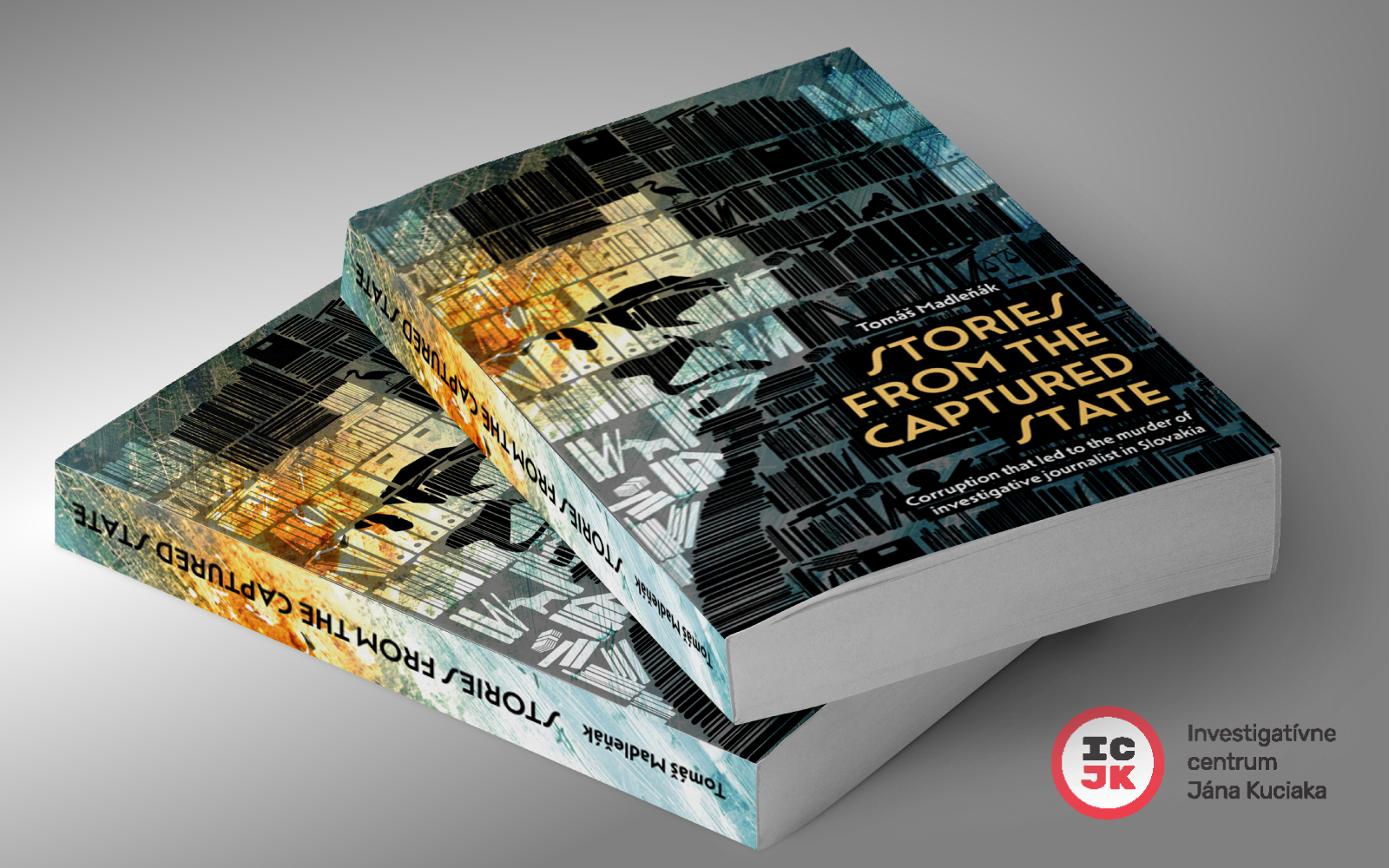
On Monday, January 26, 2026, the trial of Marián Kočner began for the third time at Slovakia’s Specialized Criminal Court. Together with his associate Alena Zsuzsová, he is accused of ordering the murder of investigative journalist Ján Kuciak. To mark the restart of the proceedings as well as the anniversary of the murder, we are publishing an excerpt from the book Stories from the Captured State, by Investigative Center of Ján Kuciak (ICJK) journalist Tomáš Madleňák, which revisits the trial so far and the last verdict. In that ruling, the court acquitted Kočner but found Zsuzsová guilty. The Supreme Court later overturned the decision because of numerous errors, ordering a new trial before a different panel of judges.
Not Guilty
When I first sat down at the laptop with access to Kočner’s Library, the very first thing I opened were copies of the two USB sticks the police had seized from Marian Kočner’s villa. On them I found two folders bearing the codename of the entire operation, which Kočner and Tóth had apparently named after the controversial FBI director: edgar 1 and edgar 2. Tóth testified that he handed the results of the surveillance to Kočner on USB sticks on an ongoing basis and then once again with all the contents together in 2018. These two keys were apparently the last, and most complete, version. Inside the edgar 1 and edgar 2 folders were additional subfolders, labeled with the names of the journalists and politicians being monitored. I clicked on the one called Kuciak, which contained another subfolder labeled 2017, and within it seven more subfolders numbered from Ján Kuciak 1 to Ján Kuciak 7. In each of these, there were one or two text documents marked with dates. There were nine such documents in total, and some of the folders also had videos. Each of the documents described a day of surveillance, some covering several days. The text was supplemented by inserted photographs from the surveillance. When I saw it, the first thing that came to my mind was that this was what I imagined reports that communist State Security (ŠtB) agents wrote about dissidents looked like.
“Report from the day October 4 2017,” reads the headline of the report from the first day that Kočner’s and Tóth’s squad first hung on the heels of Ján Kuciak at the address where Aktuality editorial office is located. “12:20 h. surveillance of Ján Kuciak started at Prievozská 14 in Bratislava 17:28 h. Kuciak spotted leaving the mentioned address. He was dressed in a dark blue jacket, blue jeans, blue t-shirt, carrying a black backpack on his back. Looking at his mobile phone, he continued on foot along Prievozská street, Mlynské nivy to the new bus station. He went to one of the vendor stalls and bought a filled baguette. Eating the baguette, he went to platform No. 5 and stood in line with waiting passengers. From this platform, a bus regularly departs at 18:00 h to Zlaté Moravce with a passage through the town of Sereď. … During the bus ride, Kuciak did not communicate with anyone, spending most of the time manipulating his phone.
“18:42 h. he got off the bus at the bus station in Sereď and continued on foot to the nearby Lidl store. He went inside and bought some groceries. After leaving the store, he went to the parking lot, stopped at a dark green VW Passat vehicle with license plate BY XXX XX. It is an older type that was manufactured approximately between 2000 and 2003. He unlocked the vehicle, placed the shopping and backpack in the trunk. He got in and drove through Sereď to the village of Veľká Mača on Brezová Street. He parked in front of house number 558, got out and entered the yard with his shopping. It is a family house with a flat roof, the kind that was built in the 70s and 80s of the last century. From the outside, the house looks relatively neglected, but it is under renovation. Right behind the gate of the family house was a large concrete mixer and coiled electric cables, various protective tubes, etc.
“Until 22:15 h. Kuciak did not leave his residence, the surveillance was ended.”
The text from the first day of surveillance is accompanied by seven photographs of Ján Kuciak walking, eating a baguette at the bus station in Bratislava, and loading his belongings into a car in Sereď. He left his older Passat there every morning and travelled to Bratislava by bus. Sometimes in the evening in Sereď, alone or together with Martina, he would go shopping at the supermarket and then drive home to Veľká Mača. The photos show the color and registration number of their car, and the house they were renovating. In the photos from the first day of surveillance, the house has already had its windows replaced. When I noticed it, my heart ached again at the thought that these two young people were trying to build a home for themselves with honestly earned money. An ordinary, older, modest house, gradually renovated to make it suitable for a family. In this, they were violently stopped by bullets ordered by someone who despised honest work and earned his ostentatious luxury through fraud. An older Passat versus a showy Bentley. An older family home with recently replaced windows versus a residence in an expensive part of Bratislava with an indoor swimming pool full of kitschy luxury. Life versus death. There is not a hint of anything in this text document, nor in the other eight similar reports and seven accompanying videos, that Kočner could have used to blackmail or compromise the young journalist. But what the documents did have was information that could be interesting for someone preparing a murder: the exact address of his home and work, a description of the route between these two places, the route Ján traveled, the license plate number of his car and where he parked it, the shop where he bought groceries…
The fact that the surveillance reports and photographs were used in the murder has been confirmed by the killers. According to the prosecution, Marian Kočner ordered the murder via Alena Zsuzsová. She passed the order on to her acquaintance Zoltán Andruskó, who arranged for the two hitmen. He knew that Tomáš Szabó and Miroslav Marček had murdered before. Zsuzová, while placing the order with Zoltán Andruskó, showed him the very surveillance reports that Kočner’s and Tóth’s squad had created. Andruskó then showed them to Marček and Szabó. This is confirmed by the final judgments against Andruskó, Szabó, Marček, and the not-yet-final first instance judgment against Zsuzsová, who was found guilty by the Specialized Criminal Court but is awaiting a decision by the Supreme Court. On the other hand, Marian Kočner has been acquitted twice by the Specialized Criminal Court. The first acquittal was overturned by the Supreme Court, which ordered a retrial. The second acquittal from this retrial is still pending the decision of the Supreme Court.
Kočner’s defence was built on finding holes in the prosecutors’ arguments and questioning the trustworthiness of witnesses. Both Andruskó and Marček cooperated with the police since their arrest and consistently described photographs and surveillance reports exactly as they appear on the USB sticks seized by the police from Kočner that I was able to study in detail in Kočner’s Library. For the photographs that both Andruskó and Marček recognized, the defense tried to suggest that the killers might have seen other photographs from some other surveillance. A recording of Miroslav Marček’s interrogation, during which investigators showed him photographs from the surveillance of Ján Kuciak, was also played in court. The surveillance was ordered by Marian Kočner and the results, including the photographs, were found at his home on USB sticks. Marček recognised two of the photographs as the ones he had seen when receiving the order for Kuciak’s murder. However, he also said that there was one missing: “I remember one where his face was much more visible. And I don’t see that one here. It was taken somewhere at a bus stop or in a parking lot. He was wearing a black sweatshirt in it. He was photographed from the front, while walking. Actually, I recognized him from that photo; from these ones, I wouldn’t have recognized him,” Marček remarked. Kočner’s defense interpreted this as evidence in favour of Marian Kočner. We therefore repeatedly dug into the data from Kočner’s Library and searched through the surveillance reports. Indeed, there is not one individual photo in the data that matches Marček’s description one hundred percent. But I found several photographs that partly match it: on the very first day, the spies took pictures of him walking from the front in a dark blue sweatshirt, which looks almost black in the photo. There are also photos from the same day showing Jan Kuciak’s face in greater detail as he eats a baguette at a bus stop, still wearing the dark sweatshirt. And from the parking lot, when he, dressed the same way, is loading groceries into his car.
Kočner’s defense also questioned the interpretation of Threema messages in which Kočner and Zsuzsová, according to the prosecution, wrote about murder in code—for example, messages about how they both itch with scabies (scabies is supposed to be a code for a troublesome journalist, according to an analysis by academics at the Faculty of Arts of Comenius University in Bratislava) or say that cream (a cipher for murder) needs to be applied. Or about teeth falling out, which is a sign of death according to Zsuzsová’s dream book; the day after the murder, when Andruskó informed her of the murder, she wrote to Kočner that one of her teeth had already fallen out. Or about the melting of the snow, where snow is supposed to symbolize something unpleasant that prevents Kočner and Zsuzsová from carrying out their interests, and its melting signified removal of said unpleasant thing—namely, the murder of a journalist. This is what Kočner, seemingly illogically, asked the morning after the murder:
THREEMA APP, FEBRUARY 22 2018:
Zsuzsová: Oh f*ck
Kočner: What
Kočner: Has the snow melted?
Zsuzsová: 1 has really fallen out
The defense disputed the interpretations of these codes, but failed to provide any other plausible explanation for the messages. Kočner was not treated for scabies; Zsuzsová was not at the dentist with a tooth that had fallen out. Instead, she met with Kočner in Bratislava, where, according to the indictment, he handed her money so that she could pay off the killers. If, despite all this evidence, the judges had decided that the principle of in dubio pro reo ([when] in doubt, rule for the accused) applied, and had plausibly explained why they still had reasonable doubt about Kočner’s guilt, this would have been easier to accept than the strange line of reasoning they chose. The judges claimed that only Zsuzsová was guilty. But Ján Kuciak did not write about Zsuzsová. Nobody in Slovakia, except for her personal acquaintances and Kočner, knew about her until the murder. But the judges claimed that Zsuzsová, out of a kind of love for Kočner, hatched the plan herself and had the inconvenient journalist murdered, as he was dangerous to Kočner and thus also threatening her own property interests, as Kočner was her generous sponsor. The judges thus created their own version of events. We never found any evidence in Kočner’s Library to support this theory. And a court should, by law, only draw conclusions from the evidence presented and found, not interpret and create its own version of events.
Two of the three-member panel of judges, Ružena Sabová and Rastislav Stieranka, ruled as described. The third member, Jozef Pikna, dissented. In their judgment, Sabová and Stieranka do not dispute that Marian Kočner had a negative attitude towards Ján Kuciak and wanted to take revenge on him. However, they argue that he wished to do so by pillorying, not by murder.
“Apparently driven by a vindictive motive, he decided to resolve this situation by pillorying the journalist and his family,” the judges wrote in their ruling, adding that he had no basis for doing so. However, that does not mean he had the intention to kill anyone, they said.
“The court could not reliably, beyond reasonable and justified doubts, come to the conclusion that the act connected with the killing of Ján Kuciak was committed by the defendant Marian Kočner,” Stieranka and Sabová wrote to justify their decision.
“The court… came to the conviction that Kočner had no knowledge of Kuciak’s murder before its public disclosure…” they claim the same verdict with a much greater degree of certainty.
In another part of the verdict they write why they do not find Kočner guilty of ordering the planned but unfinished murders of the prosecutors either. The trials in these two cases were joined and ruled on together, as the cases themselves are linked, too. According to the indictment, in addition to the murder of a journalist, Kočner also ordered the murder of former minister and lawyer Daniel Lipšic, whom he hated. Lipšic defended the victims in the Čistý deň (Clean Day) case; defended opposition politician Igor Matovič when Robert Fico used tax secrets against him; and, in the Privatbanka case, it was Lipšic who, while he was still interior minister in Radičová’s government, opened the whole case concerning suspicious transactions of millions of euros to Marian Kočner’s accounts. The second prosecutor whose murder Kočner (according to the indictment) ordered was Maroš Žilinka, the prosecutor who got the Donovaly case on his desk after Kočner’s policeman Štefan Jombík swept it off the table—until it was reopened after an article by Ján Kuciak and Žilinka took the case away from Jombík and started real prosecution. The third prosecutor whose murder Kočner allegedly ordered was Peter Šufliarsky, about whom Kočner also expressed himself vulgarly in Threema and whom he perceived as an obstacle to his release from jail. However, judges Sabová and Stieranka also acquitted Kočner, writing:
“If Kočner had also been involved in preparing the murder of JUDr. Žilinka, then he would have specifically mentioned the person of JUDr. Žilinka to Zsuzsová. The court does not find direct evidence and has not established a complete chain of indirect evidence based on which it could decide without doubt that defendant Kočner approached and asked Zsuzsová to arrange the execution of murder…”
One of the most compelling pieces of evidence against Kočner were the photographs from the surveillance of Ján Kuciak. It has been proven and acknowledged by the court that the surveillance of Ján Kuciak was ordered and paid for by Kočner and that it was he who handed over the materials to Zsuzsová, who showed them to Andruskó when ordering the murder. According to the verdict, the judges have no doubt about this. However, they argue that Kočner did not give them to Zsuzsová to order Kuciak’s murder, but so that she would know how to operate the Na pranieri outlet. They argue that Kočner did not order the preparation of materials for murder, but pillorying:
“The surveillance of journalist Ján Kuciak… was not aimed by Kočner at obtaining information about Ján Kuciak’s usual way of life, about the usual times of his activities and the places where he stayed, which are needed to create conditions for murder…,” wrote judges Stieranka and Sabová, in obvious contradiction with reality, since there is nothing in the surveillance reports on Ján Kuciak, which I saw with my own eyes and read in their entirety in Kočner’s Library, than information about his usual way of life, activities, daily routine, and places where he stayed. The verdict does not answer the question of why Kočner would give such photographs to Zsuzsová for public shaming and pillorying since there was no material suitable for public shaming in them. Even the members of the surveillance team themselves reported that “Kuciak lives like a monk.”
The third judge of the panel, Jozef Pikna, had an obvious problem with the argumentation of his colleagues. He exercised his right to add a dissenting opinion to the verdict, in which he asserted that he did not doubt Kočner’s guilt. Pikna wrote that “the evidence presented at the main hearing creates a logical and undisturbed system of mutually complementary evidence, which in its entirety excludes the possibility of any conclusion other than that the defendant Marian Kočner committed the act…” According to him, the evidence presented “proves beyond reasonable doubt that the order for the murder did not begin with Alena Zsuzsová, but with Marian Kočner.”
Judge Sabová and Judge Stieranka justified their decision to acquit Kočner on the basis of the principle of in dubio pro reo, which is a valid principle of rule of law and literally means [when] in doubt, rule for the accused. The question is always: how much doubt? Murders are never done with formal written contracts and invoices, so there is always some doubt. To sentence someone, the evidence presented must overrule any reasonable and justified doubts then. Jozef Pikna does not consider the doubts of his colleagues Ružena Sabová and Rastislav Stierania to be reasonable. On the contrary. According to him, it was clear that Kočner had a motive to have Ján Kuciak murdered. In fact, according to Pikna, Kuciak’s articles about Kočner’s fraud were so well-researched and supported by analytical work that they created real problems for Kočner, which, “in the context of Marian Kočner’s then current efforts to enter politics, was an existential threat to him.”
In 2017, Kočner tried to establish a political party called Cieľ (Goal). However, he was never able to collect the necessary 10,000 signatures to register the party with the Slovak Interior Ministry. This is despite the fact that he and Alena Zsuzsová also tried to misuse the signatures of people from Roma ghettos and the underprivileged who benefited from food aid. Zsuzsová and Kočner aimed to obtain these individuals’ personal data through the food aid program and then forge their signatures. They finally handed over almost 13,000 signatures to the Ministry of the Interior on 25 January 2018. However, the authorities refused to register them because 3130 signatures contained incorrect data.
Pikna also considered the fact that Kočner did not directly threaten Ján Kuciak with death, but with discreditation, to be further evidence of his guilt. From the records of the surveillance of Ján Kuciak by Peter Tóth’s commando, it appears “that Marian Kočner failed to reveal and record negative behavior of Ján Kuciak… by which he could blackmail or ridicule him through his outlet ‘Na pranieri [In the Pillory]’ and thus eliminate him,” Pikna writes.
Since Kočner was unable to discredit Kuciak, he was left with materials that were only good for one thing: murder. According to Judge Pikna, the surveillance reports, especially in connection with Zoltán Andruskó’s testimony, directly prove Marian Kočner’s guilt. Since his detention, Andruskó has consistently testified that Kočner ordered the murders through Zsuzsová. According to the judge, it was impossible “that Alena Zsuzsová would only ‘pretend’ before Zoltán Andruskó that she was ordering the murders for Marian Kočner without him having actual knowledge of it.” Other evidence rules this out, he said. Zsuzsová showed Andruskó the photos and the schedule of Jan Kuciak’s day when ordering the murder. None of the judges doubted that Zsuzsová received the materials from Kočner. However, only Pikna wrote that he did not doubt that Kočner gave them to her precisely to show them to the murderers:
“The idea that she would have these materials for the purpose of the Na pranieri outlet makes no logical sense, because that portal was actually launched only in summer 2018. There was no reason for her to have them available half a year in advance,” he argued.
In his dissenting opinion attached to the verdict, judge Pikna also disputed that Zsuzsová would have had enough money to pay for the murder. Pikna considered unrealistic the possibility, which his colleagues suggested, that Zsuzsová would have earned the money by giving loans with high interest rates. He asked why Kočner would have continued to finance her daughter. Zsuzsová and Kočner tried to explain money transfers from Kočner to Zsuzsová by saying that Kočner became a godfather to Zsuzsová’s daughter and therefore helped her financially.
According to Pikna, that Kočner and Zsuzsová communicated in the Threema application using codes and ciphers is also beyond reasonable doubt. “It is not possible to interpret it [the Threema] absolutely literally in its entirety, but neither to uncritically rely only on the interpretation offered to the court by the individual parties to the proceedings, or the appointed experts. At the same time, however, in my opinion, it is not possible to give up on searching for its true meaning,” wrote Pikna.
* * *
Judges in Slovakia don’t like when journalists comment on their work or decisions. However, expecting the Slovak public to not only respect verdicts but also uncritically accept them as indisputable is absurdly naive. Such a thing is simply not possible, and certainly not after our experiences with Monika Jankovská and other judges who were under Marian Kočner’s command. Kočner’s Library revealed to us the kind of country we lived in. We were surprised by this. One of the consequences is that today, little surprises us anymore. Nevertheless, I have always, in every public discussion, when asked about the court’s decisions so far in the case of the murder of Ján Kuciak and Martina Kušnírová, said that I respect the court’s decision and accept that some principles of the rule of law, such as the presumption of innocence and in dubio pro reo, are simply more important than one Kočner. I don’t know how the court procedures with him will eventually end. I only hope that, after the decision of the Supreme Court of the Slovak Republic, which we are still waiting for, we will at least get a justification that we can accept as logical. Whatever the final decision of the courts may be, I personally will accept it. However, no decision of any earthly court will deprive me of the inner conviction that I have acquired after five years of studying Kočner’s Library:
Marian Kočner ordered the murder of Ján Kuciak.
As a result, Martina Kušnírová was also murdered.
Subscribe to “Goulash”, our newsletter with original scoops and the best investigative journalism from Central Europe, written by Szabolcs Panyi. Get it in your inbox every second Thursday!

Tomáš Madleňák is a Slovak journalist who has worked for the Investigative Center of Ján Kuciak since 2020. He is based in Bratislava.