




The Think-Tank Spy: Russian Diplomat Infiltrating Orbán’s Right-Wing Elite Quietly Expelled
Research: Nikita Hava (VSquare)
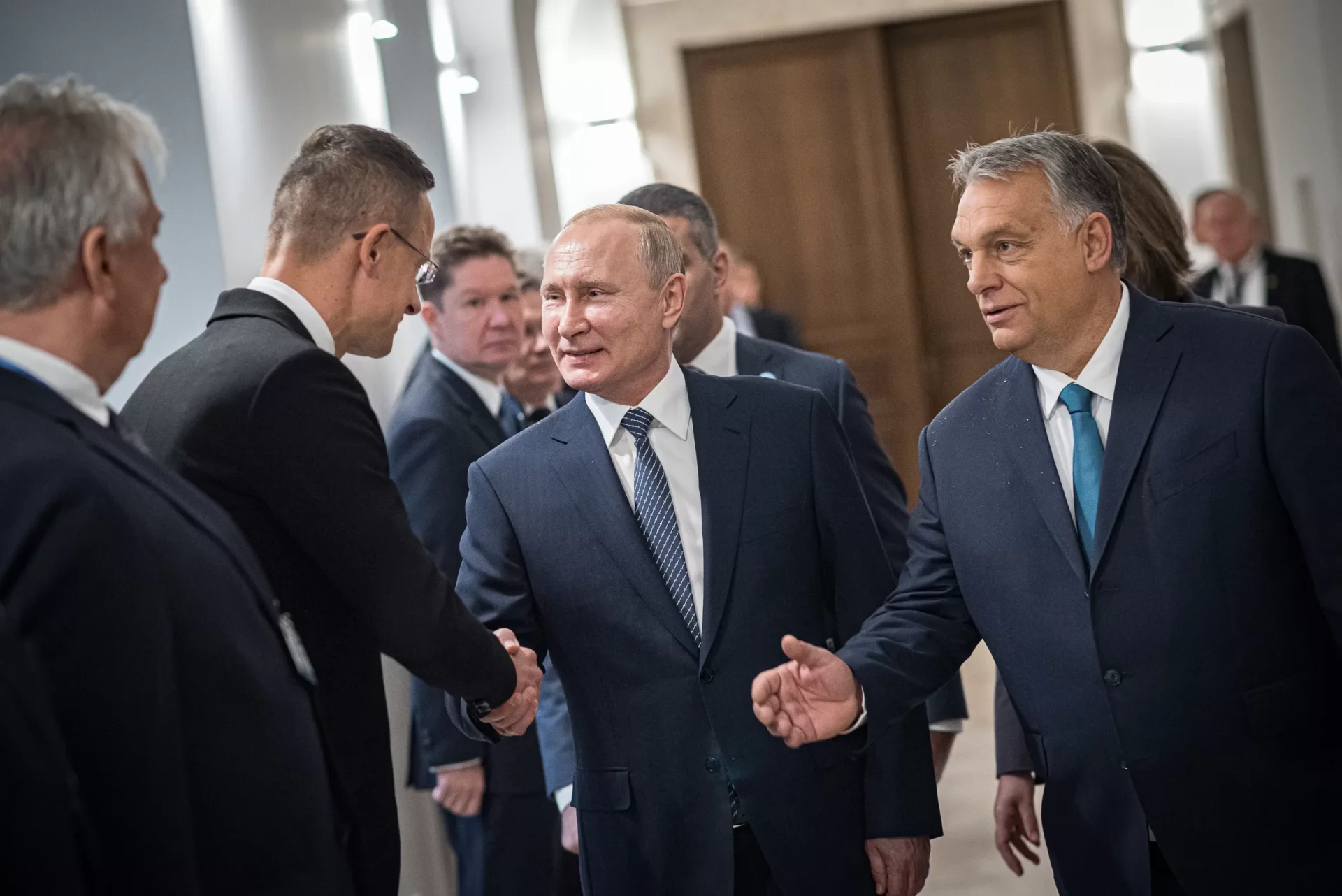
Photo: Viktor Orbán's Facebook page 2026-05-08


Research: Nikita Hava (VSquare)
Photo: Viktor Orbán's Facebook page 2026-05-08
A Russian spy who spent years infiltrating think-tanks and academic institutions close to the Orbán government was sent home from Budapest — but only after Viktor Orbán’s electoral defeat removed the political obstacle that had shielded the operative for months.
Hungary has quietly expelled a Russian spy operating under diplomatic cover who infiltrated right-wing and foreign policy think tanks close to the Orbán government — running informants and scouting for potential recruits, VSquare has learned from multiple Hungarian government sources.
Artur Sushkov, a 36-year-old third secretary at the Russian Embassy in Budapest, was forced to leave the country along with his spouse on May 4, 2026. Sushkov was identified by Hungarian authorities as an undercover officer of Russia’s Foreign Intelligence Service (SVR).
The expulsion came months later than Hungary’s own counterintelligence service had wanted. The Orbán government had blocked an earlier proposal to send Sushkov home in February 2026, according to a government source — a delay driven by political calculation. With Russia actively supporting Orbán’s reelection bid, his government was unwilling to risk straining ties with Moscow in the middle of a campaign.
Together with our consortium partners, we have also revealed audio recordings and transcripts of phone conversations showing how Hungarian Foreign Minister Péter Szijjártó served Russian interests in Brussels — helping remove individuals and entities from sanctions lists — and how he colluded with Sergey Lavrov, leaking EU documents and coordinating efforts to block Ukraine’s EU accession process.
“Similar situations occurred more than once under the Orbán government,” said Péter Buda, a former Hungarian counterintelligence officer — referring to the Orbán government’s pattern of opposing or delaying the expulsion of Russian spies operating under diplomatic cover.
“Based on this particular case, it is clear that the political leadership did not allow the intelligence services to carry out their duties properly. Let us not be naive: a country where there is no need to fear any significant consequences presents an attractive venue for hostile intelligence operations, while in virtually every other European country, Russian intelligence operatives had to fear serious retaliation,” Buda added.
However, everything changed after Viktor Orbán’s defeat on April 12, 2026. As his regime collapsed, agencies that had long operated under tight political constraints could suddenly carry out their jobs properly. Finally, the Russian spy was sent home.
The counterintelligence operation targeting Sushkov was conducted by Hungary’s Constitution Protection Office, known by its Hungarian acronym AH, in cooperation with the security agency of an unidentified NATO country.
The Hungarian government and the Russian Embassy in Budapest did not reply to our requests for comment.
The institutions and events that formed the focus of Sushkov’s intelligence gathering have something in common: all were overseen by Balázs Orbán (no relation to Viktor Orbán), the prime minister’s political director who also served as campaign director for the failed reelection bid.
Sushkov’s targets or field of operation included, among others, the Mathias Corvinus Collegium (MCC), the Hungarian Institute of International Affairs (HIIA), and the John Lukacs Institute for Strategy and Politics at Ludovika University of Public Service — a university that trains Hungarian military, law enforcement, and intelligence officers.
Russian Couple Living in a Shopping Mall
Artur Albertovich Sushkov has been posted to Hungary twice. He first arrived in 2019 and stayed until 2022, then returned on February 8, 2023, following a three-month break, this time with a promotion from attaché to third secretary. Hungary’s Foreign Ministry diplomatic list shows his wife accompanying him as a spouse on the second posting.
Sushkov maintains a permanent Moscow registration at a family apartment, along with multiple addresses in Kaliningrad. His father is a decorated Afghan war veteran.
Sushkov’s wife Svetlana — also quietly expelled from Budapest — was officially employed at the Russian Foreign Ministry’s Diplomatic Academy, which was reorganized and merged into MGIMO by 2026.
Two Kaliningrad addresses appear in official registration records for both Sushkov and his wife, and both raise questions. One is a hotel room — suggesting either long-term ministry-funded accommodation, a practice common for temporary postings, or use of the address as a formal registration point while actually living elsewhere.
The other is at a shopping mall and entertainment center, an extremely unlikely place of residence for diplomats.
Leaked flight data show Sushkov traveling between Budapest and Russia in 2020, likely for the holidays, and making three round trips between Budapest and Kaliningrad in the summer and autumn of 2022 — after Russia’s full-scale invasion of Ukraine had already begun. His wife accompanied him on some of those trips.
Fertile Ground for Russian Espionage
Sushkov kept a low profile online, but his aggressive networking in pro-Orbán think-tank and academic circles raised red flags.
His primary targets were Hungarian citizens sought out at conferences and events organized by MCC and HIIA, where he pushed for off-the-record meetings with people he knew had close ties to Orbán government officials and decision-makers.
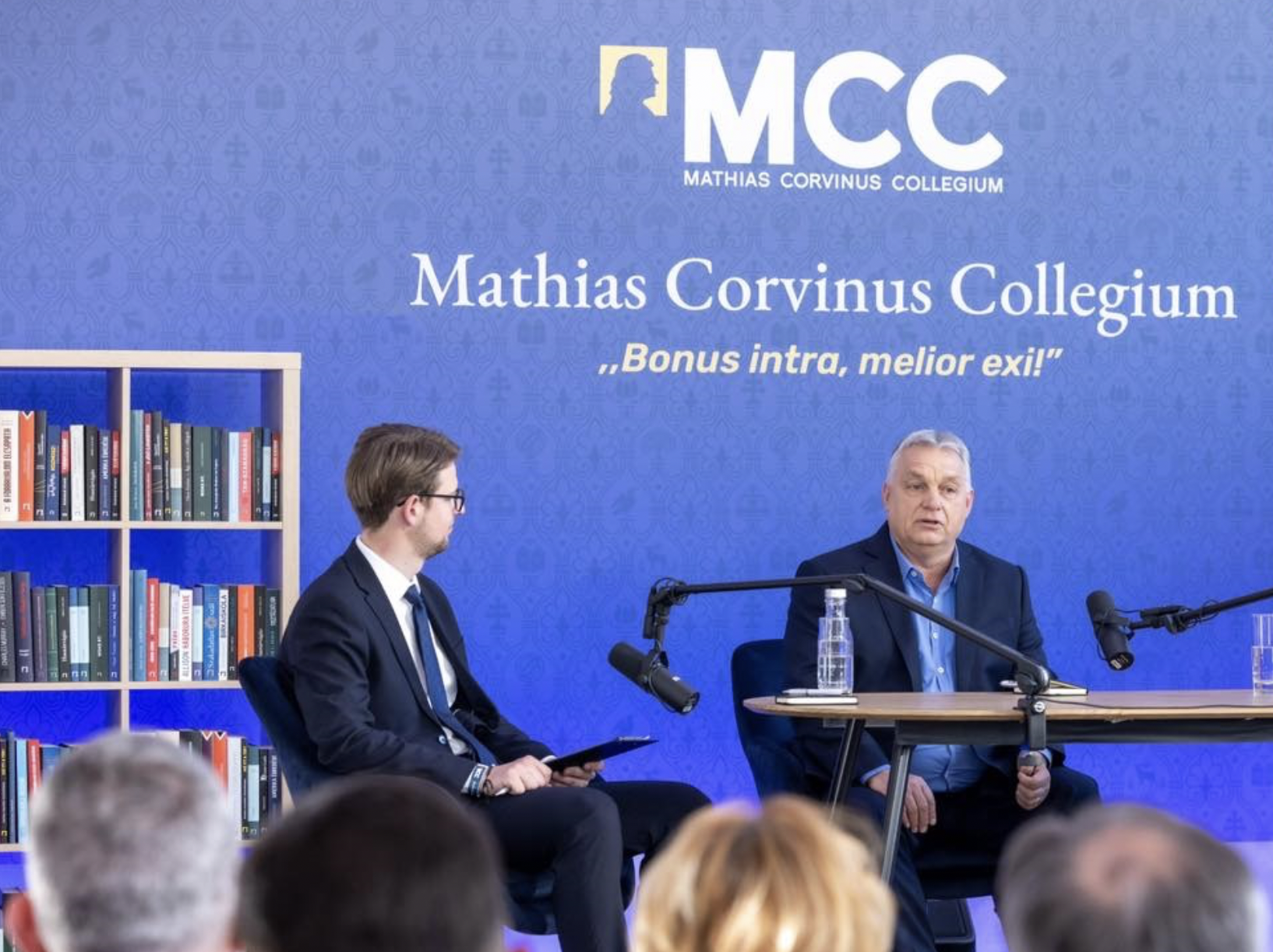
Viktor Orbán at MCC. Source: MCC’s Facebook page
MCC, the lavishly funded think-tank and lobbying operation that functions as an ideological flagship of the Orbán government, has been led de facto by Balázs Orbán, the prime minister’s political director and later campaign chief — the same campaign that trafficked in Kremlin narratives and anti-Ukrainian messaging. Balázs Orbán stocked MCC with Hungarian experts and foreign scholars, many of whom shared its anti-Western, pro-Kremlin worldview.
That roster included John Laughland, a prominent British far-right thinker who had run a Paris-based think-tank with Russian backing and worked for the Dutch far-right Forum for Democracy (FvD), while holding a well-paid fellowship at MCC. On October 7, 2022, when he flew back to London from Budapest, British authorities briefly detained him on suspicion of spying for Russia.
MCC later hired Misa Djurkovic, a Serbian pro-Kremlin scholar and member of the Valdai Club with personal and professional ties to organizers of the failed 2016 coup attempt in Montenegro — a plot secretly orchestrated by Russia’s military intelligence service, the GRU.
In 2025, VSquare also revealed that MCC quietly removed a Chinese scholar following a national security investigation into suspicions that the researcher had close ties to intelligence officers from China’s Ministry of State Security (MSS).
It was in this friendly environment that Sushkov apparently felt he could move freely, networking and scouting potential recruits.
“MCC did not send official invitations to Artur Sushkov or any other Russian diplomats for either its public or closed-door events; however, open programs were by their nature accessible to anyone,” the pro-Orbán institution told me in response to my request for comment. They emphasized that in numerous cases, attendees could participate in their events without prior registration.
“MCC is like an open office. It’s such a revolving door that the Russians don’t even need to properly dig in, no classic recruitment needed either, they just walk in and out freely,” a Hungarian national security source said.
From Political Intelligence to Wifi Passwords
According to a Hungarian source familiar with the diplomat’s activities, Sushkov successfully initiated the recruitment process of at least three individuals.
One of them — a researcher with contacts both at HIIA and the John Lukacs Institute — had already been trained by the Russian intelligence officer in clandestine communication and participated at secure meetings.
Sushkov cultivated this asset through expensive gifts while making clear that real money was available in exchange for information.
Through that asset’s network of contacts, Sushkov obtained political intelligence from the Hungarian Institute of International Affairs (HIIA), which came under Balázs Orbán’s direct oversight in 2023.
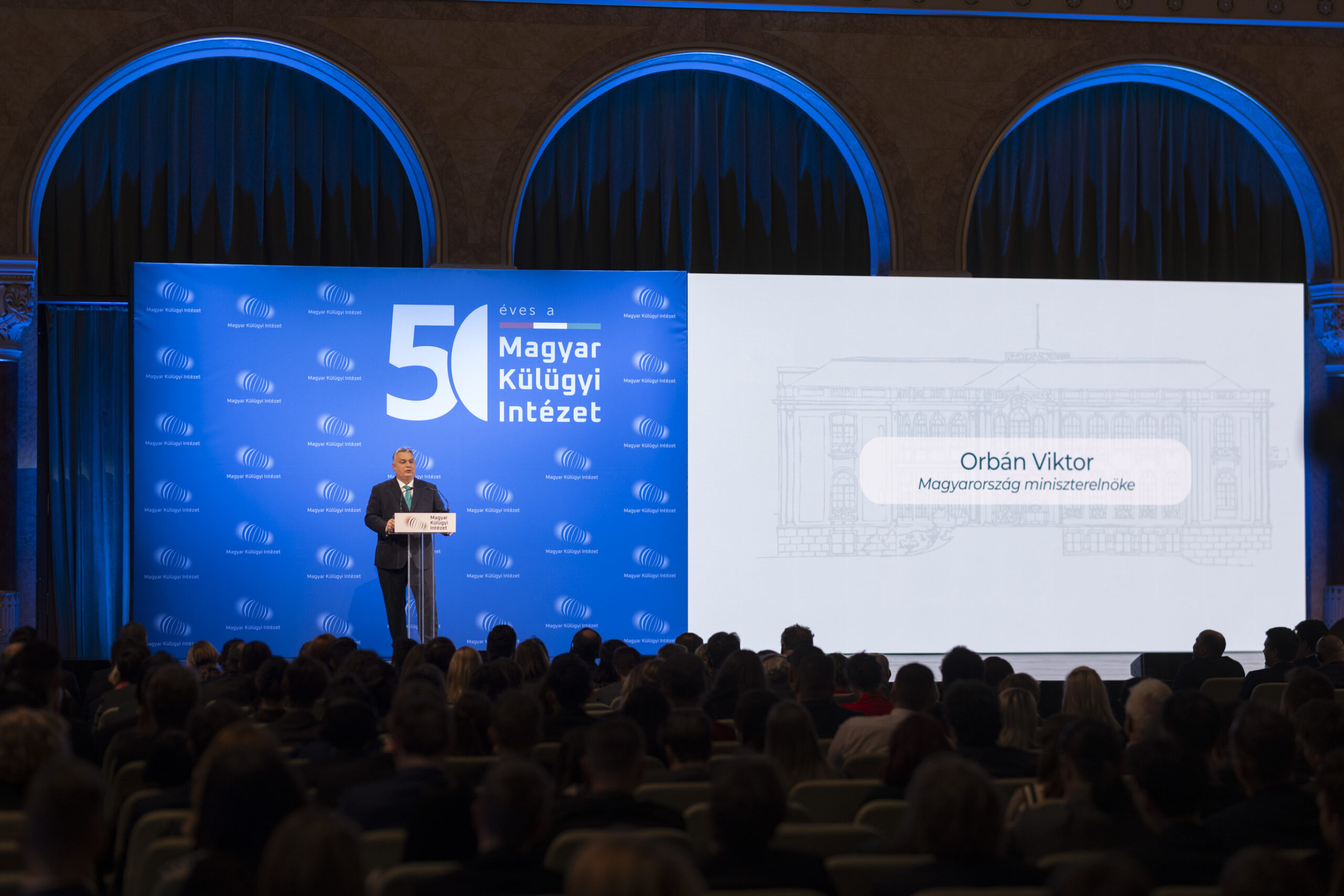
Viktor Orbán speaking at HIIA’s 50th anniversary celebration. Source: HIIA
The institute relocated from Gellért Hill on the Buda side of the Hungarian capital to Pest, right across the street from the Russian Embassy on Bajza Street – which, like other Russian embassies, is also a hub for signals intelligence gathering.
Since HIIA operates under the Prime Minister’s Cabinet Office, and some of its staff write materials directly for Viktor Orbán, they have direct access to the highest echelons of Hungarian decision-making. A government source confirmed that Sushkov’s asset knew senior Hungarian decision-makers well, too.
HIIA only responded to our inquiry after the publication of thisarticle. “Based on our information, we cannot confirm that he participated in any closed-door event or that he appeared on the Institute’s guest list. Based on the attendee lists, we were able to identify him as a visitor at two 2024 events, both of which were public panel discussions open to anyone,” they wrote about Sushkov.
They added that they had no information indicating that Sushkov had been in contact with their colleagues. The HIIA further stated that in Sushkov’s case, “we received no inquiry from authorities.”
Meanwhile, the same asset, through their contacts, also gave the Russian spy a window into the John Lukacs Institute for Strategy and Politics at Ludovika University of Public Service — an institution whose oversight body Balázs Orbán chaired until his resignation in May 2026, following the government’s electoral defeat.
Sushkov “was not among the invited guests at any of the institute’s closed-door or public events, his name does not appear on participant registration lists, and we have no knowledge of him having attended any of our events,” the John Lukács Institute said in response to our request for comment, adding that they never invited Russian diplomats.
They also wrote that Hungarian authorities held awareness and security training for their researchers. “In accordance with what was said there, our researchers informed the competent authorities in every instance when they came into contact with diplomats whose behavior gave cause for suspicion,” the institution added.
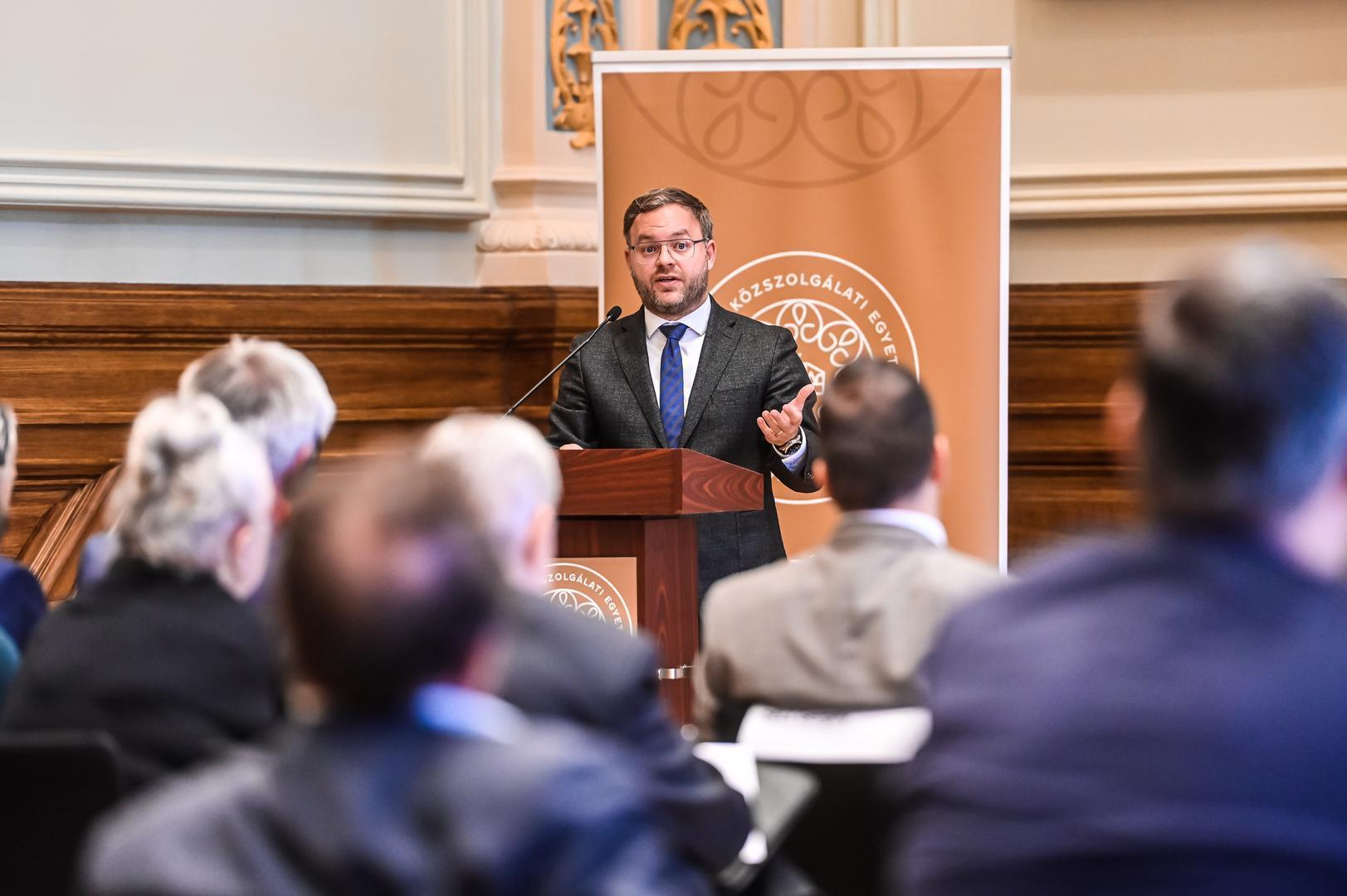
Balázs Orbán speaking at the university. Photo: Ludovika University of Public Service
It’s no coincidence that Hungarian counterintelligence held such training sessions. “There is a broader pattern at work: Russian espionage has increasingly shifted its focus toward academia and think-tanks, which is an approach long favored by Chinese intelligence. Their collection effort is sweeping; virtually no type of information falls outside their interest,” a Hungarian national security source explained.
Likewise, Sushkov’s appetite for intelligence was indiscriminate. He sought everything from gossip about Hungarian government officials to updates on the Paks 2 nuclear power plant project — and even the Wi-Fi password for HIIA’s internal network. (In their response, the HIIA stated that they have no knowledge of and have received no information about any incident in which their internal network password may have been leaked to the Russians.)
Sushkov worked to extract information from his assets and informants on political decision-making across both foreign and domestic policy, developments in the Hungarian election campaign, Hungary’s foreign policy plans, and above all, Budapest’s relationship with Ukraine.
Game Over
Sushkov’s operations were aggressive enough that even the Orbán government considered expelling him — but the sensitivity of such a move during the campaign bought him time.
According to a Hungarian government source, Hungarian counterintelligence, working jointly with a NATO country’s partner agency, first thought that Sushkov could be a potential recruitment target. (In an earlier interview with VSquare, former Hungarian counterintelligence officer Ferenc Katerein explained how expulsions work, and that they are sometimes preceded by a recruitment attempt.)
Once it became clear he could not be turned, Sushkov and his wife were quietly expelled for violating the Vienna Convention — the official euphemism for espionage.
Quiet expulsions have long been a hallmark of the Orbán government’s approach — even when declaring Russian diplomats persona non grata, Budapest kept such measures secret to minimize friction with the Kremlin. At the same time, this method also signals to the Kremlin that they can operate in Hungary more boldly, as the retaliation is intentionally softened.
Russian SVR intelligence officer Artur Sushkov and his wife were given two weeks to pack up and leave, and departed on Monday.
A Hungarian government source added that, as in previous cases, Russia is expected to mirror the Hungarian measure, and send home a Hungarian diplomat posted in Russia in about two months’ time.
Even after Sushkov’s expulsion, however, at least a dozen identified or suspected SVR intelligence officers remain under diplomatic cover at the Russian Embassy in Budapest, according to officials of multiple NATO countries. This number doesn’t include Russian spies working for two other agencies, the GRU and the FSB.
VSquare has previously reported that the GRU sent to Hungary three additional agents specializing in social media manipulation during the Hungarian election campaign. However, they were not officially posted to the Russian Embassy on Bajza Street, Budapest.
“The activities of Russian intelligence services in Hungary were not necessarily or exclusively directed against Hungarian targets, but also against other countries in the Schengen area. Let us not forget, after all, that Russia is waging a hybrid war against Europe. It can therefore be stated that the Orbán government contributed, at the very least indirectly, to the success of this war,” former counterintelligence officer Péter Buda told.
Subscribe to “Goulash”, our newsletter with original scoops and the best investigative journalism from Central Europe, written by Szabolcs Panyi. Get it in your inbox every second Thursday!

VSquare’s Budapest-based lead investigative editor in charge of Central European investigations, Szabolcs Panyi is also a Hungarian investigative journalist at Direkt36. He covers national security, foreign policy, and Russian and Chinese influence. He was a European Press Prize finalist in 2018 and 2021.